Tuesday, October 27, 2026 Mobs of people have been anxiously awaiting part 2 after I published. Untangling the knots in the Retired Teacher Chapter and Other Stuff - Part 1. The knots keep growing - And untangling this one is a doozy I chronicled some ...
The knots keep growing - And untangling this one is a doozy
I chronicled some of the issues dividing the non-Unity crew, which was very united when they won the 2024 election with 63%. Since then there have been so many twists and turns that is forcing me to postpone Part 2 which was focused on the one-slate revolt of some members of Retiree Advocate, who run the RTC, over the RA Organizers 10-3 split offer to Fixed Retiree Benefits. The 1008 issue is further dividing the groups as you will see below.
The latest controversy relates to the surprise reso at the DA offered by retired UFT officer Sterling Roberson, the most likely Unity candidate to oppose Bennett Fischer this spring in the RTC election, to support the new city council bill 1008 to protect retirees from being charged for healthcare. Educators of NYC commented:
Sterling (Roberson) intentionally never read or mentioned the resolves in this proposed resolution … INTENTIONALLY.
Hundreds of delegates on the phone voted on a resolution they never read, had access to or were fully informed about.
This is very much Unity’s modus operandi — to co-opt policies that the rank and file is clamoring for in order to WATER IT DOWN.
For sure - a Unity scam aimed at the upcoming RTC election just like the 10k para scam aimed at the 2025 election (which seemed to work - but unless Mulgrew and his pal Julie Menin get them the 10k, it won't work for the 2028 UFT election.) Luckily, UFT retirees are used to the Unity scams so we won't be fooled again. Or will we?
I'm trying to follow the bouncing ball with a Bennett Fischer and Arthur Goldstein version of a reso affirming support for 1008 --- and today's discussion at the RTC EB meeting. If I don't fall asleep, I will report on it later.
Any RTC member can attend in person or remote.
Zoom link for today's Exec Board meeting. 1-3pm in Room 19H.
Sterling (Roberson) intentionally never read or mentioned the resolves in this proposed resolution … INTENTIONALLY.
Hundreds of delegates on the phone voted on a resolution they never read, had access to or were fully informed about.
This is very much Unity’s modus operandi — to co-opt policies that the rank and file is clamoring for in order to WATER IT DOWN.
Examples:
1. They were FOR Medicare Advantage before the lawsuits by NYC Retirees made it untenable for their attempts to privatize the traditional Medicare plan.
2. They saw that members wanted to be able to ratify agreements with changes to their healthcare … so they added a healthcare committee to maintain control and only supported the DA making these decisions.
I wanted to get this fake turn to support 1008 by Mulgrew and the clear signal that Sterling will be running for CL of the RTC on the table before I delve into the RTC maelstrom.
*****Fix Retiree Benefits is organizing a delegate slate for the RTC election but is still open to working in a coalition for one slate.
Also - I have been removed from moderating the RA listserve where criticism of RA will be censored. It is no longer reliable.
Tuesday, Oct. 20, 2026
A candidate for RTC Chapter Leader
Last week I went to three meetings and a faux Funeral for UFT Opposition to 1008, after future Unity candidate for RTC chapter leader Sterling Roberson followed his script in "supporting" 1008 which they had been claiming violated collective bargaining, the Taylor Law, and the pooper scooper law. But then again, UFT leaders rarely pick up the poop they leave.
There were actually 5 meetings over two weeks and maybe some progress towards a united slate, but the train leaving the station is picking up steam. There's too much to report in this one post, so there will be a follow-up. (My head is spinning. I wish I could write as fast as Arthur - I used to but aging brain cells, you know.)
Since last week over 60 people have registered to run for delegate with Fix Retiree Benefits. CLICK HERE to run for delegate with Fix Retiree Benefits. The goal is 300.
Some background on one-slate progress
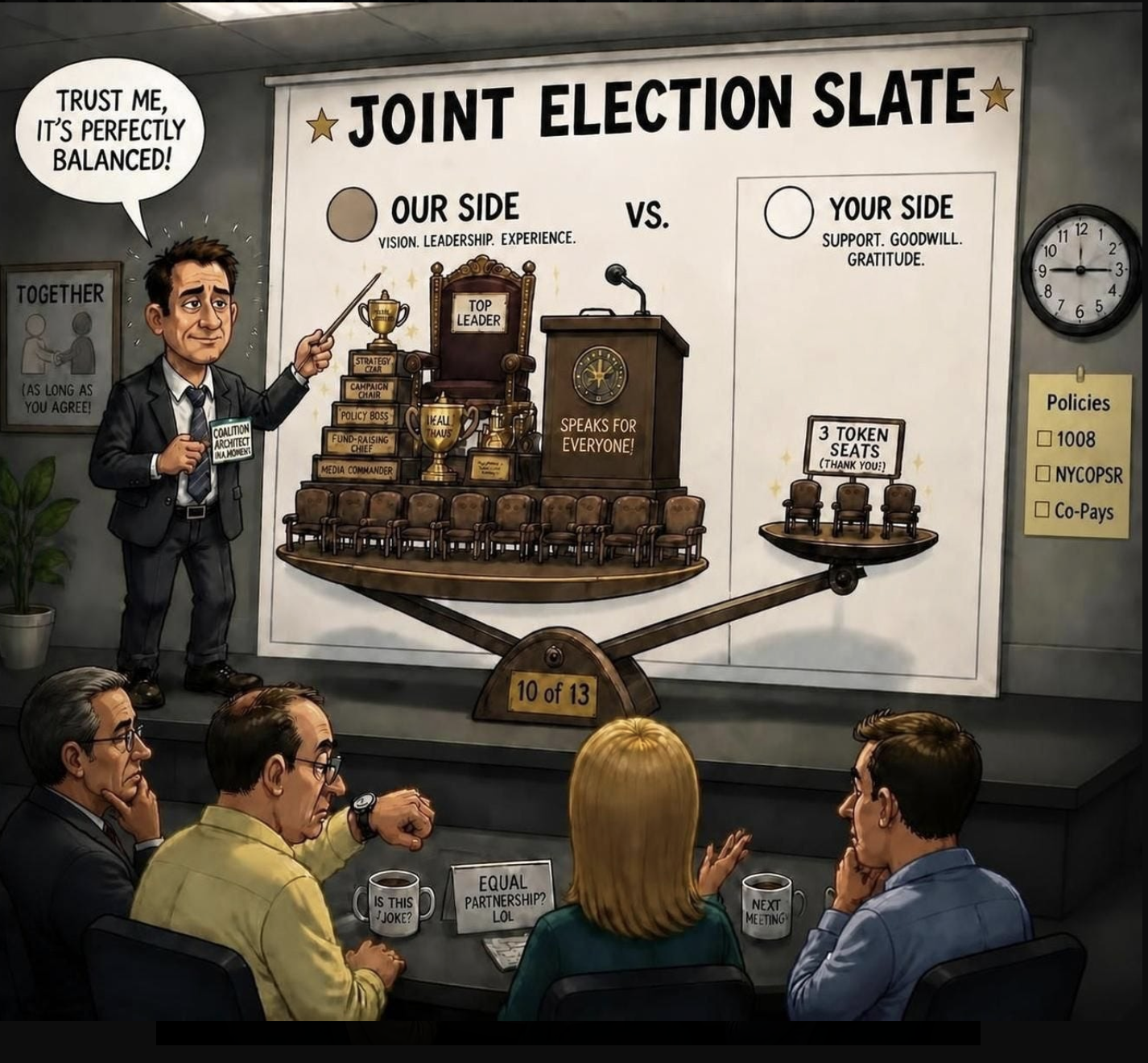
A group of RA dues-paying members were unhappy when RA Organizers presented a proposal for the creation of a 13 member election committee that gave FRB 3 out of 13 slots at a raucous Sept. 22 RA general membership meeting attended by around 40 members. The general feeling was that the 10-3 proposal would seriously damage the prospects for one slate.
Also of concern was the manner in which the meeting was conducted, with charges of lack of democracy when demands to put it to a vote were ignored, as one RA dues-paying attendee pointed out:
You cannot seriously think that creating a 13 member committee, composed of 10 RA representatives and only 3 from Fix Retiree Benefits, chosen by RA, is a fair and legitimate proposal for creating a joint slate! ... it appears to be a proposal created with the intention of having it rejected by FRB.... Many, perhaps most, of those who attended the RA membership meeting on Sept 22 were opposed to the way this committee was formed and were denied a vote on it. A democratic process on our side might have resulted in a better outcome.
The RA 15 member Organizing committee (steering) went ahead anyway and notified three men associated with FRB on Sept. 27 (FRB core members are majority women), inviting them to a meeting on Sept. 28. The next day Bennett Fischer offered to let FRB choose the three. This was the first official contact with the FRB since last May. The official FRB response, while leaving open the one-slate possibility, was:
The RA Organizers (their 15-member steering) proposal fundamentally recreated the concept of a an election committee that would run the election and vet candidates and the 3 FRB people would lose every vote when there was no agreement. We learned from our experience with ABC that there is a more dynamic way to run an election than we've seen from the legacy caucuses. A rigid structure would harm the ability to win. If there is an agreement to run one slate, I believe the RA and FRB crowds should be free to run their own versions of the campaign. But that's my personal opinion, not yet that of FRB.
The train was pulling out but there was still hope to hop on if the dissident RA members could pressure the leadership of RA into an equitable agreement. The pushback on working with Marianne Pizzitola was still intense and we even heard that one member of the RA Org had said if we dropped her they could agree to a 50-50 split. Protests that she was a key figure in our win two years ago were deflected with: but this is another election and we're incumbents and much better known in the retiree chapter. I don't agree, but that's for another time.
A mixed group met up after the Oct. 1 NYHA event.
An ad hoc meeting after the Oct. 1 NYHA meeting was open and frank and offered some hope and followed by a larger meeting after the RTC general meeting on Oct. 13, offering even more hope. We aimed at another meeting after the RTC meeting on Oct. 13.
The Oct. 13th meeting - Part 2 coming soon. (It is written but if I included it here you would be reading a tome. Actually, this alone is a tome.)
Concerned that divisions between Retiree Advocate and Fix Retiree Benefits would widen to the point of no return, a group of retirees I've termed "One-Slaters" are begging everyone to come together in a united slate to keep Unity from winning back the RTC chapter.
There is a sense of desperation and panic that if the chapter is handed back to Unity, they will use their control to find new and creative ways to reduce our healthcare or raise our fees, but this time, having learned some lessons from losing so badly in 2024, will do so in a much smarter and slicker manner and make sure Unity will never lose control again.
One of Unity's first lessons from that loss was to degrade and disparage and make Marianne Pizzitola of NYCOPSR, who had so much to do with getting retirees to vote against Unity, toxic. (Analogy to Corp Dem obsession with Hassan Piker). Unfortunately, some of the very people she helped put in control of the RTC seem to buy the same anti-Marianne Unity line.
They had a different tune as per this June 16, 2024 NY Post report on the RTC election:
UFT insurgents credited Marianne Pizzitola, a retired FDNY emergency medical specialist and current president of the Organization of Public Service Retirees, Inc., with rallying citywide worker opposition to the Medicare Advantage shift.
Boy, how things have changed since June, 2024 when members of Retiree Advocate (me included at the time) celebrated the massive win with Marianne Pizzitola the day we won. Once in power, RA began to back away from giving her credit and began to brag about how it was THEIR organizing that won the election with just a little bit of help from Marianne, fake news.
By the way, the role played by Arthur Goldstein in that campaign is also undervalued. Arthur now has almost 7,000 supporters on his substack. Some of his recent posts, critical of RA, have perturbed the one-slaters and I have links to them below.
The One-Slaters argue for a united slate by any means necessary, even to the extent of downplaying participation of Marianne and urging suppressing criticism of RA and RTC leaders. Another concern is a willingness to accept the same leadership personnel and structure, which many of them admit is a problem but they are willing to bite the bullet in the name of a united front.
The One-Slaters are unhappy when RA or RTC is criticized, feeling that would make RA less likely to want to work with critics. But is was clear to many that RA never had the intention of sharing power with FRB or anyone else not on their inside game. Yet, we have tried to stay in the one-slate lane despite the repeated "no interest" messaging from RA.
Election conversations have been accelerating, recently at the Sept. 29th RTC Ex Bd meeting and the RTC Health Committee NY Health Act meeting on Oct. 1.
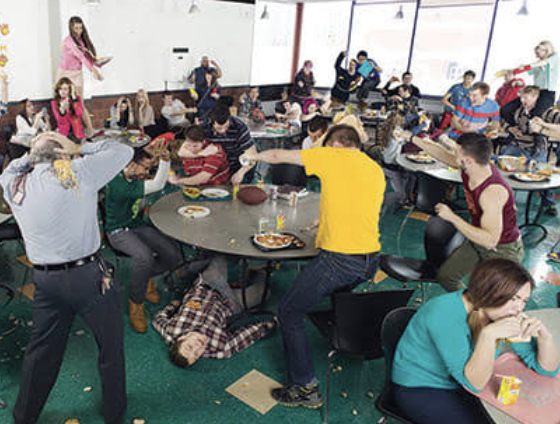
This was the first time many of the key players on all sides in the RTC were meeting in person. There were no food fights but there were intense discussions over the one slate idea and the issues dividing us. What I found interesting was many of the one-slaters agree with FRB criticism but don''t want to talk about the issues, only wanting a united slate by any means necessary. They want a papering over of differences -- win first, fight later.
They are pushing to have an open meeting of all parties, including non-aligned.
I can see their point and remain open to further discussions, especially with independents and RA dissident dues-payers.
Dues-paying members of RA, unhappy with the leadership, are keeping hope alive that they can pressure the RA Org into some agreement. I will publish some of their comments next time, but with every passing day, the train is speeding up.
====
Arthur and I are quoted in the NY Post article of June 16, 2024
“This is a tale of a massive shift in voting sentiment amongst retirees,” UFT activist Norm Scott said of the election results. “Can the same shift occur in the general election next year?”
Arthur Goldstein, vice-chair-elect of the retiree chapter, said, “We have taken our United Federation of Teachers from the clutches of those who thought Eric Adams’ budget and/or Aetna’s profits were more important than our health.
“We have broken the bonds placed upon us by ostensible leaders, union bosses to whom our health was not even an afterthought.”
Here are a few more blasts from the past:
This June 24, 2024 from The City Reporter is self-explanatory
“The courts have spoken. My members have spoken,” said UFT President Michael Mulgrew. Left unsaid is how else unions might find $600 million in annual cost savings.
This March 21, 2023 City Reporter article delves into the petition a bunch of us outside the normal caucus structure organized - this was shortly before James Eterno's stroke and he was actively involved in planning this. We ended up with 12k signatures and in some ways we dropped the ball. Ironically, when we won the election some of us proposed bringing the issue of a membership vote up at the first RTC meeting but the RTC Ex Bd changed it from a membership vote to a DA vote and of course the UFT leadership quashed it. I would say that was an early rift.
Nine for them, three for us. Echoes of UFT/Unity election committee meetings where they always get three for one. But then again, Retiree Advocate channeling Unity behavior has been striking.
Here is the response to a meeting from Fix Retiree Benefits that I and two others were invited to that we will not be attending. It's self-explainable. I'm scheduling this post for 6 PM, the precise time the meeting they called without consulting us is due to begin.
The three invited Fix Retiree Benefits members will not attend.
In June 2024, UFT retirees overturned 40 years of control of the UFT Retired Teachers Chapter (RTC) by Unity Caucus, and won elections for 10 RTC Officers, 15 Executive Board members and 300 representatives to the UFT Delegate Assembly. Retirees revolted over the old Unity RTC leadership’s support for the attempt to move us out of traditional Medicare and into a for-profit Medicare Advantage plan. Receiving 63% and over 17,000 retiree votes, the Retiree Advocate (RA) slate prevailed in the 2024 election, with the strong support of the New York City Organization of Public Service Retirees (NYCOPSR) led by Marianne Pizzitola, who spoke to a standing ovation at the very first RTC Meeting not under Unity control in October, 2024.
As a result of that massive victory, UFT leader Michael Mulgrew backed off the Medicare Advantage demand, but has refused to support retirees on City Council Bill 1008 — which would grant retirees permanent protection under the law; nor has the UFT Unity leadership supported the elimination of co-pays for UFT retirees.
Over the past two years, differences have arisen within the RTC chapter between Retiree Advocate and a newly formed group, Fix Retiree Benefits— which has focused on protecting and expanding healthcare benefits and continuing the strong alliance with Marianne Pizzitola and NYCOPSR as major factors in the attempt to keep Unity from re-taking control of the RTC.
Representatives of Fix Retiree Benefits had two meetings with RA in April and May 2026, with a proposal for the two groups to work together in the RTC elections. Fix Retiree Benefits proposed a 50-50 split of the 25 RTC Officers and Executive Board, as well as the 300 Delegate Assembly representatives. A proposed June follow-up meeting was cancelled by RA with no further response.
On Sunday, Sept. 27, three core members of Fix Retiree Benefits were informed via email by RTC Chapter Leader and RA Organizer Bennett Fischer that they had been placed on a 13-member RTC election committee, without being consulted in advance. This 13-member RTC election committee was formed unilaterally by RA. The committee also included six RA Organizing Committee members and three others with known affiliations to the RA Organizers, with no input from Fix Retiree Benefits or independents organizing for the RTC election. In the email sent to the three individuals affiliated with Fix Retiree Benefits, the election committee meeting was called for Monday, September 28 at 6 P.M.
An email to one of the three members from Fix Retiree Benefits was sent to the wrong email address. You can read his response here:
This formation of a 13-member “election committee” is in essence the response by RA to our original proposal from April and May, which was for an even split of Officers, Executive Board, and Delegate Assembly Representatives, and to for a united slate in the next RTC election.
Aside from the fact that Fix Retiree Benefits was not even given the courtesy of being asked what representatives we would choose, plus the fact that Fix Retiree Benefits, a group with a strong presence of women (two of whom had already met with RA during negotiations in April and May), did not have any of them considered for the committee by RA; the very nature of a proposal to set up a “pre-election” committee in which RA members would more than double the representation of Fix Retiree Benefits is objectionable. Presumably, this 13-member committee would then determine the candidates running on the slate.
This proposal by RA is clearly one-sided and is not acceptable to those who have been critical of the manner in which the RA leadership has been running the RTC, and would amount to a continuance of the same policies that have caused a large number of retirees to reconsider voting for RA again.
Only a slate decided on and reflective of the RTC membership will have a chance to defeat Unity once again. A serious proposal would respond directly to the issue of how each group (as well as independents) would be represented on a unified slate.
While representation among the Officers, Executive Board and Delegates is important and must be resolved, there are other concerns that must be addressed. For one, what should be contained in the platform of a united slate? What issues should be emphasized? Another issue is how do we organize to get Inro 1008 passed, and how do we work with other groups to lobby for its passage?
Given these conditions, none of the three Fix Retiree Benefits members intend to attend RA’s election committee meeting. However, we remain open to working not only with RA but with the vast number of non-affiliated RTC members who wish to actively participate in the RTC election.
The joint-slate proposal presented by Fix Retiree Benefits to Retiree Advocate in April and May is below:
1. Protect our promised retiree healthcare. We must unite with other municipal union retirees, and work in solidarity with the New York City Organization of Public Service Retirees and its leader Marianne Pizzitola in the fight to pass City Council Intro 1008.
2. Fight to eliminate the onerous and coercive copays. Improve retiree UFT Welfare Fund benefits. Provide drug coverage for retirees and their dependents, as in all other municipal unions, and improve dental coverage.
3. Protect our pension benefits. Do not let the city balance its budget on the backs of retirees. Fight in the State to increase COLAs. Enable retirees to vote for TRS teacher trustees.
4. Oppose Unity Caucus leadership, when they pit active members against retirees or engage in undemocratic or other actions that cause harm to the membership.
We wish to run a democratic RTC, accountable to all its constituents, Medicare and pre-Medicare, inclusive of paraprofessionals and all other titles.
Fix Retiree Benefits proposed the following governing structure for the joint slate:
Each group (RA and FRB) would each nominate 150 of the chapter’s 300 delegates.
Each group (RA and FRB) would equally share the 10 officer positions (5 each).
Each group (RA and FRB) would share the 15 Executive Board positions, with the group nominating the chapter leader candidate choosing 7 of the 15 members of the Exec Board, and the other group choosing 8 members.
Thanks for reading FIX RETIREE BENEFITS - UFT! Subscribe for free to receive new posts and support our work.
It is deeply disappointing but not at all surprising to see RA leadership behaving in this way. It seems their only takeaway from the 2025 officers election, in which they lost the retiree vote by a 3-to-1 margin, was to become even more embittered and entrenched.
Despite TRIPLING the retiree vote received by RA in the 2025 election, the union activists involved in Fix Retiree Benefits have offered to split the RTC slate evenly (50/50) and to work together with RA to develop a platform. That offer from Fix Retiree Benefits was presented in good faith and in the spirit of union solidarity, and it still stands. RA should take the offer, and we should all get to work in defeating Unity, whose nearly 70-year obsessive control of the UFT has resulted in 20+ years of diminishing returns for all UFT members.
That’s
what he [Mulgrew] told us as we tried to pass 1096. No doubt he’ll trot this out
again as we support the newly named 1008. The problem, he claims, with a
bill that would make our health care city policy and eliminate his
beloved co-pays is it violates collective bargaining.
There were howls of laughter in UFT-land when the unpopular union leader Michael Mulgrew declared war on the super popular Mayor Mamdani over the para bonus issue.
Did Mamdani invite Mulgrew to break the much-maligned pattern bargaining that sets a standard of pay raise for all unions based on the first union to settle? It would make sense for a DSA pro-labor mayor to give special attention to the lowest paid workers and paras certainly fit that mold, as do EMS workers. But that would break the pattern and might lead to squawking from higher salaried who might get less %wise even if the actual money they get would be more - much more.
Due to pattern-bargaining, the same % goes to the highest and lowest paid. Thus a 100k at 3% worker gets a 3k raise a year and a para at 35K gets a $350 raise in the same contract. The only way for paras to get a permanent, pensionable salary is to selectively break the pattern.
Yes, Mulgrew is using the same collective bargaining argument as Mamdani when it comes to protecting retiree healthcare, except Mamdani is closer to the truth than Mulgrew. But using "truth" and "Mulgrew" in the same sentence is a sham.
Oh, the irony of the mainstream NYC press (Times, News, Post) engaging in a rare Mamdani praise-fest for standing up to the UFT, when in actuality he is taking a potential long-range pro-para pro-union position. But then again so much of what Mulgrew has done is actually anti-union, and the para bonus gambit may just fit that mold.
I say potential because the crucial test will be in the next contract negotiations where if Mamdani doesn't deliver for paras his cred on the left on the affordability issue with some of the lowest paid city workers would be laid to waste.
There are many facets to the para pay issue. When my wife, who pays little attention to some of this stuff, asked me why Mamdani opposes the para bonus, I realized the issue had gone mainstream. I told her the key to understanding the entire issue was the Fix Para Pay election win over Unity in the 2024 chapter election. Her eyes glazed over at the inside baseball. Go and explain this to the mainstream press which is framing the issue in lopsided ways.
Daniel Alicea addresses the Unity election loss issue:
The
Daily News says UFT President Michael Mulgrew “failed”
paraprofessionals at the bargaining table and “basically left the paras
behind.”
That’s the sentence worth remembering.
Because
before there was a RESPECT Check, before Mayor Zohran Mamdani sued to
stop it, and before politicians started holding press conferences about
paraprofessional poverty, paras themselves had already revolted.
Only
after that political earthquake inside his own union did Mulgrew become
the public face of a $10,000 legislative campaign. A lobbying campaign
and series of bills in which Mulgrew never once consulted with the UFT
paraprofessional chapter over its design or messaging.
The mainstream mostly anti-Mamdani and anti-union press has been having a field day, gleeful at seeing a split and mocking a DSA member mayor, and so happy that a pro-labor socialist will stand up to the union.
Here are a few points to explore:
Mulgrew's para gambit was a response to the Para chapter election loss in 2024. Check.
If we delve deeper, we can see that Mamdani is actually more pro-labor than Mulgrew and his corrupt UFT leadership by defending the collective bargaining agreement as the way to enact permanent economic health for paras as opposed to a one-time non-pensionable gimmick.
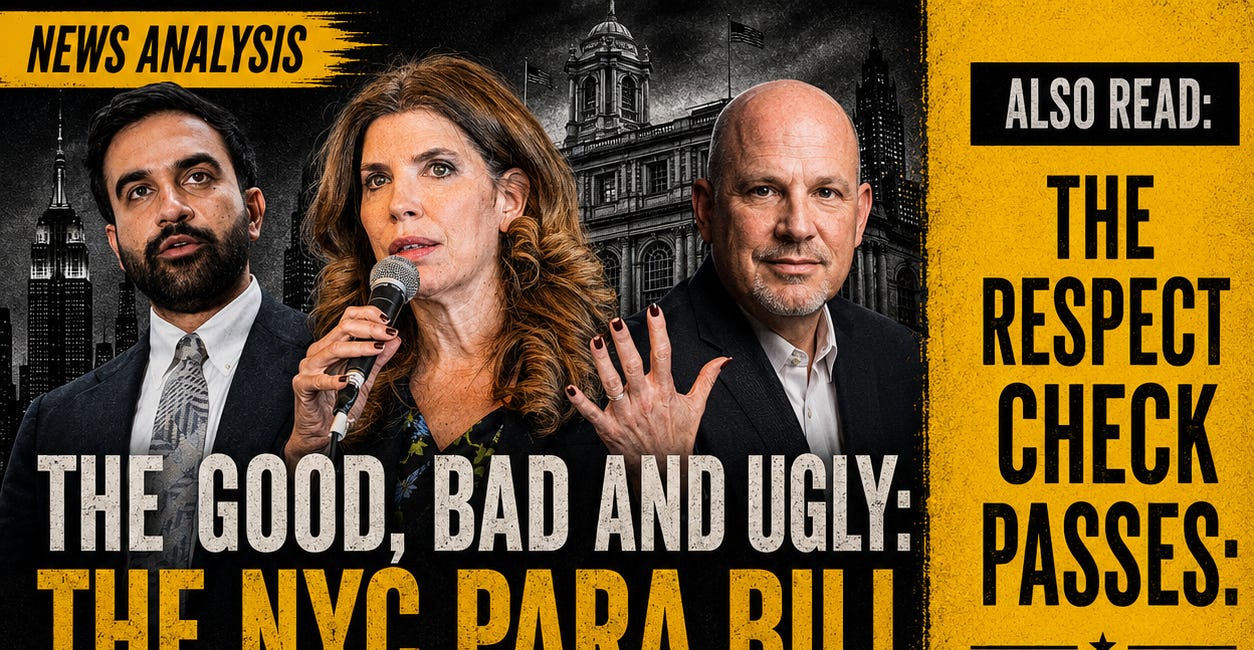
Mulgrew and City Council chair Menin tag team Mamdani as she preps a 2029 campaign against him, a campaign the UFT will back (maybe the kiss of death for her?). The para issue is the first of others to come where Menin looks for opportunities to differentiate herself. (Keep an eye on the 9/11 ceremonies).
The mainstream press has superficially been siding with Mamdani for standing up to the union and attacking Menin, but that is temporary. The second he gives paras a raise in the contract, the dogs will be out.
The left, especially the loyal opposition in the UFT, which is reluctant to criticize Mamdani and seems confused, just stays silent - see if you can find a Jacobin article delving into the issue. So the only place with a left-leaning perspective where you will get some analysis is by reading Arthur, Daniel, ABC, Fix Retiree Benefits, FIx Para Pay and Ed Notes. Let me know when you see MORE, RA or NAC put something up.
Here are excerpts from the NYT authored by 3 reporters who always have their chops out to slam Mamdani. The Times has followed the scurvy NY Post lead on anti-Mamdani articles.
A
lawsuit filed by the Mamdani administration to block $10,000 bonuses
for teachers’ aides has put the mayor at odds with their union.
When Mayor Zohran Mamdani sued the City Council
over its end-run move to give $10,000 bonuses to teachers’ aides
outside the normal collective bargaining process, the mayor placed
himself at the short end of a two-on-one battle.
Not
only would the mayor square off against the City Council, a frequent
sparring partner, but he would also embark on his first major fight with
a public sector union, in this case the United Federation of Teachers.
In
doing so, a mayor eager to burnish his pro-worker bona fides has
scrambled conventional wisdom and left himself in the strange position
of being praised by some of his most committed critics.
“Mamdani
does right,” read a recent headline from The New York Post’s
conservative editorial
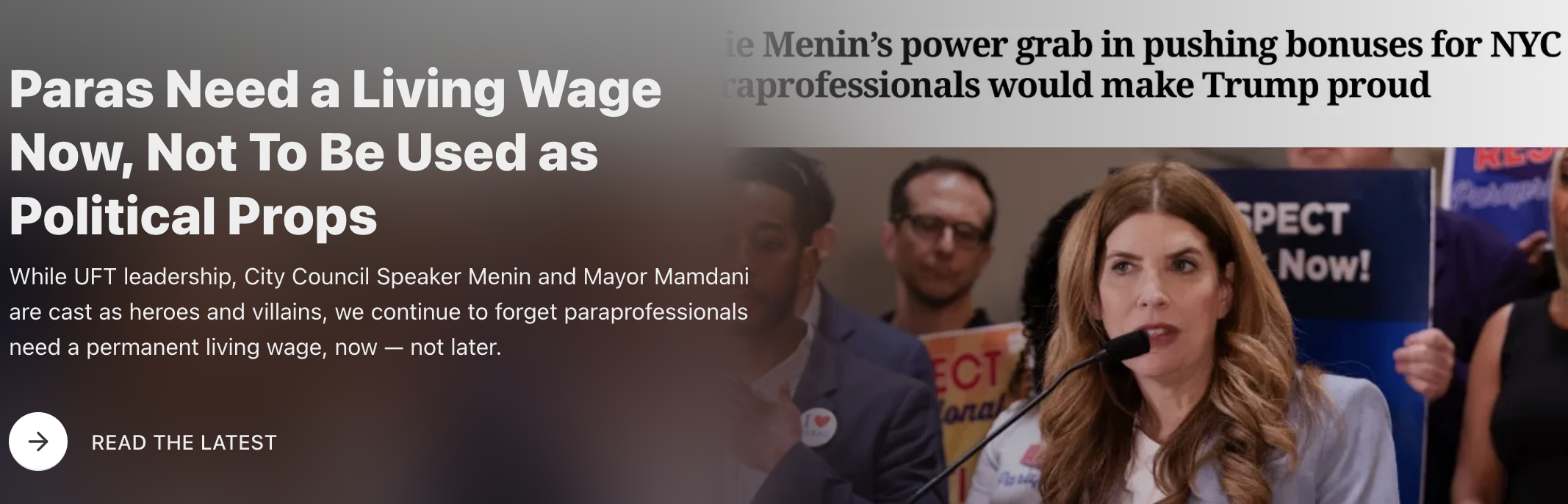
Because Speaker Julie Menin knows better, her unabashed abuse of power in orchestrating a unanimous City Council vote for a $10,000 bonus payment for NYC’s deeply deserving school paraprofessionals would make Donald Trump proud.
Her usurping the mayor’s exclusive authority under the state Taylor Law
to negotiate contracts was a naked giveaway to the powerful teachers
union and United Federation of Teachers President Mike Mulgrew and sets a
dangerous precedent at City Hall.
The Missing Link in all reporting on the para issue is the 10k is the Unity Loss to Fix Para Pay in the 2024 Para Chapter Election, along with the loss in the Retiree election.
The losses were by big margins: 63% in the RTC and 75% in the para election. In the RTC, Unity dropped from their usual 17-19K to 10K.
With 26k paras and 70K retirees and his re-election coming up a year later, losing big in those chapters could very well have turned into a loss for Unity - and both results spurred Amy Arundell and other unhappy Unity people to join with some standard opposition folk to form a potent ABC and become a threat. Mulgrew pivoted by declaring he no longer backed MedAdvantage and for the paras came up with the one-time non-pensionable 10k bonus.
And it seemed to work in time for the 2025 election . One of the reasons ABC actually thought it had a chance to win even in a 3 slate race was the hope that the para and retiree vote would be substantial. While the retiree vote dropped from 2024 it was still enough to continue to worry Unity with Unity regaining some ground but fundamentally in a 50-50 split with the ABC/ARISE combo retiree vote. (I will delve deeply into the upcoming RTC election.)
The para vote was not substantial, as the Unity blitz before the election gave paras the impression Mulgrew was really fighting for them. It will be interesting to see how things play out in the upcoming para chapter election if FPP runs a slate. Will there be some blowback if they still haven't gotten the check by the spring?
While supporting the 10k as an emergency bonus, ABC pointed out the one-time only gimmicky aspect and called for paras to get a permanent pensionable raise in contract negotiations, while also pointing out that Mulgrew had his chance to get them a big raise in the last contract and didn't even try. For taking that position, Unity attacked ABC as being against the 10K and that also cut down the vote. But 140 paras ran with ABC -- and none with ARISE.
Now that Mamdani is taking the collective bargaining position in opposing the 10k bonus and in essence challenging Mulgrew to bargain effectively (two contradictory words for UFT negotiators) he also puts to shame the Mulgrew position that supporting City Council bills to protect retiree healthcare violates collective bargaining and the Taylor Law. Taking one side for an issue and taking the contradictory side for another issue is not out of bounds in the UFT.
I left a text linking the para election issue at the Brian Lehrer show regarding the election after a segment on the para issue last week.
Daniel points out that if going around contract negotiations and using politics to bargain is good for the goose, it is also good for the gander as other unions will play the same game.
While
UFT leadership, City Council Speaker Menin and Mayor Mamdani are cast
as heroes and villains, we continue to forget paraprofessionals need a
permanent living wage, now — not later.
Where
I part company with the board is over what happens next — and who gets
to play hero now that everybody has discovered that a school worker
making barely $33,000 can’t afford New York City.












Despite TRIPLING the retiree vote received by RA in the 2025 election, the union activists involved in Fix Retiree Benefits have offered to split the RTC slate evenly (50/50) and to work together with RA to develop a platform. That offer from Fix Retiree Benefits was presented in good faith and in the spirit of union solidarity, and it still stands. RA should take the offer, and we should all get to work in defeating Unity, whose nearly 70-year obsessive control of the UFT has resulted in 20+ years of diminishing returns for all UFT members.