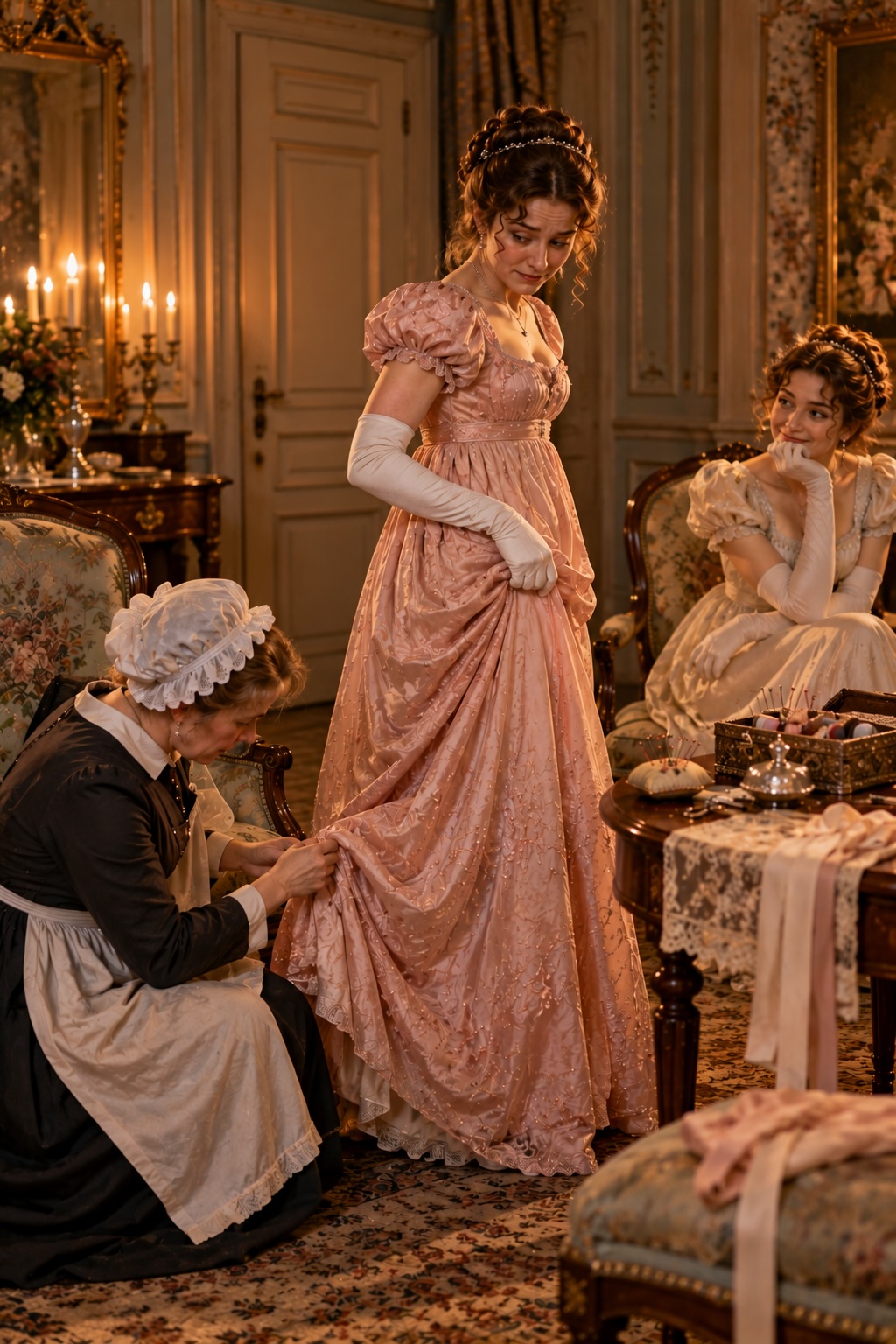
If you’ve ever read a Regency romance, you’ve probably seen it—the heroine stepping into her second Season, determined this time will be different. But beneath the glittering ballrooms and elegant dances, there was a quiet, ticking pressure most ...
‌ ‌ ‌ ‌ ‌ ‌ ‌ ‌ ‌ ‌ ‌ ‌ ‌ ‌ ‌ ‌ ‌ ‌ ‌ ‌ ‌ ‌ ‌ ‌ ‌ ‌ ‌ ‌ ‌ ‌ ‌ ‌ ‌ ‌ ‌ ‌ ‌ ‌ ‌ ‌ ‌ ‌ ‌ ‌ ‌ ‌ ‌ ‌ ‌ ‌ ‌ ‌ ‌ ‌ ‌ ‌ ‌ ‌ ‌ ‌ ‌ ‌ ‌ ‌ ‌ ‌ ‌ ‌ ‌ ‌ ‌ ‌ ‌ ‌ ‌ ‌ ‌ ‌ ‌ ‌ ‌ ‌ ‌ ‌ ‌ ‌ ‌ ‌ ‌ ‌ ‌ ‌ ‌ ‌ ‌ ‌ ‌ ‌ ‌ ‌ ‌ ‌ ‌ ‌ ‌ ‌ ‌ ‌ ‌ ‌ ‌ ‌ ‌ ‌ ‌ ‌ ‌ ‌ ‌ ‌ ‌ ‌ ‌ ‌ ‌ ‌ ‌ ‌ ‌ ‌ ‌ ‌ ‌ ‌ ‌ ‌ ‌ ‌ ‌ ‌ ‌ ‌ ‌ ‌ ‌ ‌ ‌ ‌ ‌ ‌ ‌ ‌ ‌ ‌ ‌ ‌ ‌ ‌ ‌ ‌ ‌ ‌ ‌ ‌ ‌ ‌ ‌ ‌ ‌ ‌ ‌ ‌ ‌ ‌ ‌ ‌ ‌ ‌ ‌ ‌ ‌ ‌ ‌ ‌ ‌ ‌ ‌ ‌ ‌ ‌ ‌ ‌ ‌ ‌ ‌ ‌ ‌ ‌ ‌ ‌ ‌ ‌ ‌ ‌ ‌ ‌ ‌ ‌ ‌ ‌ ‌ ‌ ‌ ‌ ‌ ‌ ‌ ‌ ‌ ‌ ‌ ‌ ‌ ‌ ‌ ‌ ‌ ‌ ‌ ‌ ‌ ‌ ‌ ‌ ‌ ‌ ‌ ‌ ‌ ‌ ‌ ‌ ‌ ‌ ‌ ‌ ‌ ‌ ‌ ‌ ‌ ‌ ‌ ‌ ‌ ‌ ‌ ‌ ‌ ‌ 

Why a Second Season Was Every Regency Heroine’s Fear

If you’ve ever read a Regency romance, you’ve probably seen it—the heroine stepping into her second Season, determined this time will be different.

But beneath the glittering ballrooms and elegant dances, there was a quiet, ticking pressure most people don’t realize.

During England's Regency era (1811–1820), upper-class families descended on London each spring for “the Season,” a glittering parade of balls, concerts, dinner parties, and carefully choreographed social events.

Because the Season wasn’t just social—it was a deadline.

For a young woman making her debut, it was exciting, terrifying, and loaded with expectation. The unspoken goal was to capture find a husband before summer arrived and everyone retreated to the countryside.

Most girls entered society between the ages of seventeen and nineteen. They'd be formally presented at court, then escorted to event after event by a watchful mother or chaperone. A ball wasn't just an evening of dancing—it was an audition. A gentleman requesting a dance was one of the few socially acceptable ways for a young couple to actually speak to each other.

And if the Season ended without an engagement? Back home she went—and back to London the following year.

Here's where it gets interesting for those of us who love romance fiction.

The second Season carried a quiet, particular pressure that the first Season didn't. A young woman returning for another year knew that a fresh crop of bright-eyed debutantes was entering the ballrooms for the very first time. She was still young—perhaps barely twenty—yet she might feel positively ancient by comparison. Mothers fretted. Aunts offered unsolicited opinions. And the young woman herself often wondered what she had done wrong, or whether she would ever find the right match.

That tension—the fear of falling short, the pressure to perform, the longing to simply be seen and known rather than evaluated—is exactly the kind of emotional terrain that makes for a wonderful romance story.

Because society's expectations never accounted for the fact that the right love story rarely arrives on schedule.

Many real women married in their second or third Seasons, or not at all, and lived full and meaningful lives. But for our heroines, the second Season is the perfect storm—just enough disappointment to make her guard her heart, just enough hope to keep her searching, and just enough social pressure to push her into exactly the situation she’s been trying to avoid.

That's where the sparks fly.

And this is where so many Regency heroines find themselves. My own heroine, Lissa Gardinier, arrives in London for her second Season having learned her lesson—blend in, stay quiet, and don't attract the wrong kind of attention. Of course, the best-laid plans have a way of unraveling, especially when an intriguing stranger suddenly makes that very difficult.

When reading Regency romances, the second-Season dilemma is one of those timeless setups that...

Read the whole entry »


A Past He Cannot Escape

Full excerpt + character images below.

Michael and Sol by the fire in Lady Wynwood’s Spies

Mr. Drydale studied Michael’s face. “I’ve known for months that I need more help than just the two of us, but it has been difficult finding people to trust. I was hoping you might join us in pursuing this group, but you seem reluctant.”

Michael didn’t blame his job, but when he was focused on a mission, he rearranged his priorities and discarded what should be most important to him. He knew he couldn’t regain what he had lost, but he didn’t want to go back to being an agent again. “I quit my work for the government because I wanted to find Richard’s murderer, not uncover a plot for treason. I have been working toward that goal for the past year.”

Michael lost in thought - Lady Wynwood’s Spies, Volume 1:Archer

Perhaps he was so focused on Richard’s murderer because he didn’t want to face a future so completely the opposite of what he had thought his life would be. Or maybe he was so focused on the murderer because he didn’t want to face the fact that, if he had handled the situation better, his brother would not now be dead.

—from Lady Wynwood’s Spies, Volume 1: Archer

Read the first few chapters free online.


When a Regency Spy Falls in Love with a Lady Archer

Regency-era spy hero Michael Coulton-Jones in period clothing on a wooded path, from a Christian romantic suspense series.

Michael Coulton-Jones — master of disguises and reluctant heir.

My character, Mr. Michael Coulton-Jones, is a man who laughs easily, moves confidently, and seems untouchable … until you discover what he carries alone.

Michael isn’t tormented in the obvious way. He doesn’t brood in corners or glare across rooms. He smiles. He jokes. He adapts.

But beneath every disguise is a man who believes he failed the one person who trusted him most.

This is a story about espionage, about secret societies hidden beneath Regency society.

But it’s also a story about guilt, and whether a man who cannot forgive himself can ever believe that God might.

The Spy Who Laughs

At first glance, Michael is exactly the sort of Regency gentleman who should not be trusted.

He is broad-shouldered and deceptively relaxed. His coffee-brown hair falls longer than fashion dictates, often into glass-green eyes that seem to be laughing at a joke no one else has heard. He speaks French like a commoner from the countryside and Spanish like it is a childhood lullaby.

He grins at danger and bows over a lady’s hand as if the world were nothing more than a ballroom. He is charming. Reckless. Quick with a blade. Quicker with a smile.

And he lies for a living.

A Spy in Disguise

As a younger son, Michael joined the army at seventeen, where his gift for languages and his ease with disguises drew the attention of men who worked quietly in the shadows. Before long, he was no longer simply a soldier. He was retrieving information, slipping through borders, trading false documents for real ones. He learned to become other men as easily as changing coats.

He cultivated a persona—the fool, the adventurer, the rogue who never appears worried. It made people underestimate him. It kept him alive.

But even then, he had somewhere to return to—his family’s estate only an hour from London, a steady older brother who handled responsibility, a charming younger sister, and a mother who believed him merely restless, not dangerous.

His anchor was his brother Richard.

And then Richard was murdered.

The Brother He Could Not Save

Michael could have prevented the tragedy. That’s what haunts him the most.

Richard had written to him after a friend had been killed and he suspected a man with strange facial scars was involved. But Michael was in the middle of a mission and didn’t take it seriously enough.

By the time he returned to England, Richard was dead—officially poisoned along with other club members in what was called an unfortunate incident.

But Michael knew otherwise. Richard’s papers regarding the strange man were missing.

His own unconcern gave evil time to strike.

He hasn’t forgiven himself, and he wonders if God has not forgiven him either.

The Archer He Should Not Want

Before all of that—before grief hardened him—Michael had met a woman who unsettled him.

He was drawn to Miss Phoebe Sauber from the first moment they were introduced—she was awkwardly tall but...

Read the whole entry »


He Was Not Alone in the Room

The man he was waiting for opened the door to the study with barely a click of the door latch. His silhouette was partially outlined in the dim light from the candle he held, and he was far enough away that he shouldn’t have seen the predator in the shadows, but he grew still for a moment.

Then he continued into the darkened room, although he did not head toward his desk, as might be expected. Instead, he set the candle on the mantle of the fireplace, with his back to his desk and the stranger waiting for him.

—from Lady Wynwood’s Spies, Volume 1: Archer

Read the first few chapters free online.


The Dark Knew His Secrets

As he waited in the darkened room for his quarry to appear, he felt like the shadows were loving arms clasped around his shoulders. He was comfortable in the dark—it blurred his many disguises, and it somehow made his emotions rest in slumber. Everything that felt messy inside of him was hidden by the dark so that he could pretend he was whole and without pain.

—from Lady Wynwood’s Spies, Volume 1: Archer

Read the first few chapters free online.


Follow Me on Social Media

© Your Business. You're receiving this email because you've signed up to receive updates from us.

If you'd prefer not to receive updates, you can unsubscribe.