With so much attention surrounding Ozempic, Wegovy, and other GLP-1 medications, you may be wondering whether your body can produce more GLP-1 naturally. The answer is yes. Your body already makes GLP-1, and certain food choices and lifestyle habits may support its natural release.
What Is GLP-1 and How Does This Hormone Work?
GLP-1 stands for glucagon-like peptide-1. It is an incretin hormone, or signaling peptide, produced primarily by specialized cells in your gastrointestinal tract.
Your body releases GLP-1 after you eat. It then sends several important signals that help your body respond to the nutrients in your meal.
GLP-1 helps:
Stimulate insulin secretion when blood sugar is elevated
Reduce the release of glucagon, a hormone that raises blood glucose
Slow gastric emptying so food leaves the stomach more gradually
Send fullness signals to the brain
Support appetite regulation
Reduce hunger after eating
These mechanisms help explain why GLP-1 has become such an important area of research in diabetes, obesity, blood sugar regulation, and weight management.
The National Institute of Diabetes and Digestive and Kidney Diseases explains that GLP-1 is produced by the gut in response to food and helps prepare the pancreas to release insulin while briefly slowing digestion and reducing appetite. (NIDDK)
Your natural GLP-1 does not remain active for very long. It is quickly broken down by enzymes in the body. Prescription GLP-1 drugs are designed to act on the same receptor for a much longer period.
Increasing your body’s own GLP-1 is not the same as taking a prescription GLP-1 receptor agonist. Food, exercise, sleep, and supplements can support normal appetite and metabolic function, but they do not reproduce the strength or duration of prescription medications.
Still, for some people supporting your natural GLP-1 response can be one valuable part of a healthy routine-especially if you want help managing hunger, food cravings, blood sugar, energy, and feelings of fullness.
Can You Increase Natural GLP-1 Levels?
You cannot eat GLP-1 as if it were a nutrient found in food. Instead, certain nutrients and daily habits can help encourage your intestinal cells to release more of your own GLP-1.
The most promising natural strategies include:
Eating adequate protein
Consuming soluble and fermentable fiber
Including resistant starch
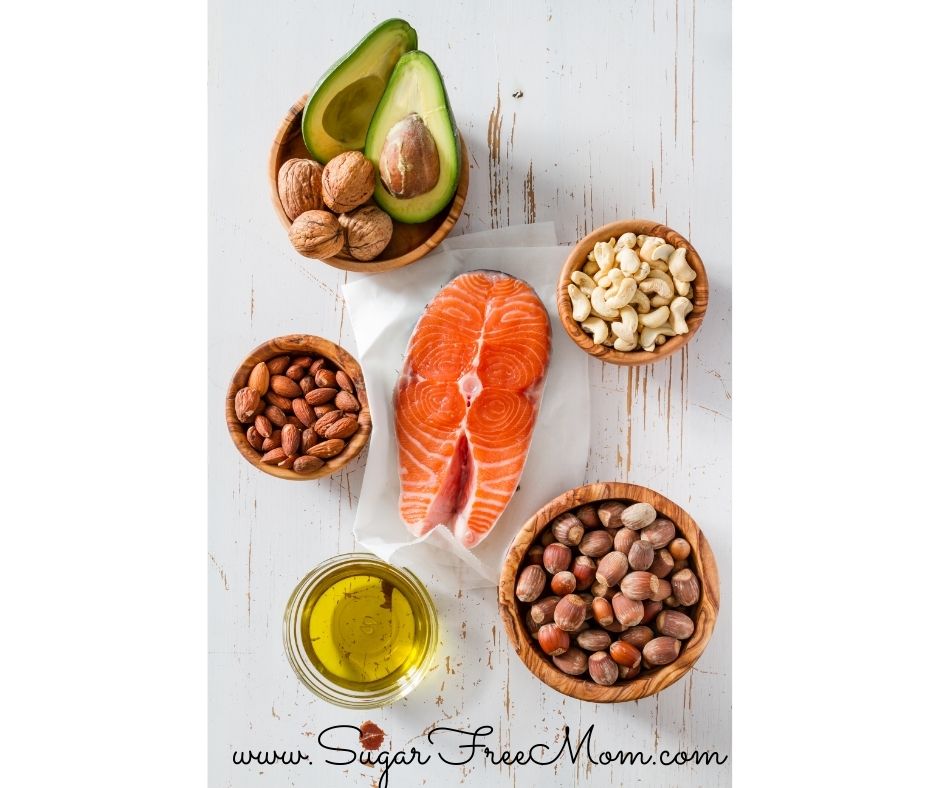
Choosing nourishing unsaturated fats
Eating vegetables and protein before concentrated carbohydrates
Exercising regularly
Getting consistent, restorative sleep
The response will differ from one person to another. Studies examining natural GLP-1 production are often small, and results vary according to the food, amount, meal composition, study population, and method used to measure GLP-1.
Think of these habits as ways to support your normal appetite and metabolic signals, not as a natural replacement for prescription treatment.
Protein, Soluble Fiber, and Resistant Starch for GLP-1 Production
The composition of your meals influences GLP-1 secretion. Protein, carbohydrates, and fat can all stimulate digestive hormones, but some food choices may produce a more favorable response than others.
Include protein with each meal
Protein is one of the most studied nutrients for satiety and GLP-1 release.
Helpful protein sources include:
Eggs
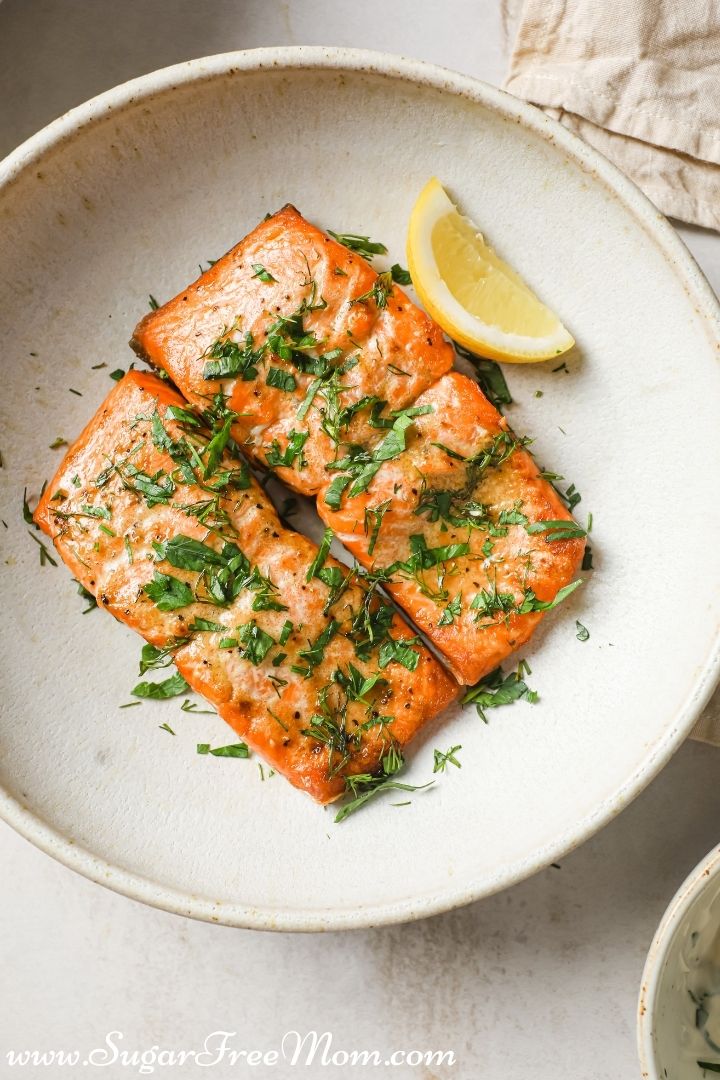
Fish and seafood
Chicken, turkey, and other lean meats
Greek yogurt and cottage cheese
Tofu and tempeh
Beans and lentils
Protein-rich seeds
Whey or plant-based protein, when appropriate
In human trials, protein-rich meals and protein consumed before a meal have increased post-meal GLP-1 and feelings of fullness.
One randomized crossover trial found that a small whey-protein drink before a meal increased GLP-1 and reduced the post-meal glucose response in adults with type 2 diabetes and overweight or obesity. (PubMed)
A practical goal is to include a meaningful protein source at each meal rather than eating meals made primarily from refined carbohydrates.
Eat more soluble and fermentable fiber
Fiber helps slow digestion and supports the beneficial bacteria living in your gut.
Some types of fiber are fermented by intestinal bacteria. This creates short-chain fatty acids, compounds that may communicate with the intestinal cells responsible for GLP-1 production.
Fiber-rich food choices include:
Beans and lentils
Vegetables
Berries, apples, and pears
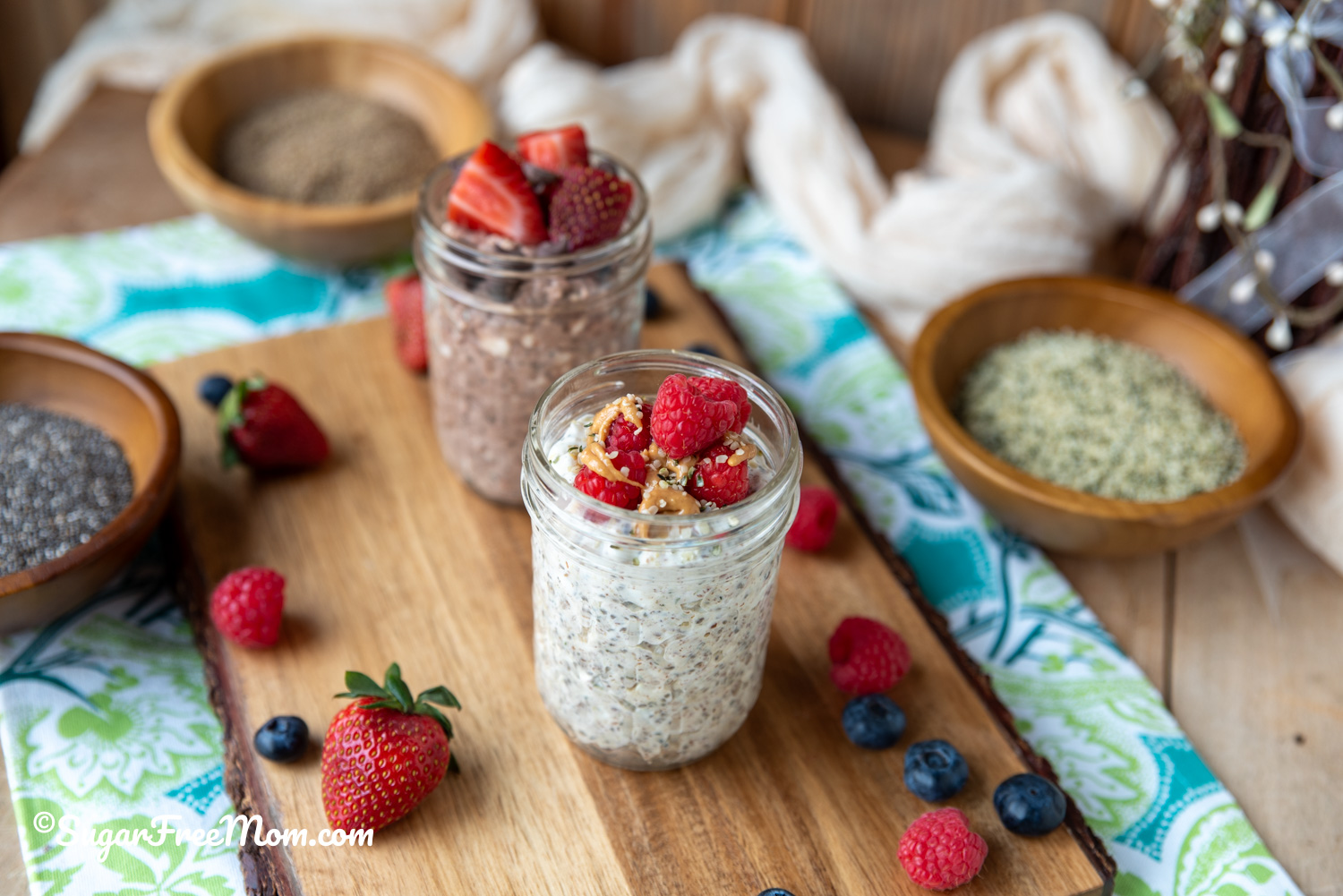
Chia and flaxseed
Nuts and seeds
Avocados
Fiber is valuable for digestion, cholesterol, blood sugar, and feelings of fullness.
Increase fiber gradually and drink enough water. Adding too much too quickly can cause gas, bloating, or other gastrointestinal discomfort.
Include resistant starch
Resistant starch is a form of carbohydrate that resists digestion in the small intestine. It travels farther through the gastrointestinal tract, where gut bacteria can ferment it.
Sources may include:
Beans and lentils
Slightly green bananas
Oats
Barley
Certain cooked-and-cooled potatoes, or rice
Foods or products containing resistant maltodextrin
Resistant starch supports gut health, insulin sensitivity, and short-chain fatty-acid production.
Choose satisfying sources of fat
Unsaturated fats provide another nutrient signal within a mixed meal.
Helpful choices include:
Extra-virgin olive oil
Avocado
Olives
Nuts and seeds
Salmon, sardines, and other fatty fish
Protein, fiber, and nourishing fats can work together to make a meal more satisfying and support steadier energy.
A review of nutritional GLP-1 mechanisms identified amino acids, unsaturated fatty acids, and compounds produced through fiber fermentation as potential signals involved in natural GLP-1 secretion. (Nutrition and GLP-1 review)
Food Choices and Meal Order for Blood Sugar and Appetite
What you eat matters, but the order in which you eat a mixed meal may also affect blood sugar, insulin secretion, and GLP-1.
When practical, try eating:
Non-starchy vegetables first
Protein and healthy fats next
Whole food carbohydrates afterward
In a small randomized crossover study, eating vegetables followed by protein and then rice stimulated a higher GLP-1 response and produced a lower post-meal glucose response than eating rice first. (PATTERN study)
You do not need to separate every meal into perfectly timed courses. Simply beginning with vegetables and protein before eating most of the starch may be a useful habit.
It is also important to mention that a lower-carbohydrate diet or keto diet is not required to support GLP-1. Whole food Carbohydrates can be part of a balanced meal, especially when they are paired with protein, fiber, and healthy fat.
Daily Habits That May Support GLP-1 Secretion
Food is only one part of the picture. Your activity, sleep, and daily routine also influence appetite, insulin sensitivity, blood sugar, and metabolic health.
Move your body consistently
Walking, strength training, cycling, swimming, and other forms of activity help improve insulin sensitivity and blood sugar regulation.
Emerging research suggests that regular exercise may also support the natural GLP-1 response. In an exploratory analysis of 195 adults who had lost weight, one year of structured exercise increased the participants’ late post-meal GLP-1 response compared with usual activity. (Exercise study)
You do not have to begin with an intense exercise program.
A walk after a meal, two or three weekly strength-training sessions, or gradually increasing your daily steps can be a realistic place to start.
Prioritize consistent sleep
Sleep helps regulate appetite signals, glucose metabolism, and the normal daily rhythm of digestive hormones.
Small human studies have found that acute sleep loss can delay or disrupt the usual GLP-1 response to a meal. (Sleep study)
A consistent bedtime, ending your eating 2-3 hours before bedtime, a dark sleeping environment, and reducing late-night light exposure can support better sleep and overall metabolic health.
Give new habits time
Natural GLP-1 support is not about finding one perfect food or supplement. It is about building a pattern that helps you feel satisfied, maintain steadier energy, and make intentional food choices.
Begin with one manageable change:
Add protein to breakfast
Eat one additional serving of vegetables
Replace a refined snack with a fiber-rich option
Take a short walk after dinner
Create a more consistent bedtime
Small habits become powerful when you repeat them.
Are Supplements Natural GLP-1 Agonists?
A true GLP-1 agonist binds to and activates the GLP-1 receptor.
Foods and nutritional supplements generally work differently. They provide nutrients or plant compounds that encourage your body’s own GLP-1 secretion, support fullness, or promote healthier blood sugar levels.
How Unimate and Balance Fit Into a Natural GLP-1 Lifestyle
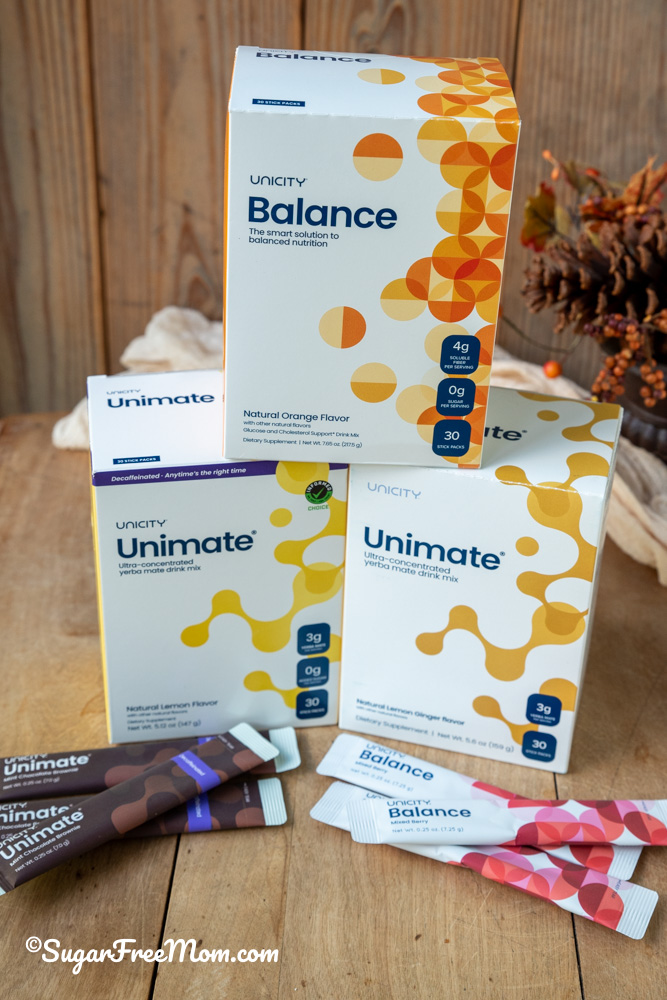
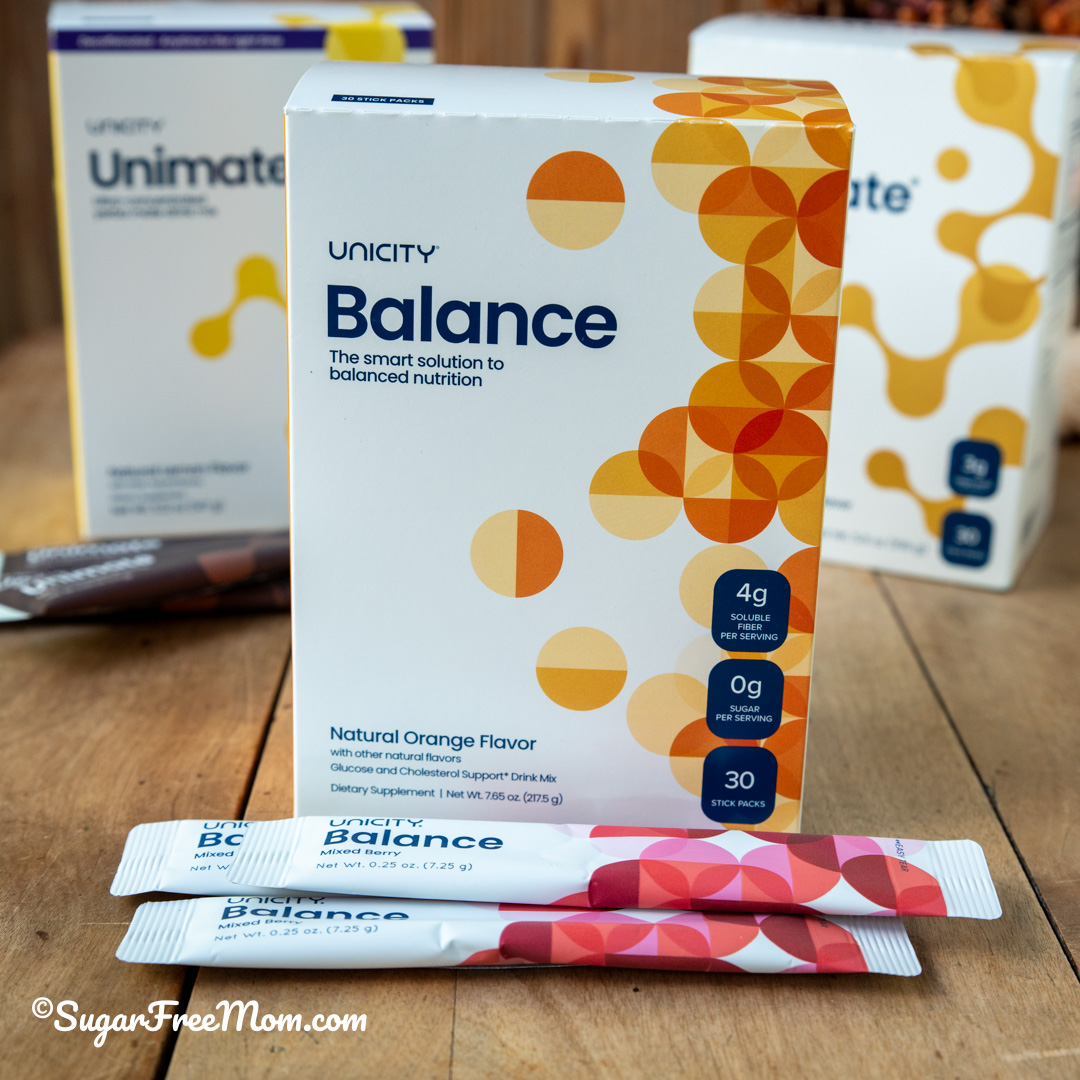
Unimate and Balance make up the Feel Great System. They can complement several of the habits discussed, particularly a routine centered on fiber, appetite awareness, meal satisfaction, and more intentional eating.
They are nutritional products-not prescription GLP-1 drugs.
Balance: soluble fiber before your meal
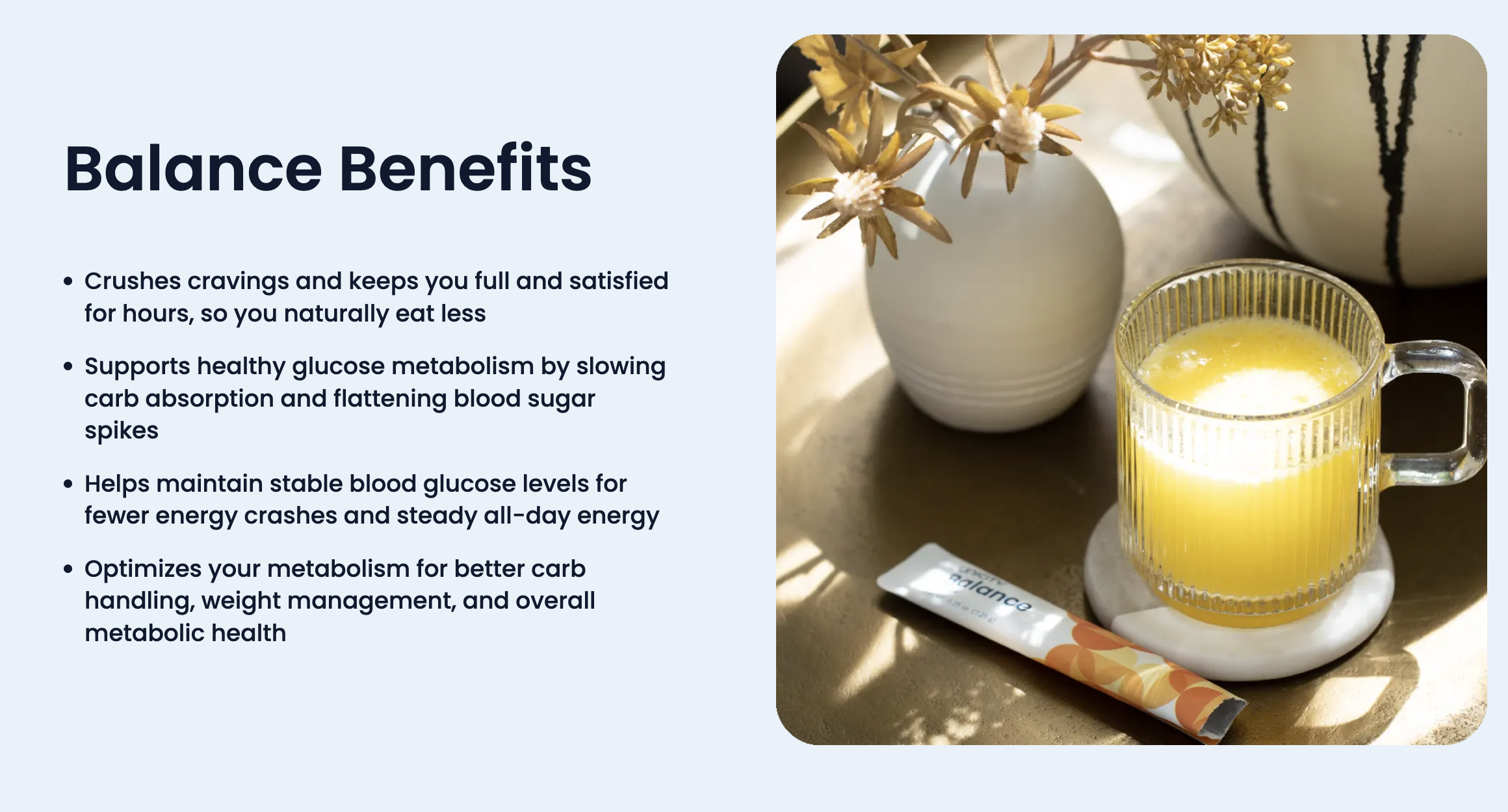
Balance is a pre-meal fiber drink made with a proprietary blend that includes five sources of fiber, plant-derived polysaccharides, plant extracts, phytosterols, vitamins, and minerals.
Its viscous soluble fiber thickens when mixed with water. This helps slow the movement of food from the stomach and support a more gradual digestion and absorption of carbohydrates.
Balance is designed to:
Support normal, healthy blood sugar levels
Slow the absorption and conversion of carbohydrates
Promote fullness after meals
Help curb appetite between meals
Support digestion and regularity
Support healthy cholesterol levels
Complement weight-management efforts
Balance also contains resistant maltodextrin. Unlike ordinary, rapidly digested maltodextrin, resistant maltodextrin resists digestion and functions more like soluble dietary fiber.
Using fiber before a meal aligns with the broader goal of promoting fullness, supporting a steadier post-meal response, and improving overall fiber intake.
Balance is generally mixed with 8–10 ounces of water and taken immediately before or with one or two of your largest meals. Drink it promptly because the fiber begins thickening quickly.
Unimate: focus, energy, and appetite support
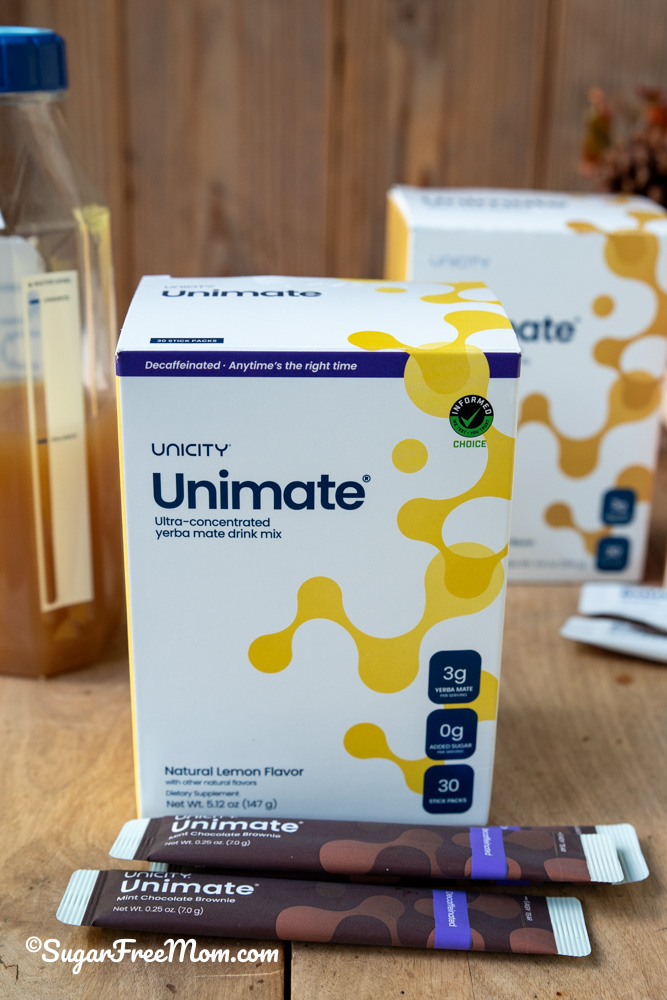
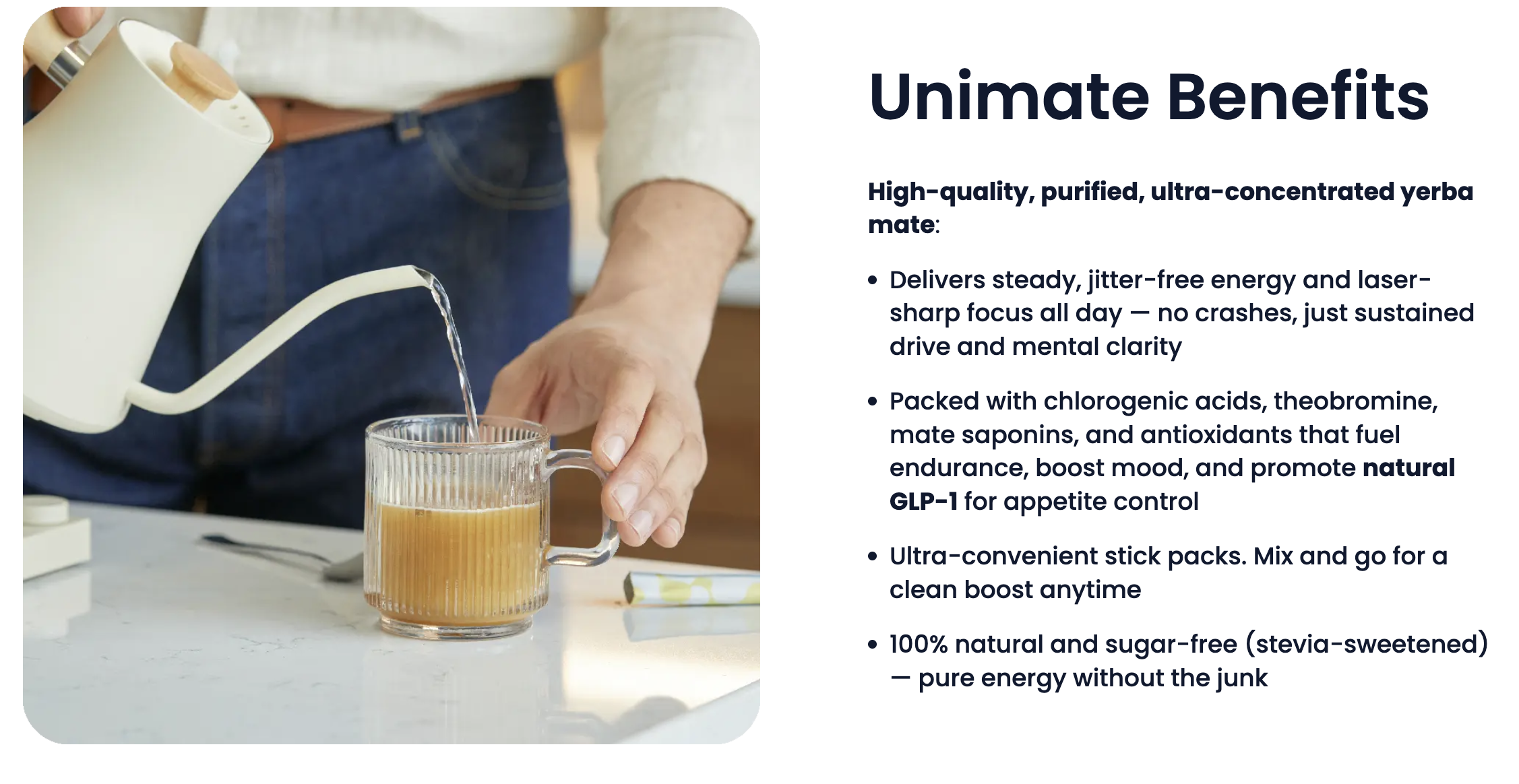
Unimate is a concentrated yerba mate drink containing naturally occurring plant compounds, including chlorogenic acids, theobromine, mate saponins, and antioxidants.
It is designed to support:
Mental clarity and concentration
Calm, sustained energy
Mood and feelings of well-being
Satiety and appetite control
Fewer cravings
Healthy weight-management efforts
A small company-conducted crossover study included 18 healthy adults. After drinking Unimate, participants reported greater fullness at the 15-minute mark and ate approximately 150 fewer calories at a later test meal than after drinking water.
Original Unimate contains naturally occurring caffeine. Lower-caffeine and decaffeinated options are available for people who are sensitive to caffeine.
My husband and I enjoy the original lemon Unimate during the morning hours and until we break our fast at lunchtime. In the afternoon we use the decaffeinated lemon Unimate and sip on that all afternoon until dinner.
We then take Balance before our dinner meal. We’ve tried Apple, Orange and Wild Berry flavors, all delicious!
Why the products are used together
Unimate is generally used earlier in the day to support focus, energy, satiety, and appetite control between meals.
Balance is taken immediately before or with a meal to provide fiber, support healthy carbohydrate digestion, and promote fullness afterward.
Together, they can help create a simple daily rhythm:
Begin the day with Unimate
Take Balance before or with one or two larger meals
Include protein, vegetables, and nourishing fats
Give your body more time between meals instead of constantly grazing
Pay attention to your appetite, fullness, cravings, and energy
Continue supporting yourself with hydration, movement, and sleep
The goal is not deprivation. It is to feel more in control of your choices and less controlled by food cravings, brain fog, and energy crashes.
Natural GLP-1 vs. Prescription GLP-1 Medications
Prescription GLP-1 medications are not the same as increasing your body’s natural GLP-1 through food and lifestyle.
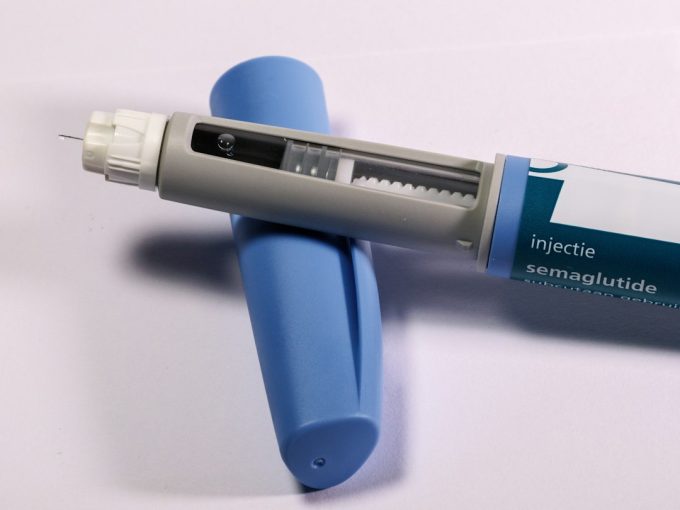
Semaglutide is a GLP-1 receptor agonist. Brand names include Ozempic and Wegovy, although the products have different approved uses.
Tirzepatide, sold under brand names including Mounjaro and Zepbound, acts on both GIP and GLP-1 receptors.
These medications are designed to resist rapid breakdown and provide a much stronger, longer-lasting receptor signal than your natural GLP-1.
They may be prescribed for conditions such as type 2 diabetes, obesity, or overweight with certain related health conditions. They are not appropriate for everyone, and there is no single “best GLP-1” for every person.
Common side effects can include:
Nausea
Vomiting
Diarrhea
Constipation
Abdominal discomfort
More serious risks and contraindications are described in each medication’s prescribing information.
GLP-1 medications should be obtained with a prescription and filled through a state-licensed pharmacy. The FDA warns that unapproved versions do not undergo the same review for safety, effectiveness, and quality. (FDA consumer warning)
Do not discontinue or change a prescription GLP-1 medication because of something you read online. Speak with the clinician managing your care.
Is Increasing GLP-1 Enough for Weight Loss and Weight Management?
GLP-1 is only one part of a complex appetite and metabolism system.
Your weight can also be influenced by:
Total food intake
Protein and fiber intake
Muscle mass
Physical activity
Sleep
Stress
Insulin sensitivity
Menopause and other hormonal changes
Medications
Genetics
Medical conditions
Supporting natural GLP-1 may help with hunger and fullness, but it does not guarantee weight loss.
The most sustainable approach combines satisfying food, adequate protein, fiber, movement, sleep, and realistic habits you can continue. Supplements can serve as tools, but they cannot replace the foundations of metabolic health.
Frequently Asked Questions About Natural GLP-1
Where is GLP-1 found naturally?
GLP-1 is produced inside your body, primarily by specialized cells in the intestinal tract. It is not a nutrient stored inside one particular food.
Food provides the signals that cause your body to release GLP-1.
What naturally increases GLP-1?
Protein, fermentable fiber, certain fats, and mixed meals can stimulate natural GLP-1 secretion.
Regular exercise may also improve the post-meal response, while adequate sleep supports the normal regulation of appetite and metabolic hormones.
Can you get GLP-1 naturally?
Yes. Your body already produces GLP-1 after you eat.
What you cannot get naturally is the same prolonged receptor activity produced by prescription GLP-1 medications.
Are there natural GLP-1 agonists?
Protein, fiber, resistant starch, and certain plant compounds may support the release of your own GLP-1.
Which natural GLP-1 approach is best for weight loss?
The best-supported approach is a combination of protein-rich meals, fiber-rich plants, satisfying fats, regular movement, consistent sleep, and an eating pattern you can maintain.
The best plan will depend on your health, your consistency and ability to stay on your chosen food plan. But I believe, regardless of your chosen food plan or diet, the Feel Great products can truly help reduce snacking and cravings.
Do I have to fast to support GLP-1?
No. Fasting is not required.
Some people enjoy time-based eating because it creates more space between meals and reduces grazing. Others feel better eating at regular intervals.
My husband and I fast daily and skip breakfast naturally as we have found the Unimate to make it quite easy to fast until lunch.
Do I have to follow keto or avoid carbohydrates?
No. You do not need to follow keto or eliminate carbohydrates.
Pairing carbohydrates with protein, fiber, and healthy fat—and eating vegetables and protein first when practical—may support a steadier post-meal blood sugar response.
My husband is not consistent with low carb eating so these products have truly helped him to be able to enjoy the foods he likes but truly eat less.
Can I use Unimate and Balance if I take medication?
Speak with your healthcare professional before using these products if you are pregnant, nursing, managing diabetes or another medical condition, or taking prescription medication.
Unimate and Balance are nutritional supplements. They do not replace prescribed medication, medical care, or an individualized nutrition plan.
Can Someone Taking a GLP-1 Medication Use the Feel Great Products?
Yes. Unimate and Balance are nutritional supplements, not GLP-1 medications, and they may complement a person’s nutrition, appetite, energy, and weight-management goals.
Anyone taking a GLP-1 medication should show the product labels to their prescribing clinician or pharmacist before beginning.
The Feel Great products can serve as supportive tools for fiber intake, fullness, focus, energy, and healthier daily habits.
Ready to Build a Routine That Supports Appetite and Metabolic Wellness?
You do not have to overhaul your life overnight.
Begin with protein at breakfast, an extra serving of vegetables, a short walk after dinner, or a more consistent bedtime. Then build from there.
If you would like additional support with appetite, cravings, energy, fiber intake, or creating more space between meals, the Feel Great System offers a simple daily routine using Unimate and Balance.
If you’d love to hear more about the science and the way the products are used together, this youtube video is for you.
The Feel Great System is available for 25% off through my link, with the discount applying to eligible monthly orders, not just the first order.
The company also offers a 90-day money-back guarantee with qualifying app-tracking requirements at least 50% of the time.
You do not need another extreme plan. You need practical tools, sustainable habits, and support that helps you remain consistent.
Here’s to greater focus, steadier energy, fewer cravings, and feeling great!
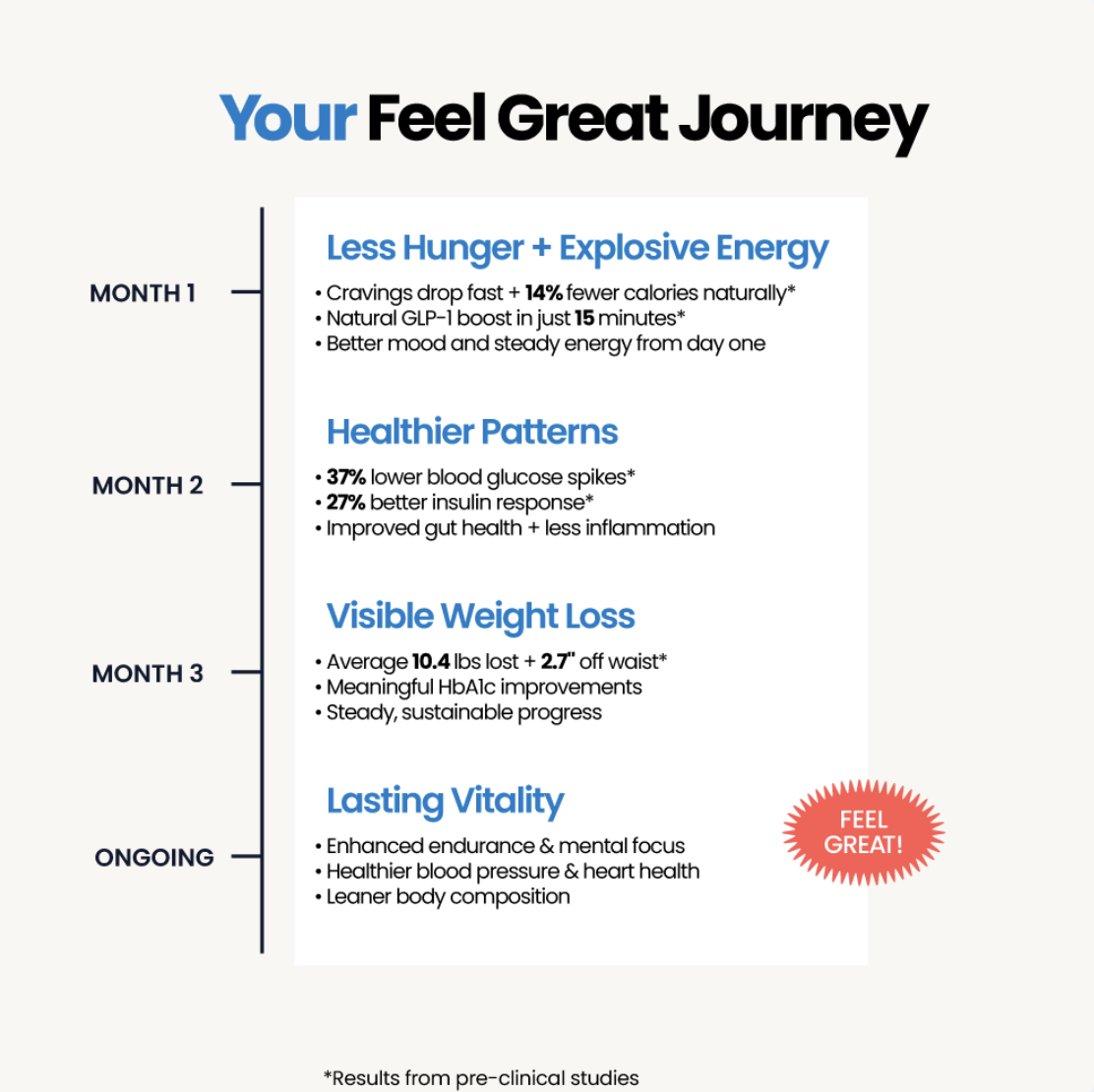
Personally, after one month my hubby has lost 2 inches off his belly and is able to fast daily with ease! I have noticed fullness at my meal taking balance and the mental clarity. I don’t even need coffee because my energy is through the roof!
I’ve also noticed myself snacking less. My trainer checks my body fat each month and after one month I lost 2% which is amazing since I am maintaining my healthy weight. To me this means, body composition is happening and I am excited!
Individual experiences will vary. These products are nutritional supplements and are not intended to diagnose, treat, cure, or prevent any disease. Consult a qualified healthcare professional before use if you have a medical condition, take medication, are pregnant or nursing, or have questions about whether these products are appropriate for you.
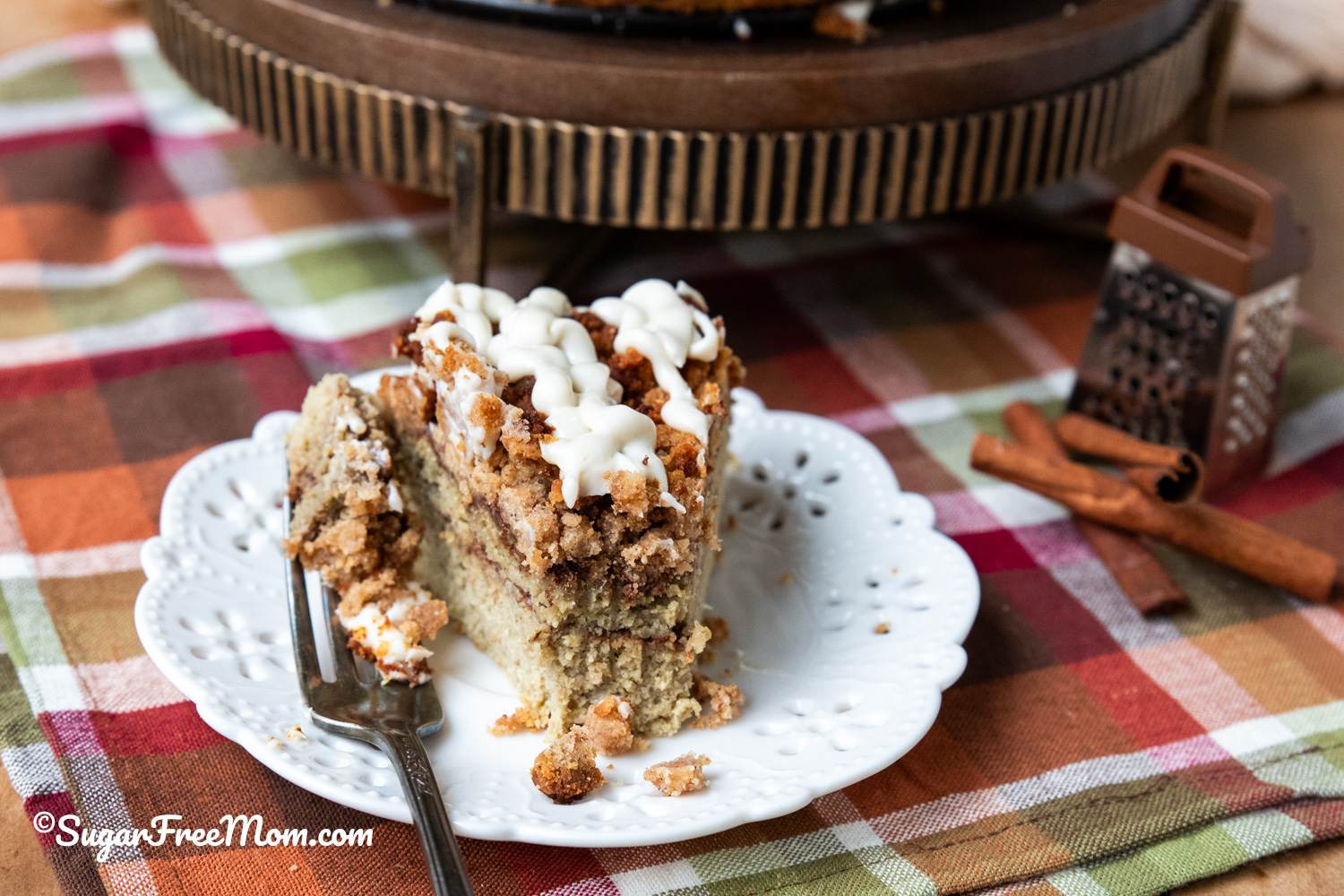
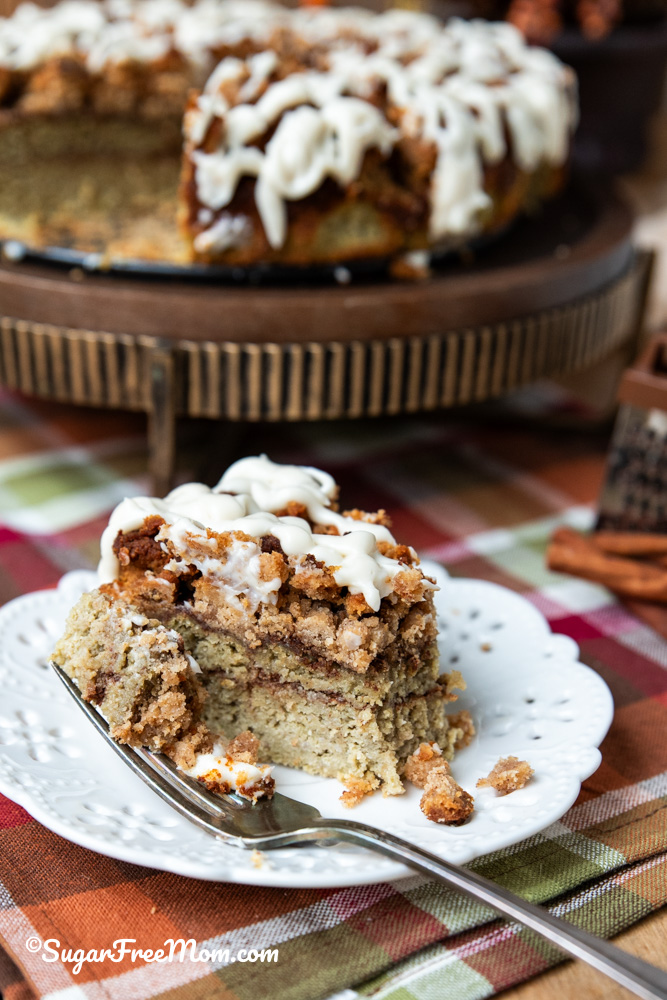
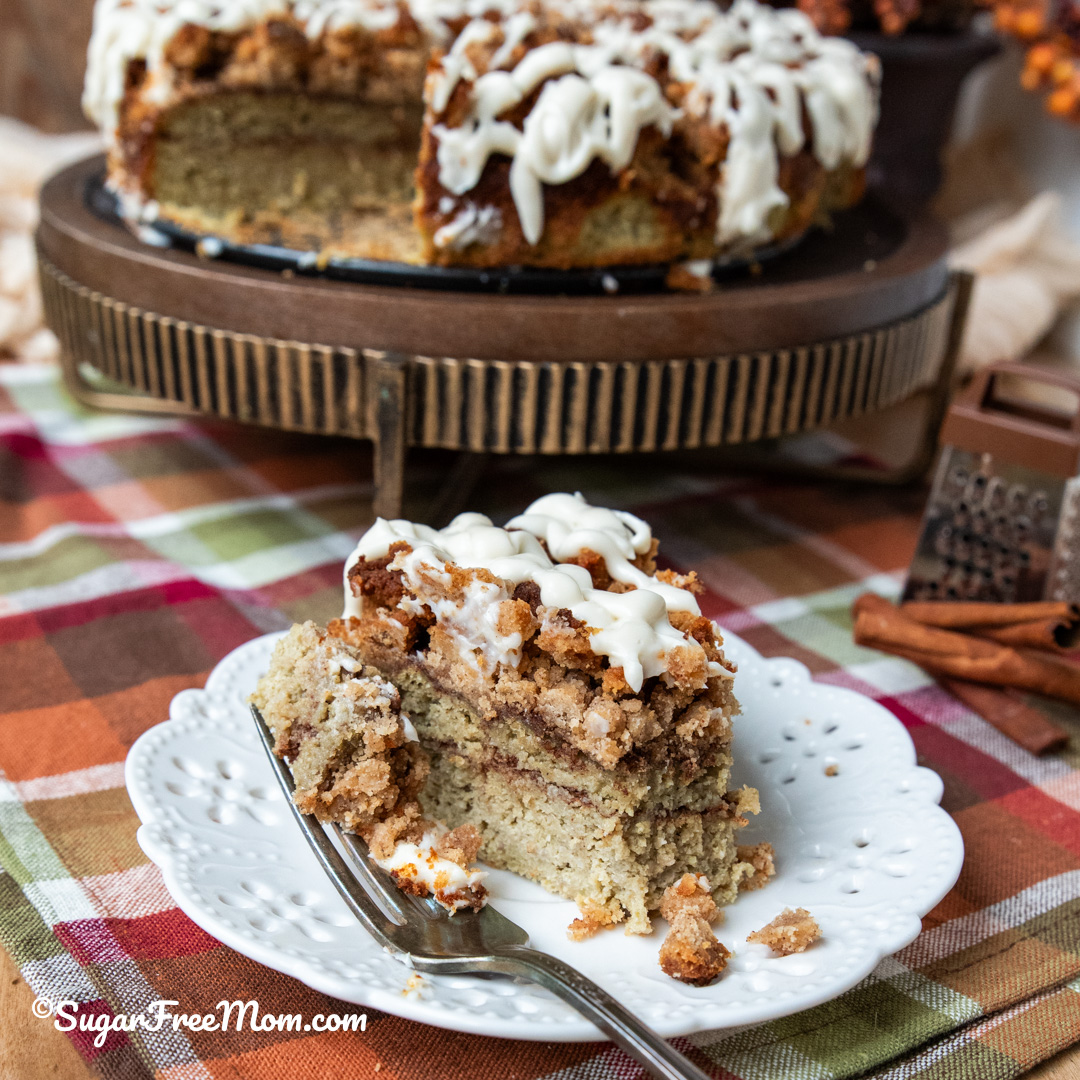
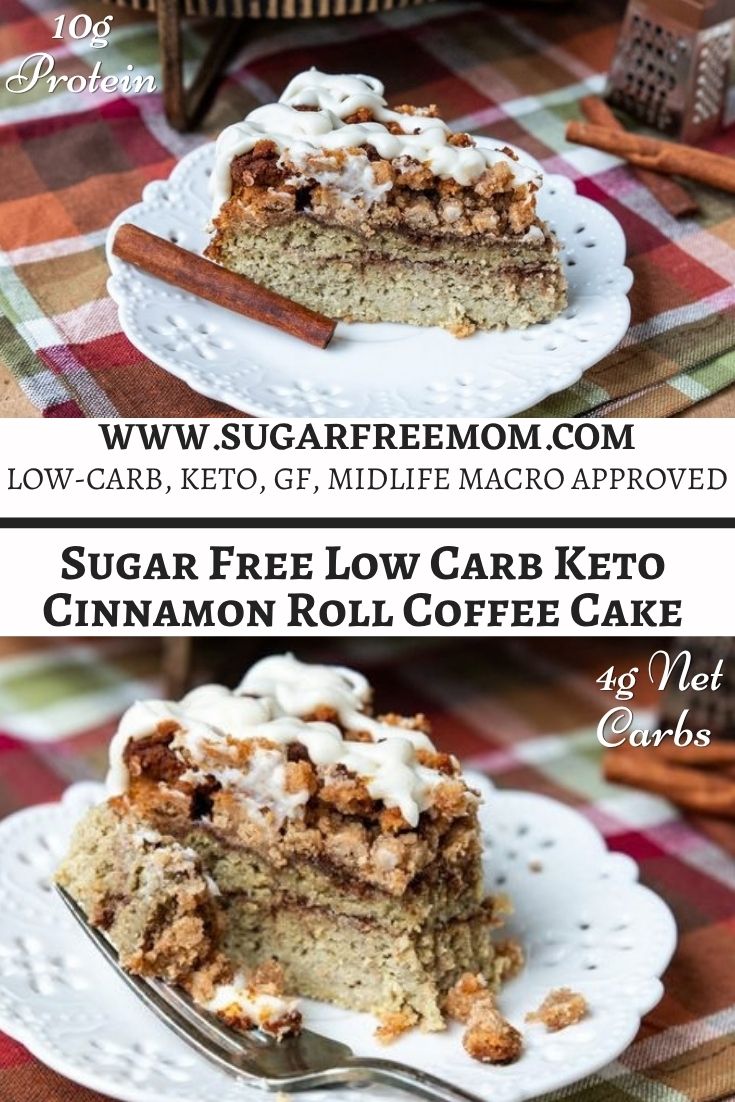
All the flavor of a cinnamon roll in an easy keto coffee cake! This sugar free, gluten free and nut free coffee cake has a cinnamon filling, streusel topping and creamy glaze with just 4 grams of net carbs per slice and 10 grams of protein.
Keto Coffee Cake
I made this brand-new Sugar Free Low Carb Keto Cinnamon Roll Coffee Cake over the weekend for my mom’s 81st birthday, and everyone loved it!
It has all the cozy flavor of a classic cinnamon roll, but there is no yeast, no rolling dough and no waiting for anything to rise.
A buttery cinnamon layer runs through the middle of a soft, tender coffee cake, while a cinnamon streusel and easy cream cheese glaze make every slice feel worthy of a celebration.
Best of all, this beautiful cake is sugar free, low carb, keto friendly, gluten free and made without almond flour. Each generous slice has 10 grams of protein and just 4 grams of net carbs!
Why You’ll Love This Keto Cinnamon Roll Coffee Cake
All the flavor of a cinnamon roll: You get a buttery brown-sweetener filling, plenty of cinnamon and a sweet cream cheese glaze in every slice.
No yeast required: The batter gets its lift from eggs and baking powder, so there is no kneading, rolling or rise time.
Low carb and keto friendly: Each slice has just 4 grams of net carbs.
Sugar free: Liquid vanilla stevia, monk fruit allulose brown sweetener and sugar-free maple syrup replace refined sugar.
Gluten free and almond flour free: Sunflower seed flour and coconut flour create a tender crumb without wheat flour, almond flour or ground almonds.
Perfect for sharing: One 8-inch cake makes 12 slices, ideal for a birthday, brunch, holiday breakfast or afternoon coffee.
What Is a Keto Cinnamon Roll Coffee Cake?
Cinnamon roll coffee cake combines two favorite treats in one easy recipe. It has the soft crumb and streusel topping of a traditional coffee cake, plus the warm cinnamon filling and cream cheese glaze you expect from a cinnamon roll.
Despite the name, most coffee cake does not contain coffee. It is called coffee cake because it is meant to be served with a cup of coffee or tea.
Traditional coffee cake is made with white flour and sugar, so it is usually too high in carbohydrates for a keto diet. This keto coffee cake uses sunflower seed flour, coconut flour and low carb sweeteners instead.
One slice has 10 grams of total carbohydrates and 6 grams of fiber, which comes to 4 grams of net carbs per serving.
It also provides 10 grams of protein. As always, check the labels on your sweeteners and sugar-free syrup because nutrition can vary between brands.
Nut Free Coffee Cake Without Almond Flour
Many keto cake recipes rely on almond flour, but this recipe is made with sunflower seed flour and coconut flour. That makes it a wonderful choice for anyone avoiding almonds or looking for a nut-free low carb dessert.
Sunflower seed flour has a mild taste and can create a soft, satisfying cake crumb. If a sunflower seed flour cake ever develops a harmless green tint after baking, do not worry.
That is a natural reaction that can occur between sunflower seeds and a leavening ingredient such as baking powder. It does not affect the flavor.
If you are baking for someone with an allergy, always check every ingredient label for possible cross-contact. Some schools and allergy organizations also classify coconut separately from tree nuts, while others do not, so use the ingredients that are appropriate for your family’s needs.
Allulose works especially well in baked goods because it keeps them moist. A brown monk fruit and erythritol blend can also be used, but erythritol may create a slightly firmer texture and a cooling sensation once the cake has chilled.
Sweetener brands vary greatly in sweetness, so use the conversion instructions on your package rather than assuming every product measures cup for cup.
In a small bowl, stir together the monk fruit allulose brown sweetener, cinnamon and sunflower seed flour. Keep the melted butter in a separate bowl so it is ready when you assemble the cake.
Make the Streusel Topping
Combine the coconut flour, melted and cooled unsalted butter, optional sugar-free maple syrup, cinnamon and a pinch of salt. Mix until moist crumbs form, then set the streusel aside.
Mix the Cake Batter
Preheat your oven to 350 degrees F. Line the bottom of an 8-inch round springform pan with parchment paper, then grease the paper and sides of the pan with butter.
In a large mixing bowl, whisk the room-temperature eggs until pale and fluffy. Add the melted and cooled butter, Greek yogurt, heavy cream or unsweetened almond milk, vanilla extract and liquid stevia. Whisk until combined.
In a separate bowl, whisk together the sunflower seed flour, coconut flour and baking powder. Add the dry ingredients to the wet ingredients and blend until a smooth batter forms. Let the batter rest for 2–3 minutes so the coconut flour can absorb the liquid.
Layer the Cake
Spread half of the batter in the prepared pan and level it with a spatula.
Brush the surface with the reserved melted butter, then sprinkle the cinnamon filling evenly over the top, leaving about 1/2 inch clear around the edge.
Spoon the remaining batter over the cinnamon layer and spread it gently so the filling stays in place. Scatter the streusel topping evenly over the cake.
Bake and Cool
Bake for 45–50 minutes, checking the cake after 40 minutes. It is ready when a toothpick or thin skewer inserted in the center comes out clean or with just a few moist crumbs.
If the streusel is browning too quickly, loosely tent the pan with aluminum foil without sealing the edges.
The cake will feel very soft when it first comes out of the oven, but it will firm as it cools. Let it cool completely before releasing the springform pan.
Add the Cream Cheese Glaze
It’s totally optional but does make this taste more like a cinnamon roll.
When you are ready to serve, mix the softened cream cheese with the sugar-free maple vanilla syrup.
If needed, add unsweetened coconut milk 1 teaspoon at a time until the glaze is thin enough to drizzle. Spoon it over the completely cooled coffee cake.
Tips for the Best Keto Coffee Cake
Use room-temperature eggs and yogurt. They combine more easily and help the batter bake evenly.
Cool the melted butter. Hot butter can curdle the eggs or make the batter look separated.
Measure coconut flour carefully. It is extremely absorbent, and adding too much can make the cake dry.
Let the batter rest. A short 2–3 minute rest gives the coconut flour time to absorb the wet ingredients.
Leave a border around the filling. Keeping the cinnamon mixture away from the edge helps the two cake layers seal together.
Check the cake early. Ovens and pans vary, so start checking at 40 minutes with a toothpick.
Do not overbake. The hot cake is supposed to feel soft. It becomes firmer as it cools.
Cool before glazing. Cream cheese glaze will melt and disappear into a warm cake.
Ingredient Swaps and Substitutions
Can I Replace Sunflower Seed Flour With Almond Flour?
Finely ground blanched almond flour is the closest substitute for sunflower seed flour. You can try the same volume, but almond flour and sunflower seed flour do not always absorb liquid identically.
Let the mixed batter rest before deciding whether the consistency needs adjusting. The batter should be thick but spreadable.
Using almond flour means the recipe will no longer be nut free. Do not use coarse almond meal if you want the softest cake texture.
Can I Replace the Coconut Flour?
Coconut flour is uniquely absorbent and cannot be replaced cup for cup with almond flour, sunflower seed flour or another keto flour.
Changing it would require rebalancing the eggs, fat and other liquids, so I do not recommend replacing or omitting it in this recipe.
Can I Use Sour Cream Instead of Greek Yogurt?
Yes. Plain low fat Greek yogurt and sour cream can be used in equal amounts. Full-fat Greek yogurt should also work, although it may make the cake slightly richer. Do not use flavored or sweetened yogurt.
Can I Replace the Heavy Cream?
Yes. Use the same amount of unsweetened almond milk or unsweetened coconut milk in place of the heavy cream. Because the recipe needs only 1 tablespoon, the difference in the finished cake will be minimal.
Can I Use a Different Sweetener?
You can replace the liquid vanilla stevia with another concentrated liquid stevia or monk fruit sweetener, adjusting to taste and according to the manufacturer’s conversion chart.
For the filling, use a brown low carb sweetener that measures like the monk fruit allulose blend.
A brown erythritol blend will work, but it may make the filling slightly more granular once refrigerated.
Avoid replacing the concentrated liquid sweetener in the cake with a large amount of a granulated product because that can change the volume and texture of the batter.
Can I Use Regular Maple Syrup?
Regular maple syrup contains sugar and will increase the carbohydrates, so it is not recommended if you want this recipe to remain sugar free and keto friendly.
You can use another thick sugar-free maple syrup in the streusel and glaze. Check its nutrition label and sweetness before substituting.
Can I Make This Dairy Free?
This recipe contains butter, Greek yogurt or sour cream, heavy cream and cream cheese, so several swaps are required.
You can experiment with a firm plant-based butter, thick unsweetened dairy-free yogurt, unsweetened coconut milk and dairy-free cream cheese. Because those products vary in water and fat content, the texture may not be exactly the same as the original recipe.
Can I Use a Different Pan?
An 8-inch round springform pan makes it easy to release the delicate cake without turning it upside down and disturbing the streusel.
An 8-inch round cake pan may also work if it is deep enough and thoroughly lined, but removing the cake will be more difficult. A 9-inch pan will make a thinner cake that may bake more quickly, so begin checking it early.
Frequently Asked Questions
Does Cinnamon Roll Coffee Cake Contain Coffee?
No. This cinnamon roll coffee cake does not contain brewed coffee or espresso powder. The name refers to a style of cake traditionally served with coffee.
Why Is My Keto Coffee Cake Batter So Thick?
Keto cake batter made with coconut flour is usually thicker than conventional cake batter.
After the 2–3 minute rest, it should be thick but still easy to spread with a spatula. If it is dry and crumbly, first check that the coconut flour was measured correctly and that all wet ingredients were added.
How Do I Know When the Cake Is Done?
Insert a toothpick or thin skewer into the center of the cake. It should come out clean or with a few moist crumbs, but no wet batter. Start checking after 40 minutes. Do not judge the cake by touch alone because it will still be very soft while hot.
Why Did My Sunflower Seed Flour Cake Turn Green?
Sunflower seed flour can sometimes react with baking powder and could develop a green tint as it cools. The color is harmless and does not mean the cake is spoiled.
But as you can see from my photos, my cake is not green.
Can I Make This Coffee Cake Ahead?
Yes. Bake the cake a day ahead, cool it completely and store it covered in the refrigerator. For the neatest presentation, wait to add the cream cheese glaze until shortly before serving.
How Should I Store the Cake?
Because of the cream cheese glaze, store the cake in an airtight container in the refrigerator for up to 3 days. Let a chilled slice sit at room temperature for a few minutes before serving if you prefer a softer texture.
Can I Freeze Keto Coffee Cake?
Yes. Cool the cake completely, then freeze individual slices in a freezer-safe airtight container for up to 2 months. For the best appearance, freeze the cake without the glaze and add freshly made glaze after thawing overnight in the refrigerator.
What Can I Serve With Keto Cinnamon Roll Coffee Cake?
Serve it for breakfast, brunch or dessert with hot coffee or tea.
Make the cinnamon filling by combining the sweetener, cinnamon and sunflower seed flour. Keep the melted butter separate and set aside.
STREUSEL Topping
Mix all ingredients in a separate bowl until moist crumbs form. Set aside.
CAKE
Preheat the oven to 350 F / 180 C / 160 fan and line the bottom of an 8 inch (20cm) round springform baking pan with parchment paper. Grease the sides and baking paper with butter.
Add the eggs to a large mixing bowl and whisk until pale and fluffy.
Add the melted butter, yogurt, milk, vanilla extract and sweetener. Whisk until combined.
In another bowl, mix the sunflower seed flour, coconut flour and baking powder and salt. Add the dry to the wet ingredients and blend until combined. Let the batter stand for 2-3 minutes so the coconut flour can absorb the liquid.
ASSEMBLY
Add half the cake batter to your pan and level with a spatula. Brush the 2 tablespoons of melted butter, then sprinkle the cinnamon filling evenly over it, leaving about 1/2 inch clear around the edge.Spoon the remaining batter over the cinnamon layer and gently spread it.
Scatter the streusel over the top.
Bake for 45-50 minutes. Check after 40 minutes. If toothpick or skewer inserted in center is dry, it's done. If the top of the cake starts to brown, you can loosely cover with a sheet of tin foil, but don’t seal it.
Let the cake cool completely before releasing and removing the springform.
NOTE the cake will feel super soft once out the oven but it will firm up as it cools so try not to over bake.
CREAM CHEESE Glaze
Mix the softened cream cheese with syrup when you are ready to serve and drizzle over the cooled cake. Add milk a teaspoon at a time until mixture is drizzleable.
STORAGE
Fridge for 3 days in an airtight container or freezer for 2 months.
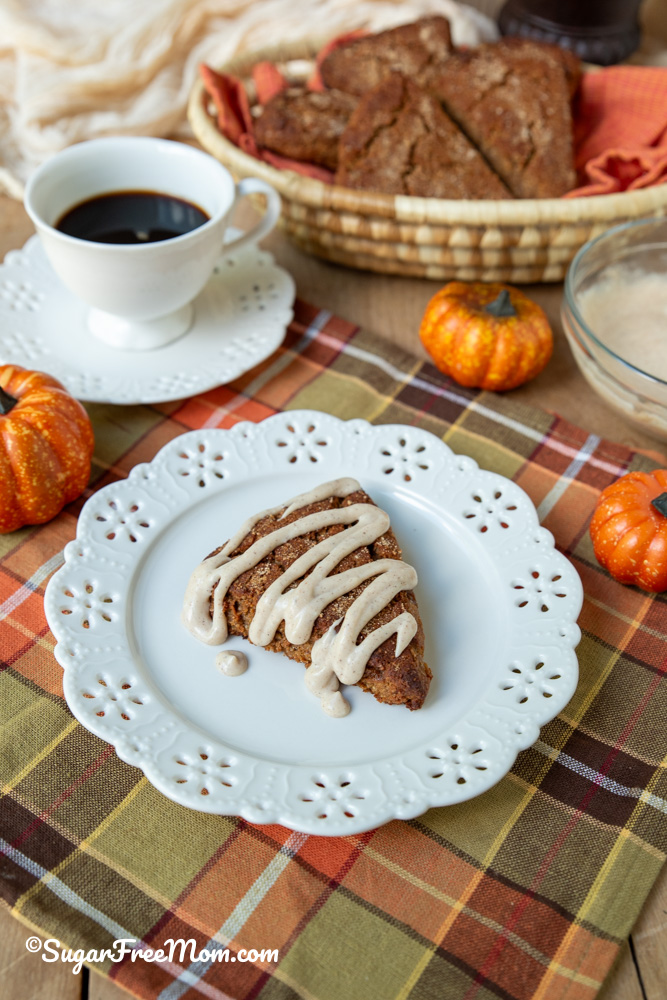
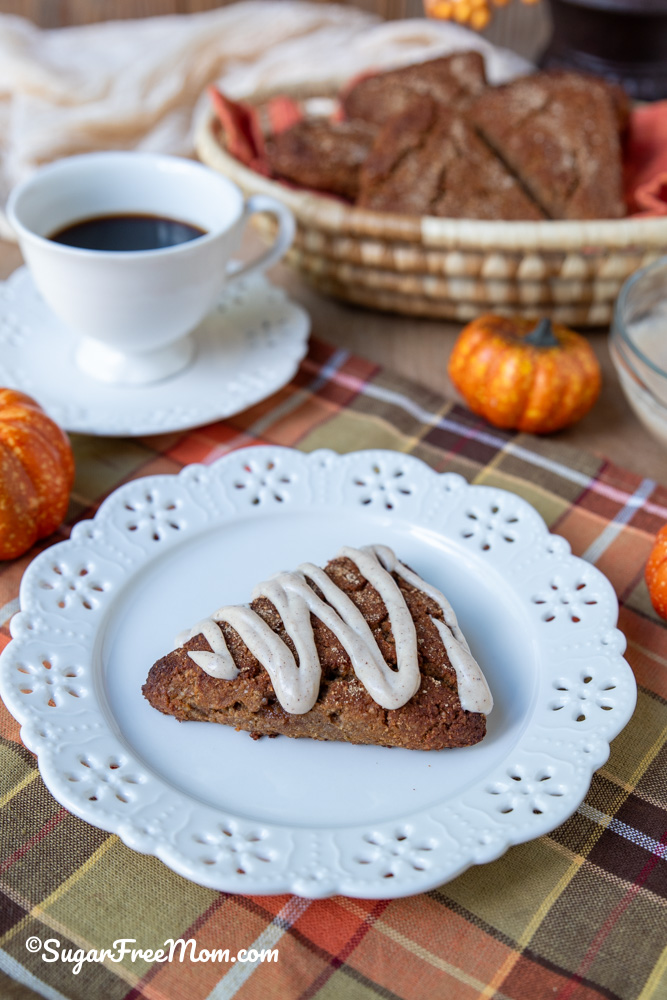
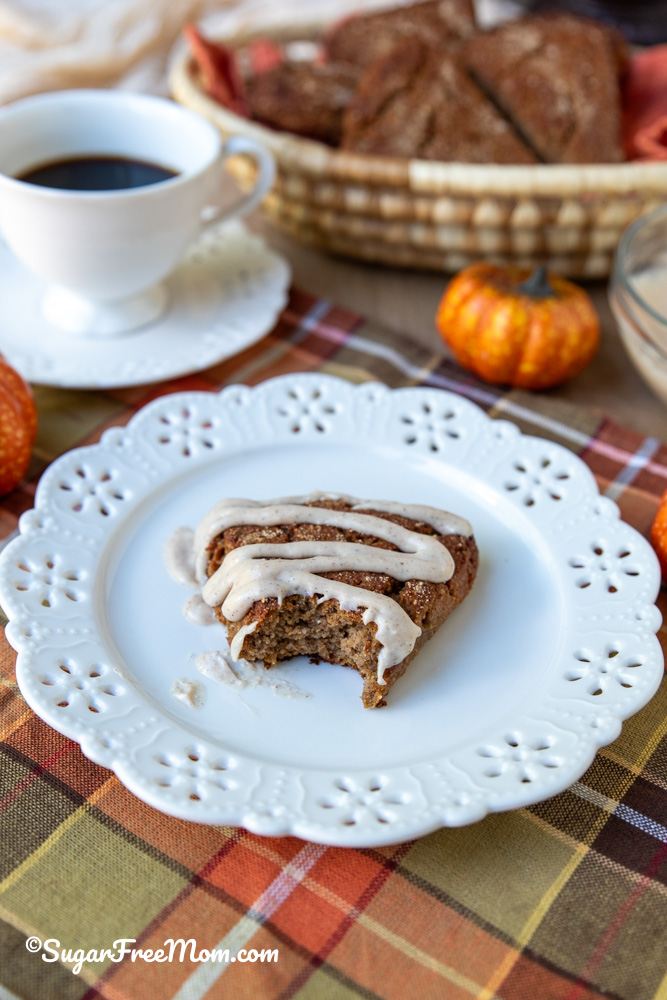
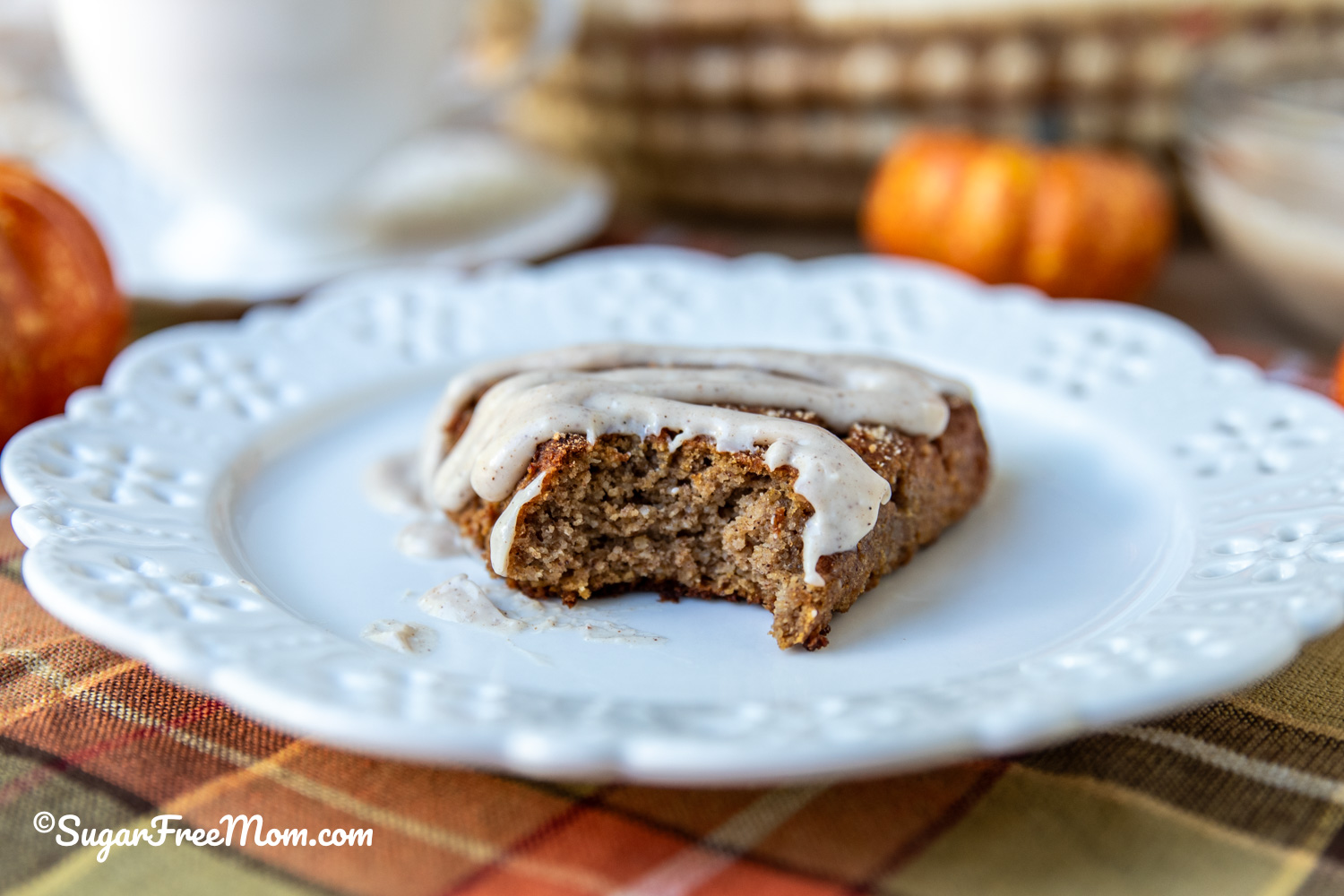
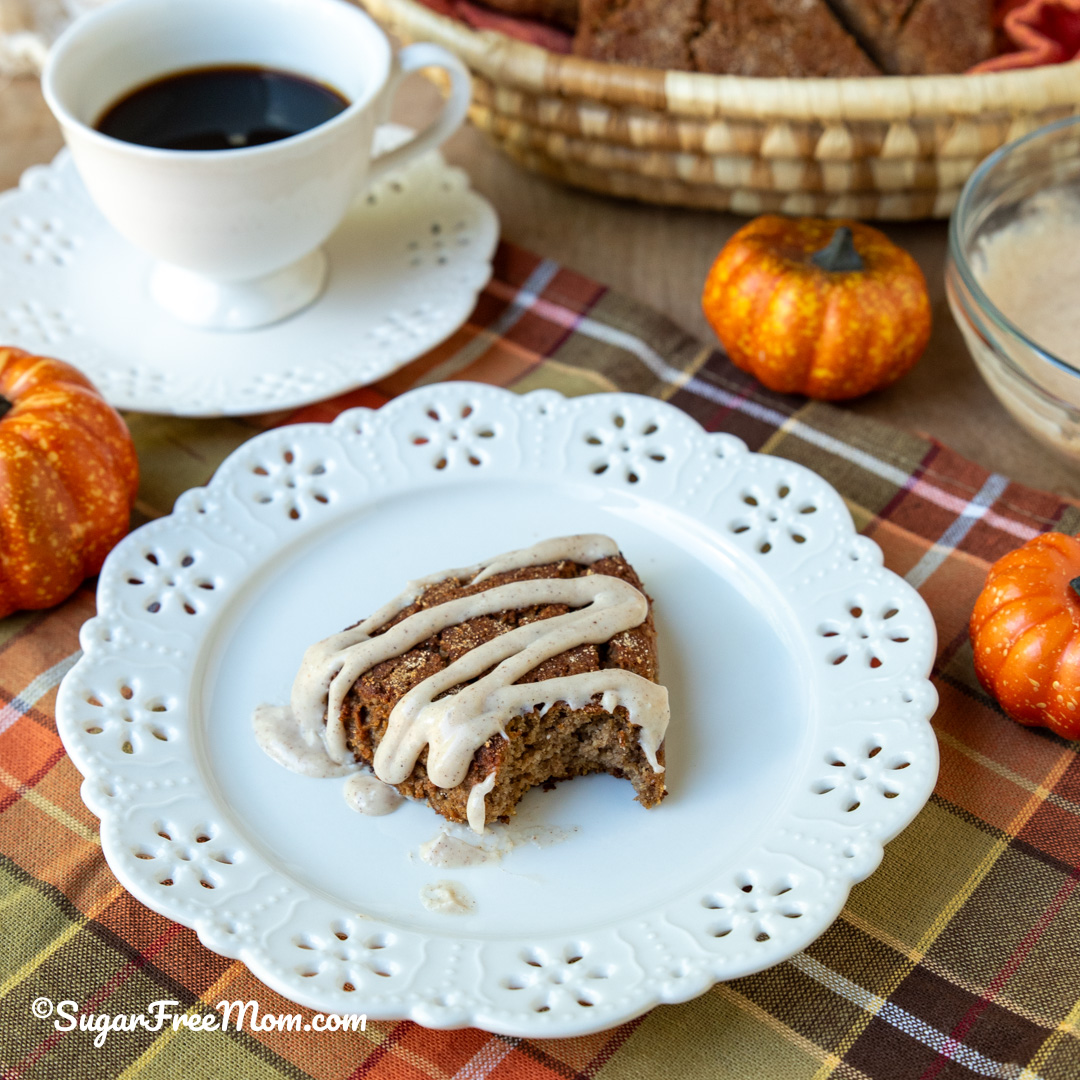
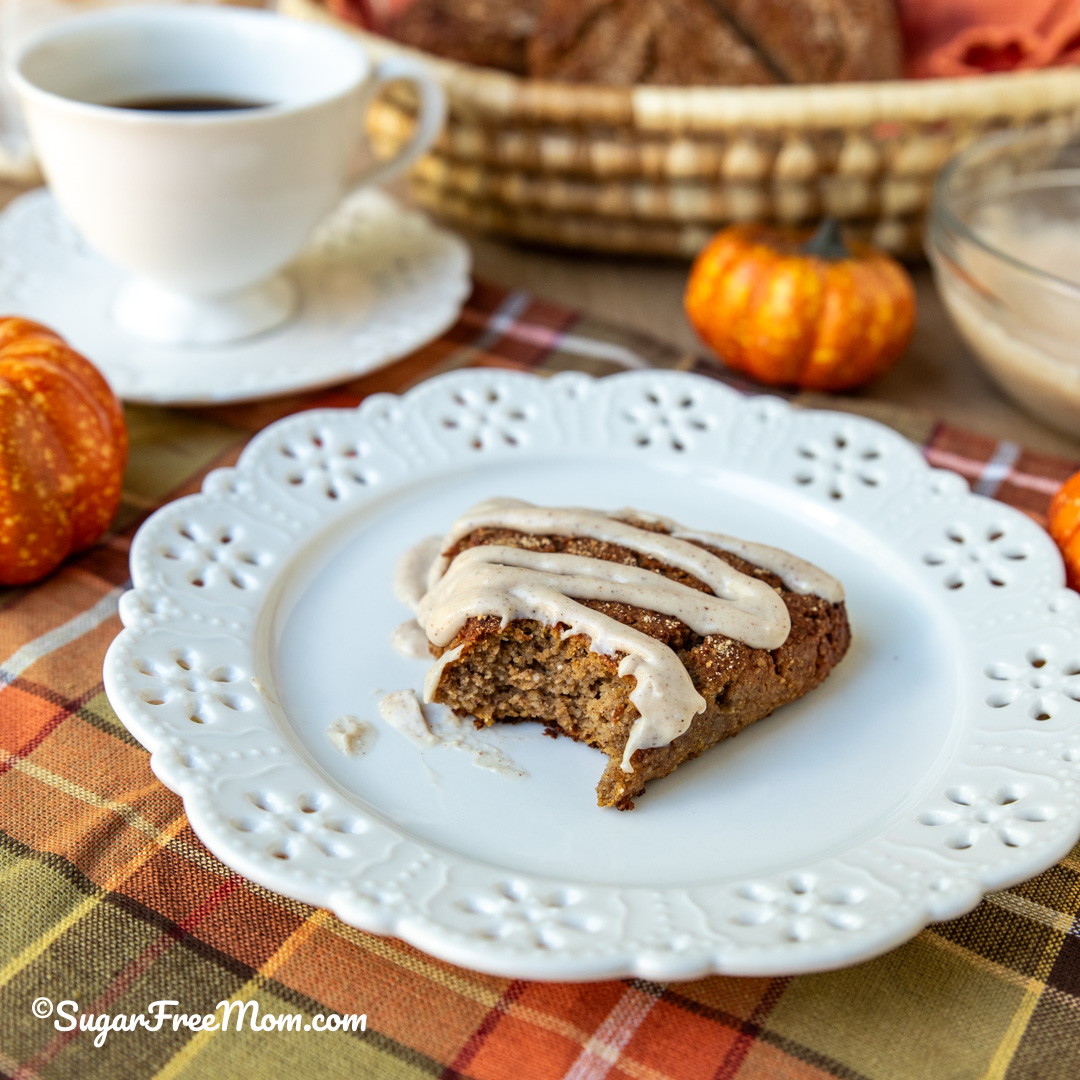
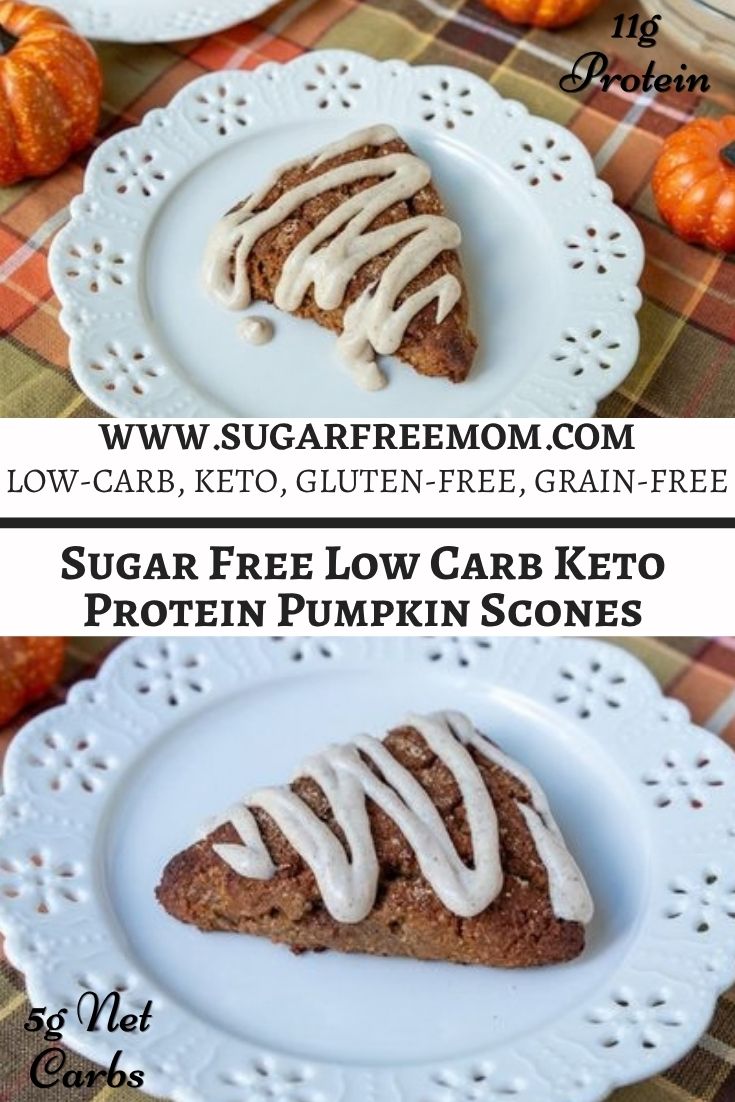
These Sugar-Free Low Carb Keto Protein Pumpkin Scones are soft and tender inside, lightly crisp around the edges and filled with cozy pumpkin spice flavor. Each satisfying scone has 11 grams of protein, making this an easy fall breakfast or afternoon snack when you want a delicious treat without added sugar.
Keto Protein Pumpkin Scones
If you’re a fan of pumpkin recipes at this time of year like I am, this simple recipe gives you all the flavor of a bakery-style pumpkin scone in a gluten-free, low carb option.
Ricotta cheese keeps the dough moist without heavy cream, while unflavored whey protein powder adds protein without overpowering the pumpkin, maple and warm spices.
Enjoy one as-is, add the optional maple cream cheese glaze, or serve it with butter or a little sugar-free jam. However you serve it, every bite tastes like fall!
Why You’ll Love These Keto Pumpkin Scones
Low carb and keto friendly: Each unglazed scone has 5 grams of net carbs.
High protein: You get 11 grams of protein in each serving.
Easy to prepare: The dough comes together in one large bowl for the dry ingredients and a second bowl for the wet mixture.
Are Pumpkin Scones Keto?
Traditional scones are usually made with wheat flour and sugar, so they can be high in carbs.
These keto scones use a blend of sunflower seed flour, coconut flour, unflavored whey protein powder and low carb sweeteners instead.
The result is a tender gluten-free scone with 9 grams of total carbohydrates and 4 grams of fiber.
Subtracting the fiber leaves 5 grams of net carbs per scone. The optional glaze is not included in the nutritional facts, so the exact carb count of a glazed scone will depend on the sugar-free maple syrup you use.
The Best Pumpkin Puree for Keto Scones
Use plain, unsweetened canned pumpkin puree for this recipe. Do not use canned pumpkin pie filling, which usually contains added sugar and other ingredients.
Pumpkin puree provides color, moisture and pumpkin flavor, but using too much can make low carb dough heavy or wet. The measured 1/3 cup in this recipe gives the scones pumpkin flavor while helping them hold their shape.
A Gluten-Free Scone Without Almond Flour
Many low carb recipes use almond flour, or a combination of almond flour and coconut flour.
My youngest son has a tree nut and peanut allergy so I try my best to use alternatives to almond flour. These keto pumpkin scones use sunflower seed flour instead, making them a wonderful option for anyone who needs a gluten-free and nut-free recipe.
Sunflower seed flour has a mild flavor and works well with the small amount of coconut flour in this dough. Sunflower seed flour can be swapped evenly with almond flour if you prefer.
Coconut flour absorbs a lot of moisture, so it cannot be swapped cup-for-cup with sunflower seed flour or almond flour. For the best texture, use the specific amounts listed in the recipe and weigh the gluten-free flours when possible.
What Does Protein Powder Do in This Recipe?
Unflavored whey protein powder helps give these low carb scones more structure while adding 11 grams of protein per serving. It also keeps the recipe from tasting overly sweet.
Different protein powders absorb moisture differently. A plant-based protein powder or collagen powder may change the texture of the dough and the finished scones, so unflavored whey protein is recommended for the best result.
Pumpkin Pie Spice Flavor
Pumpkin pie spice brings the classic combination of cinnamon, ginger, nutmeg and cloves to these scones. My homemade pumpkin pie spice recipe is an easy option, but your favorite store-bought blend will also work.
Maple extract complements the pumpkin spice without adding sugar. If you don’t have it, vanilla extract is a delicious substitute.
How to Make Keto Protein Pumpkin Scones
Combine the Dry Ingredients
Preheat the oven to 375 degrees F and line a baking sheet with parchment paper or a silicone baking mat.
In a large bowl, whisk together the sunflower seed flour, coconut flour, whey protein powder, brown sweetener, baking powder, pumpkin pie spice, xanthan gum and salt. Whisking before adding the wet ingredients helps distribute the baking powder, spices and xanthan gum evenly.
Add the Cold Butter
Grate the frozen butter directly into the dry ingredients and toss gently to coat the small pieces.
Cold butter is one of the secrets to a tender scone. If it begins to soften while you work, place the mixture in the fridge for a few minutes.
This recipe was developed with butter. Coconut oil will behave differently in the dough and has not been tested as a direct replacement.
Mix and Rest the Dough
In a separate bowl, blend the ricotta cheese, pumpkin puree, egg, maple or vanilla extract, and liquid sweetener.
Fold the wet mixture into the dry ingredients until a soft dough forms. Allow the dough to rest for 10 minutes so the coconut flour and xanthan gum can absorb moisture.
Shape, Chill and Bake
Place the dough on the prepared sheet pan and shape it into a 7-inch circle about 1 inch thick. Cut the circle into 8 equal wedges, then refrigerate for 15 minutes.
Transfer the baking sheet to the oven and bake for 22-24 minutes, or until a toothpick inserted into the center of a scone comes out clean. Let the scones cool for at least 10 minutes before serving or adding glaze.
Optional Sugar-Free Maple Glaze
The scones are flavorful enough to enjoy without a topping, but the maple glaze makes them feel extra special.
Beat the softened cream cheese, sugar-free maple syrup and cinnamon together until smooth. Once the scones have cooled, use a spoon to drizzle the glaze over the tops.
For the smoothest glaze, make sure the cream cheese is at room temperature.
This cream cheese glaze does not need powdered sweetener, heavy cream or coconut cream. If your preferred sugar-free maple syrup is especially thick, add it gradually until the glaze reaches your desired consistency.
Tips for the Best Low Carb Scones
Measure carefully. Coconut flour is highly absorbent, and even a small amount too much can make the scones dry.
Keep the butter cold. Frozen, grated butter creates little pockets throughout the dough and improves the final texture.
Let the dough rest. The 10-minute rest gives the flour mixture time to absorb the wet ingredients.
Chill before baking. A short rest in the fridge helps the wedges hold their shape in the oven.
Do not overbake. Begin checking at 22 minutes. The scones are ready when a toothpick comes out clean.
Cool before glazing. Warm scones will melt the cream cheese glaze instead of holding a pretty drizzle.
Frequently Asked Questions
What Is the Difference Between Traditional Scones and Keto Scones?
Traditional scones are generally made with wheat flour and sugar.
Keto scones replace those high-carb ingredients with low carb flours and sugar-free sweeteners. Because gluten-free flours behave differently from wheat flour, keto scone dough is often softer and benefits from resting and chilling before baking.
Can I Replace the Sunflower Seed Flour With Almond Flour?
Sunflower seed flour is often used as a nut-free alternative to almond flour, but the two may not behave exactly the same in every recipe. The amounts can be evenly exchanged.
This recipe was developed with sunflower seed flour, so using almond flour may change how much moisture the dough absorbs and alter the finished texture.
Can I Use Fresh Pumpkin Instead of Canned Pumpkin?
Plain homemade pumpkin puree may work, but it needs to have a thick consistency similar to canned pumpkin. Watery puree can make the dough too soft. For the most consistent results, use unsweetened canned pumpkin puree.
Why Is My Scone Dough Soft?
This is meant to be a soft dough. Let it rest for the full 10 minutes so the coconut flour and xanthan gum can absorb liquid.
After shaping, refrigerate it for 15 minutes before you bake the scones. Avoid adding extra flour since too much can make the scones dry.
Can I Use a Different Sweetener?
You may use another low carb brown sugar replacement in the dry ingredients and liquid monk fruit in place of the pumpkin stevia.
Sweeteners vary in strength and volume, so use the conversion recommended for the brand you choose. A granulated sweetener may also produce a slightly different texture from an allulose blend.
How Many Calories and Net Carbs Are in Each Scone?
One unglazed scone has 180 calories, 11 grams of protein, 9 grams of total carbohydrates, 4 grams of fiber and 5 grams of net carbs.
The optional maple glaze is not included in these nutritional facts.
How Should I Store Pumpkin Scones?
Store the unglazed scones in an airtight container at room temperature for up to 3 days. If you add the cream cheese glaze, keep them covered in the fridge.
Allow a chilled scone to come closer to room temperature before serving, or warm an unglazed one briefly for a softer texture.
Can I Freeze Keto Pumpkin Scones?
Yes. Once completely cool, place the scones in a freezer-safe airtight container with parchment paper between layers.
For the best results, freeze them without the glaze and add it after thawing.
These Sugar-Free Low Carb Keto Protein Pumpkin Scones are soft and tender inside, lightly crisp around the edges and filled with cozy pumpkin spice flavor. Each satisfying scone has 11 grams of protein, making this an easy fall breakfast or afternoon snack when you want a delicious treat without added sugar.
Preheat the oven to 375° F and line a baking sheet with parchment paper or a silicone baking mat.
In a large bowl whisk together all of dry the ingredients, except frozen butter listed. In another bowl, blend the wet ingredients together, set aside.Grate the frozen butter into the dry ingredients and toss gently. Fold the wet ingredients into the dry and it becomes a soft dough. Rest 10 minutes.
Place the dough onto the sheet pan in the shape of a circle about 7-inch round and 1 inch thick. Cut into 8 pieces. Separate gently. Refrigerate 15 minutes.
Transfer to the oven and bake for 22-24 minutes or until a toothpick inserted into the center of a scone comes out clean. Cool for 10 minutes before serving
Store at room temperature in an airtight container for up to 3 days.
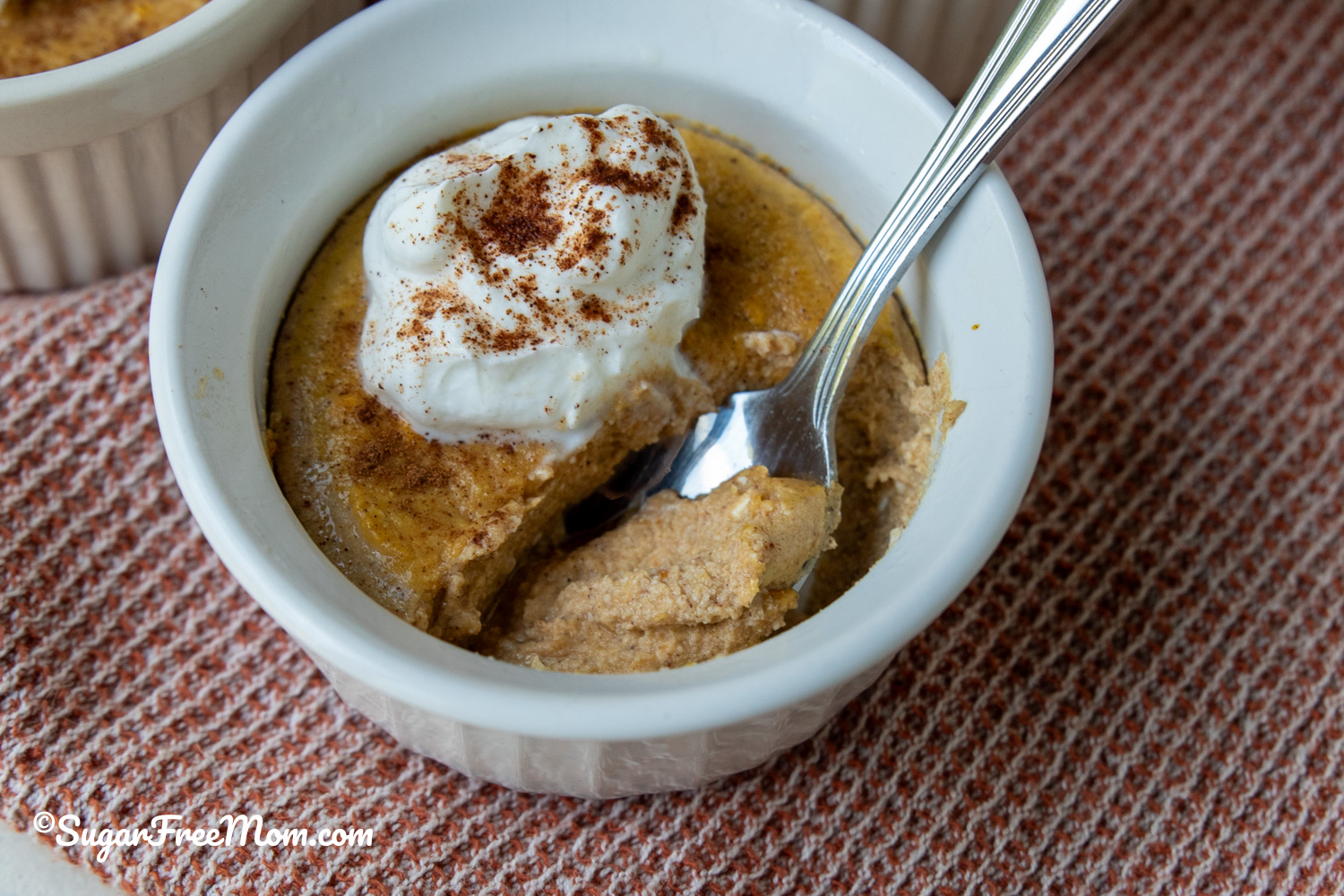
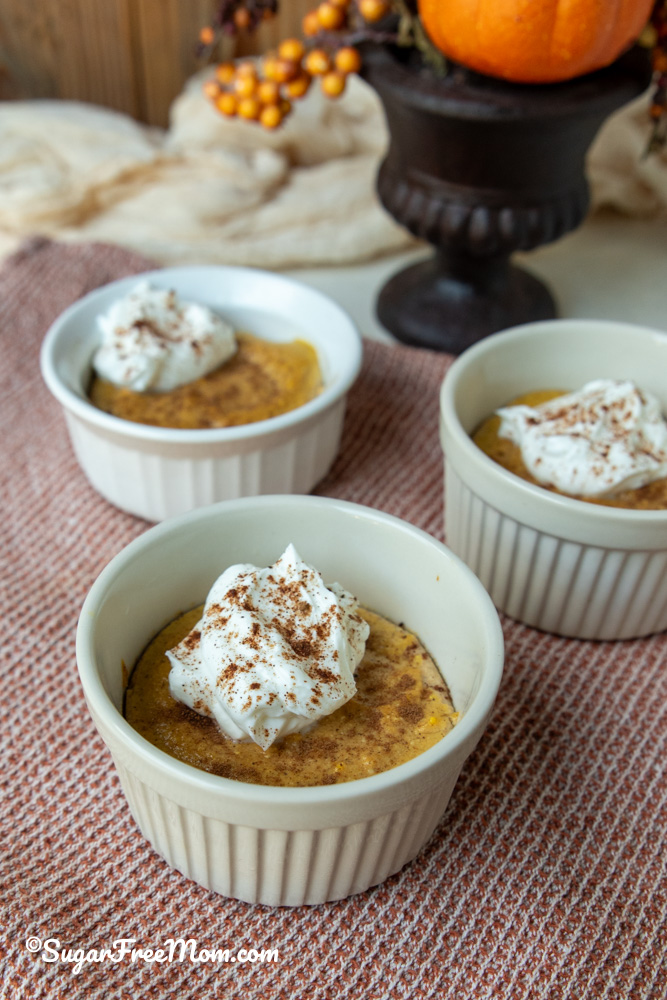
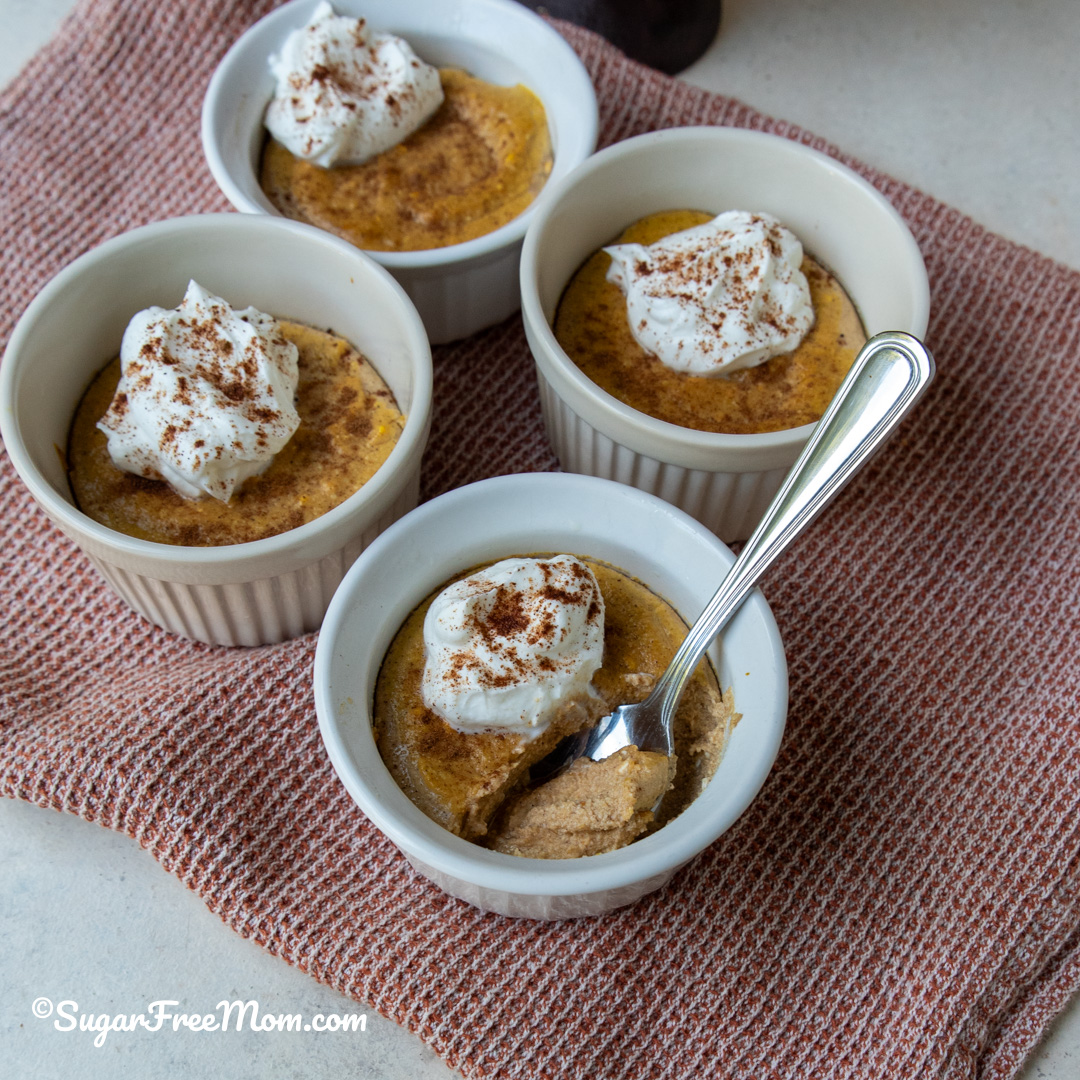
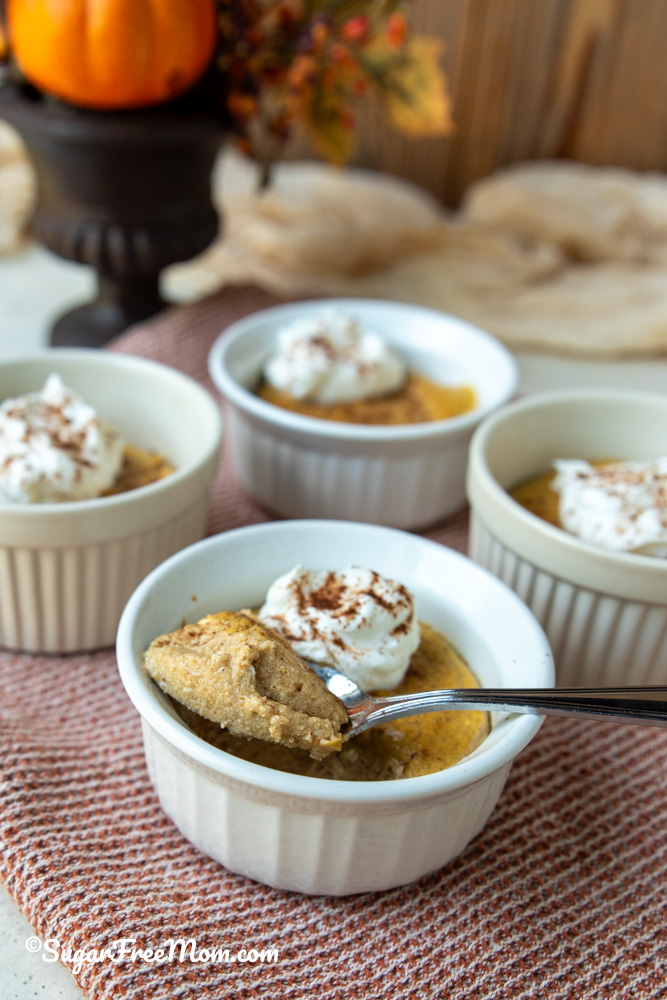
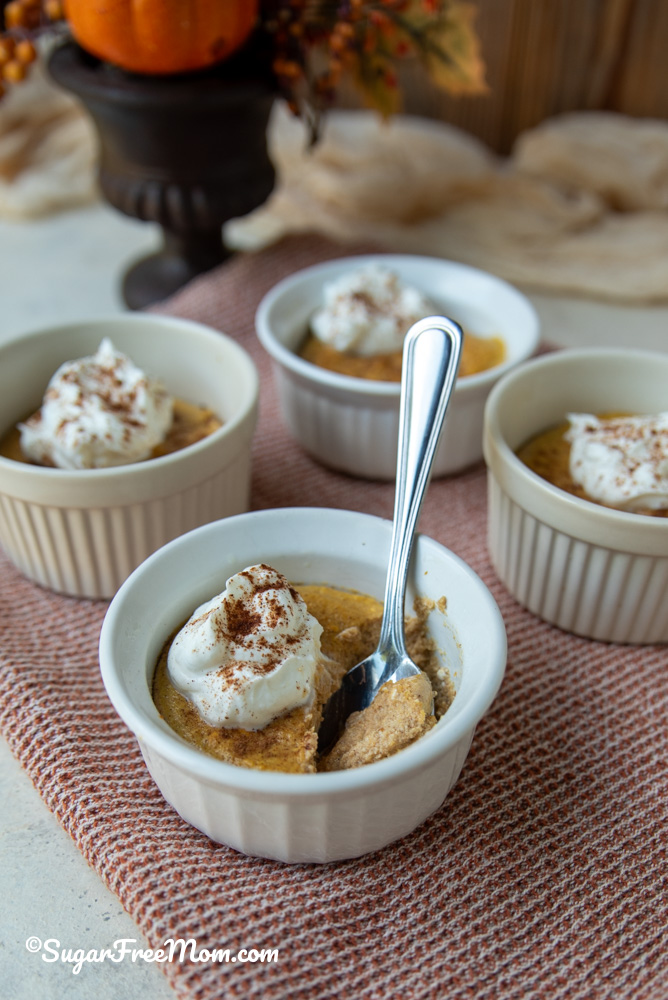
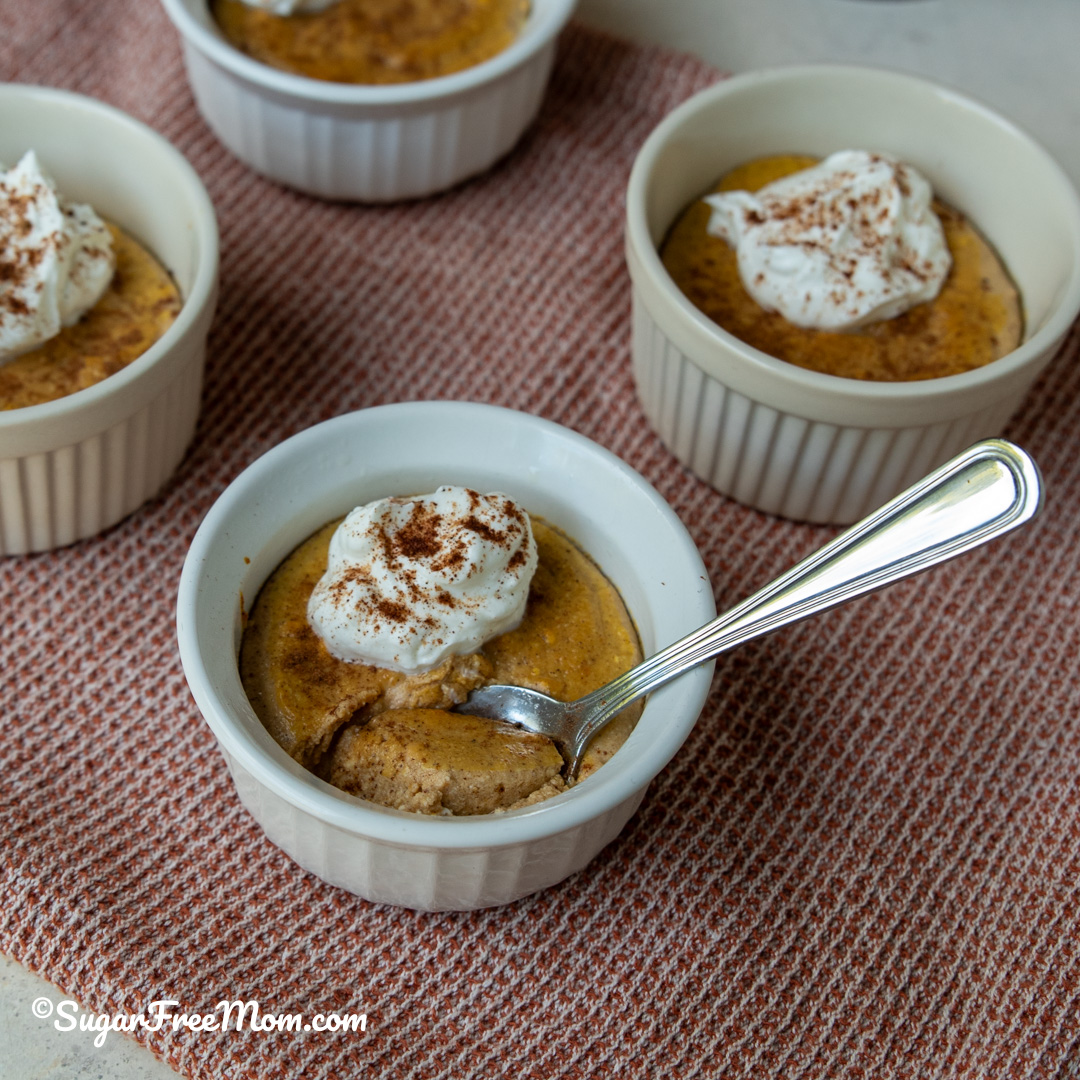
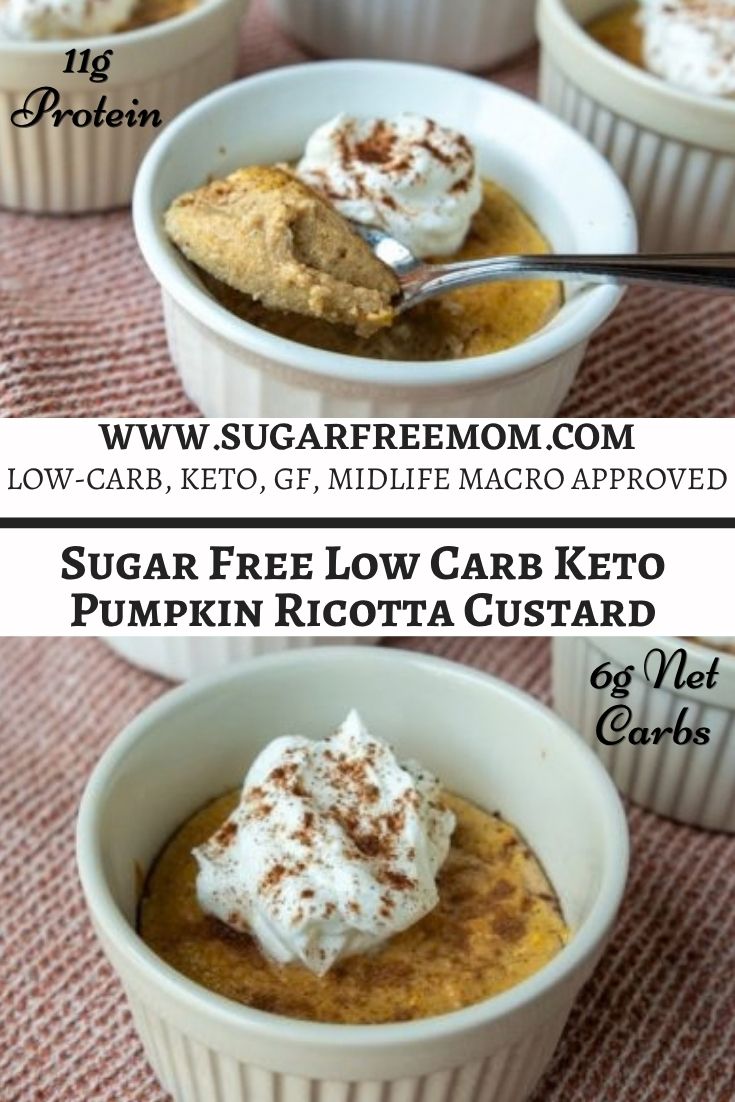
If the creamy filling is your favorite part of pumpkin pie, this easy Sugar Free Low Carb Keto Pumpkin Ricotta Custard is the perfect fall dessert! It has all the warm pumpkin pie flavor you love without the sugar, flour or crust.
Sugar Free Pumpkin Pie Custard
I already have a popular Sugar Free Keto Pumpkin Pie Custard on my website, but I had some ricotta cheese in the refrigerator that I needed to use. I decided to create another version using part-skim ricotta to increase the protein without relying on heavy cream.
The result was perfectly creamy, lightly spiced and absolutely delicious. Both recipes taste just like pumpkin pie filling, but this ricotta version provides 11 grams of protein per serving!
Each individual custard has 184 calories, 7 grams of total carbs, 1 gram of fiber and 6 grams of net carbs.
Easy Keto Pumpkin Custard Recipe with Ricotta
This easy keto pumpkin custard recipe combines pureed pumpkin, ricotta cheese, cream cheese, eggs, vanilla, pumpkin pie spice and your favorite low carb sweetener.
The main ingredients go into one bowl before the mixture is divided among four ramekins. The custards bake in a hot water bath, which helps them cook gently and evenly.
Once chilled, the texture is somewhere between traditional pumpkin pie filling and creamy ricotta cheesecake. There is no crust to make, roll or bake, so it is also a simple gluten-free and grain-free dessert for the holiday season.
Why Ricotta Gives This Crustless Pumpkin Pie a Creamy Texture
Part-skim ricotta adds body and creaminess while also increasing the amount of protein in each serving. A small amount of cream cheese helps create a smooth, rich custard without the heavy cream used in many traditional pumpkin custard recipes.
For the nutritional information listed in the recipe, be sure to use part-skim ricotta. Whole-milk ricotta should also work, but it will make the custard richer and increase the calories and fat.
Ricotta can vary in moisture. If yours looks especially watery, drain off any visible liquid before measuring it.
Is Pureed Pumpkin Keto-Friendly?
Pumpkin is a winter squash, but it can still fit into a keto or low-carb diet when portion size is considered. This entire recipe uses just ½ cup of pumpkin puree divided among four custards.
Be sure to purchase canned pure pumpkin with pumpkin as the only main ingredient. Do not use canned pumpkin pie filling, which already contains sugar and other ingredients.
Pumpkin pie spice typically contains warming spices such as cinnamon, ginger, nutmeg, cloves and sometimes allspice. You can use a store-bought blend or your favorite homemade pumpkin spice mixture.
How to Bake Pumpkin Ricotta Custard in a Water Bath
A water bath provides gentle, even heat around the ramekins. This helps the custard bake evenly and gives it a softer, creamier texture.
Place the filled ramekins inside an 8-by-8-inch baking dish. Carefully pour hot water into the larger dish until it reaches halfway up the sides of the ramekins. Take care not to splash water into the pumpkin mixture.
Bake until the custards are set and a knife inserted into the center comes out clean. Let them cool before transferring them to the refrigerator. These custards taste best after chilling for at least one or two hours.
Low Carb Sweetener Options
I used pumpkin spice liquid stevia, but vanilla liquid stevia, cinnamon stevia or a combination of liquid stevia and maple extract would also complement the pumpkin flavor.
You can use another low carb sweetener if you prefer, but the amount needed will depend on the product and its sweetness level. A powdered sweetener will dissolve more easily than a coarse granulated sweetener, which may leave the custard with a grainy texture.
I no longer use erythritol as a sweetener in my recipes due to many people worried about using it since in some studies it can cause blood clotting.
I love using a little maple extract which provides flavor but does not add sweetness, so it should be combined with a sweetener.
Regular maple syrup, honey or coconut sugar would increase the total carbs and the recipe would no longer be sugar free or keto friendly.
Can I Make Dairy-Free Pumpkin Custard or a Paleo Version?
Ricotta and cream cheese create the structure and texture of this particular recipe, so replacing them with almond milk or coconut milk would not be a direct substitution.
If you need a dairy-free pumpkin custard or Paleo-friendly dessert, make my original Keto Pumpkin Pie Custard instead. That recipe is easy to adapt to be made without dairy by replacing the heavy cream with unsweetened coconut milk or cashew milk.
Can I Use Fresh Pumpkin Instead of Canned Pumpkin Puree?
You can use homemade fresh pumpkin puree, but its moisture content can vary. Drain watery puree before measuring so the custard sets properly.
Use exactly ½ cup of pumpkin puree for this recipe. Do not substitute pumpkin pie filling because it contains added sugar and may already contain spices and other ingredients that will change the flavor, texture and grams of total carbs.
Frequently Asked Questions About Keto-Friendly Pumpkin Custard
Can I use whole-milk ricotta?
Yes. Whole-milk ricotta should produce a richer custard, but it will increase the fat and calories. Use part-skim ricotta if you want the nutritional information shown in the recipe.
Can I substitute cottage cheese for ricotta?
I have not tested cottage cheese in this recipe. Cottage cheese is often wetter and has a different texture, so it would need to be blended smooth and possibly drained. For the best tested result, I recommend ricotta.
Can I replace the cream cheese with Greek yogurt?
I have not tried this substitution. Greek yogurt contains more moisture and may make the custard softer or tangier. Cream cheese produces the tested creamy texture and helps the custard set.
Do I have to use a water bath?
I recommend the water bath for the creamiest, most evenly baked custard. Please note that direct oven heat can cause the edges to overbake before the center is set.
Can I bake the mixture in one large dish?
I tested this recipe in four 6-ounce ramekins. A larger custard should work, but the baking time will need to be adjusted. Begin checking when the center is mostly set with only a slight jiggle.
Can I make this pumpkin custard ahead of time?
Yes! It needs at least one or two hours to chill, so it is a wonderful make-ahead dessert for Thanksgiving or any fall gathering. You can also prepare it the night before serving.
Is pumpkin ricotta custard served warm or cold?
For the best flavor and texture, serve it chilled. Top each custard with sugar-free whipped cream or Greek yogurt and a sprinkle of cinnamon, nutmeg or pumpkin pie spice.
More Healthy Pumpkin Recipes
If you love the flavor of pumpkin pie filling, try my original Sugar Free Low Carb Pumpkin Pie Custard. My easy crustless pumpkin pie option and can be adapted for a dairy-free or Paleo diet.
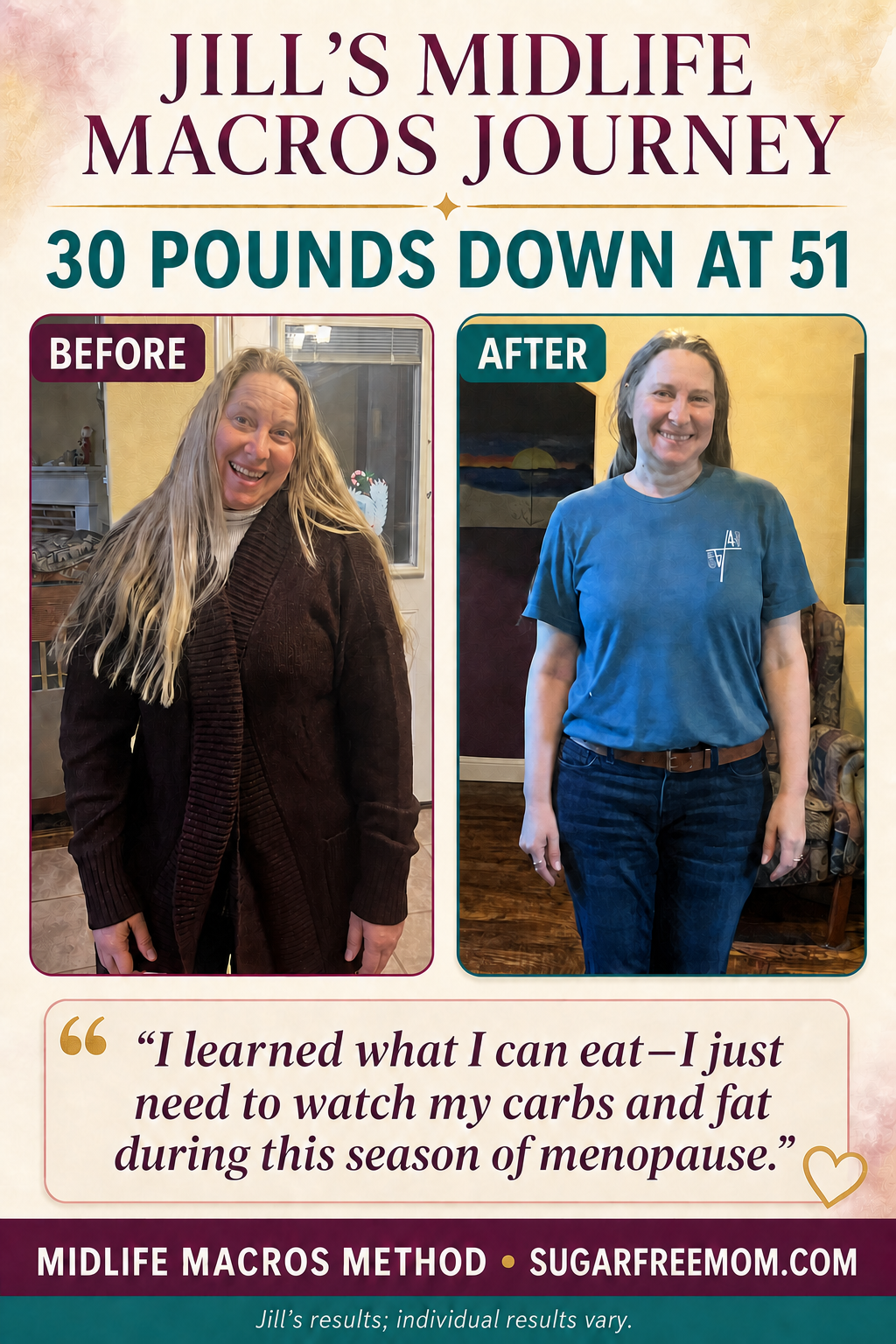
At 51 and postmenopausal, Jill broke a frustrating weight-loss stall and went from 164 to 134 pounds. Discover how midlife macro tracking and the Sugar Free Mom Tribe helped her reach her goal.
Jill’s Midlife Weight Loss Success Story: 30 Pounds Down at 51
At 51, Jill had spent years trying to take care of her health. She had followed Sugar Free Mom almost from the beginning, made recipes from my cookbooks, completed the 30 Day Sugar Elimination Diet, and even tried Weight Watchers.
But after menopause, the scale stopped moving.
Despite her efforts, Jill found herself stuck at 150 pounds. She knew she needed a different approach—one that would help her understand what her body needed during this new season of life.
Over the summer, Jill went from 150 to 134 pounds. From her highest weight of 164 pounds, she has now lost 30 pounds overall.
Even more importantly, she has learned how to nourish her body, manage cravings, make sustainable choices, and maintain her progress without beating herself up.
“I learned what I can eat. I just need to watch my carbs and fat during this season of menopause.”
Meet Jill
Jill is 51 years old, lives in East Texas, and entered menopause when she turned 50.
She has been part of the Sugar Free Mom community in one way or another for almost 15 years.
“I found Sugar Free Mom when you were just a blog with recipes,” Jill told me during our interview. “I loved your recipes for years.”
When the 30 Day Sugar Elimination Diet was released, Jill purchased the book and completed the program with the Facebook group in 2023.
She loved having everything laid out for her and found it easy to follow. While she did not initially lose a significant amount of weight, she noticed that she was losing inches.
Eventually, however, her progress stalled.
When Weight Watchers Didn’t Move the Scale
After hitting a plateau, Jill tried Weight Watchers because she hoped that changing her approach would help.
Instead, she regained much of the weight she had lost and eventually found herself stuck at approximately 150 pounds.
Her highest weight was 164 pounds at 5 feet 3 inches tall.
Jill had also fallen into an eating pattern that was not supporting her body. She would drink coffee for most of the day, eat very little, and then have dinner—often takeout.
Even though she did not feel as if she were eating very much, she was still gaining weight.
“I couldn’t seem to get the weight off,” she said. “Even with keto, trying different things, I couldn’t.”
This is such a common experience for women during perimenopause and menopause.
Eating less and trying harder does not always produce the expected result, especially when we do not understand how much protein, fat, carbohydrates, and total energy our bodies are actually receiving.
She began tracking her food with Cronometer and learning how her protein, carbohydrates, fat, and total calories worked together.
Before joining the Tribe, Jill said she did not understand macros at all.
“I learned that all from you and Angie. As soon as I got that and it clicked, I knew this was something I needed to do if I wanted to see change.”
Tracking gave Jill information she had never had before. It allowed her to see whether she was eating enough protein, where her carbohydrates and fats were coming from, and what adjustments might help her move past her plateau.
Jill followed the Midlife Macros meal plans while also learning how to make her own meals fit her personal targets. She generally ate two or three meals per day, prioritized protein, and used occasional maintenance days as part of her plan.
The specific macro targets Jill followed were personalized for her. They should not be viewed as a universal recommendation, because every woman’s nutritional needs, medical history, activity level, and goals are different.
From 150 to 134 Pounds Over the Summer
Once Jill began consistently following her midlife macros, the scale started moving again.
She went from 150 pounds in May to 134 pounds by the end of the summer—a loss of 16 pounds during her Midlife Macros phase.
Combined with the progress from her earlier journey, Jill has lost 30 pounds overall, from her highest weight of 164 pounds to her current weight of 134.
This was not a drastic, overnight transformation. Her progress occurred over several months, and she experienced normal pauses along the way, including a few weeks when the scale remained around 140.
She stayed consistent instead of assuming the plan had stopped working.
“I don’t know how to do it without tracking. It gives you such a picture of your health.”
Did Jill Have to Exercise Every Day?
Many women assume that successful weight loss must require intense daily exercise.
That was not Jill’s experience.
She purchased a rebounder after it was recommended inside the community and used it occasionally, but exercise was not the primary driver of her weight loss.
“For me, it was just the macros,” she said.
Movement is valuable for strength, mobility, cardiovascular health, mood, and overall well-being.
But Jill’s experience demonstrates how important nutrition and awareness can be, particularly when a woman has been eating very little during the day without understanding her overall nutritional intake.
How Jill Managed Afternoon Hunger and Sugar Cravings
One of Jill’s biggest challenges was feeling extremely hungry between 2:00 and 3:00 in the afternoon.
She also struggled with sugar cravings, especially when other members of her family brought donuts and other foods into the house.
Instead of relying on willpower, Jill learned to plan ahead.
She used a visual bead-jar strategy from the Taming Your Toddler workshop to help her work through the difficult afternoon period. She also kept a homemade dessert in the freezer so she would have an intentional alternative when her family brought home donuts.
These satisfying recipes helped her see that reaching her goals did not require giving up enjoyable food.
The Power of Accountability and Community
Jill lives with four other family member adults who do not necessarily want to eat the same way she does.
Her family will sometimes offer her foods that are not part of her plan, but they have learned to respect her choices.
Still, following a different lifestyle inside your own home can feel lonely.
That is where the Tribe community became especially important.
Jill participated in accountability groups, attended the Thursday-night maintenance meetings, and connected with an accountability partner.
“The accountability group really helped me not feel alone,” she said.
This support gave Jill a place to ask questions, learn from other women, and stay consistent even when the people in her household were not following the same plan.
You do not need everyone around you to participate in your journey. But having people who understand what you are working toward can make a tremendous difference.
Jill’s Non-Scale Victories
Jill’s success is not limited to the number on the scale.
She reports losing approximately two inches throughout her body, and her clothes now fit more comfortably. She can wear clothing she genuinely likes instead of choosing something simply because it feels comfortable or hides her body.
Jill is also taking a medication that can increase cholesterol and triglycerides. According to Jill, her recent cholesterol and triglyceride levels are now within the normal range, which has made both her and her doctor very happy.
These improvements are part of the bigger picture of health that Jill now sees through tracking, planning, and paying attention to what her body needs.
Individual health outcomes vary, and medication or nutrition changes should always be discussed with a qualified healthcare professional.
Learning to Maintain Her Results
Now that Jill has reached 134 pounds, her focus has shifted from losing weight to maintaining her progress.
She plans to continue tracking while gradually increasing some whole-food carbohydrates, including foods such as apples and watermelon. When she increases carbohydrates, she pays attention to how much fat she is eating so that both are not unintentionally high on the same day.
She also understands that maintenance does not mean seeing the exact same number on the scale every morning.
Normal weight fluctuations happen. Jill’s goal is to remain within a comfortable five-pound range and use the tools she has learned if her weight begins moving outside that range.
Most importantly, she no longer feels as if she is guessing.
She has a practical framework she can return to.
Jill’s Encouragement for Other Midlife Women
Jill’s story is a wonderful reminder that a long plateau does not mean your body is broken or that change is impossible.
She entered the program postmenopausal, had already tried other approaches, lived with family members who did not follow her way of eating, and was not exercising every day.
What changed was her understanding.
She learned how to track her food, prioritize protein, balance carbohydrates and fats, prepare for cravings, and use accountability rather than trying to do everything alone.
She also learned to approach her choices without shame.
“I don’t have to beat myself up. I can choose good, better, or best for me every time a choice comes.”
That is the heart of sustainable change. It is not about being perfect. It is about having the knowledge and tools to make the next supportive choice.
Watch My Interview With Jill
In our conversation, Jill shares more about her history with Sugar Free Mom, her experience with menopause, the Midlife Macros Method, her favorite recipes, the strategies she used for cravings, and how the Tribe community helped her reach her goal.
If you are in perimenopause or menopause and feel frustrated because the strategies that once worked are no longer producing results, Jill’s story offers hope.
You may not need to eat less, punish yourself with exercise, or eliminate every food you enjoy. You may simply need a clearer picture of what your body is receiving, personalized targets, and a supportive community to help you apply what you learn.
The Sugar Free Mom Tribe and Midlife Macros Method are designed to help women build that understanding and create an approach they can continue using beyond the weight-loss phase.
Jill’s story reflects her personal experience. Individual results vary. This article is for informational purposes only and is not a substitute for individualized medical or nutritional advice.
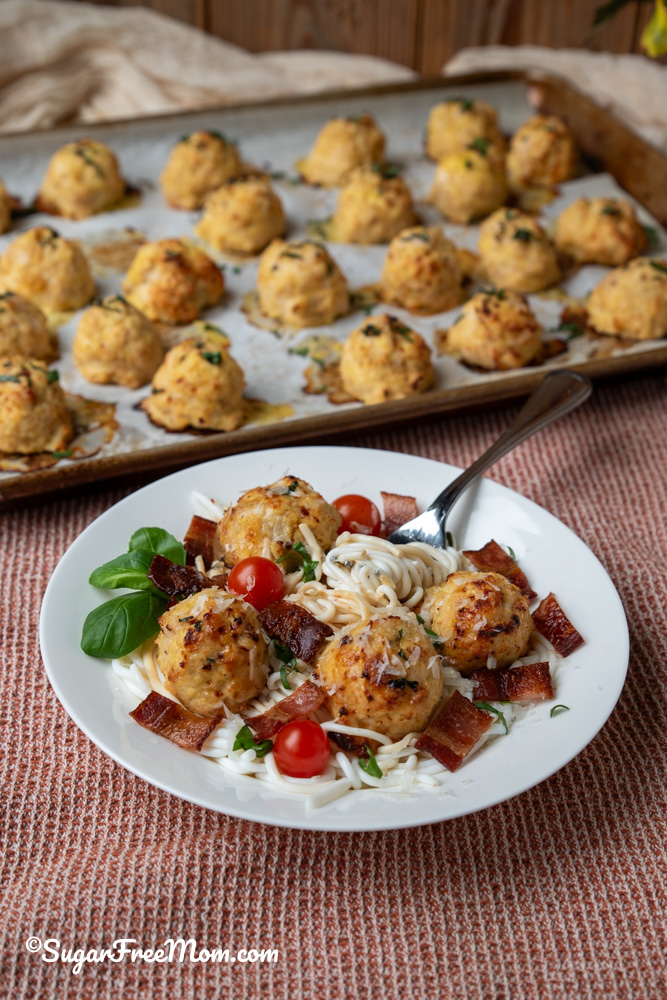
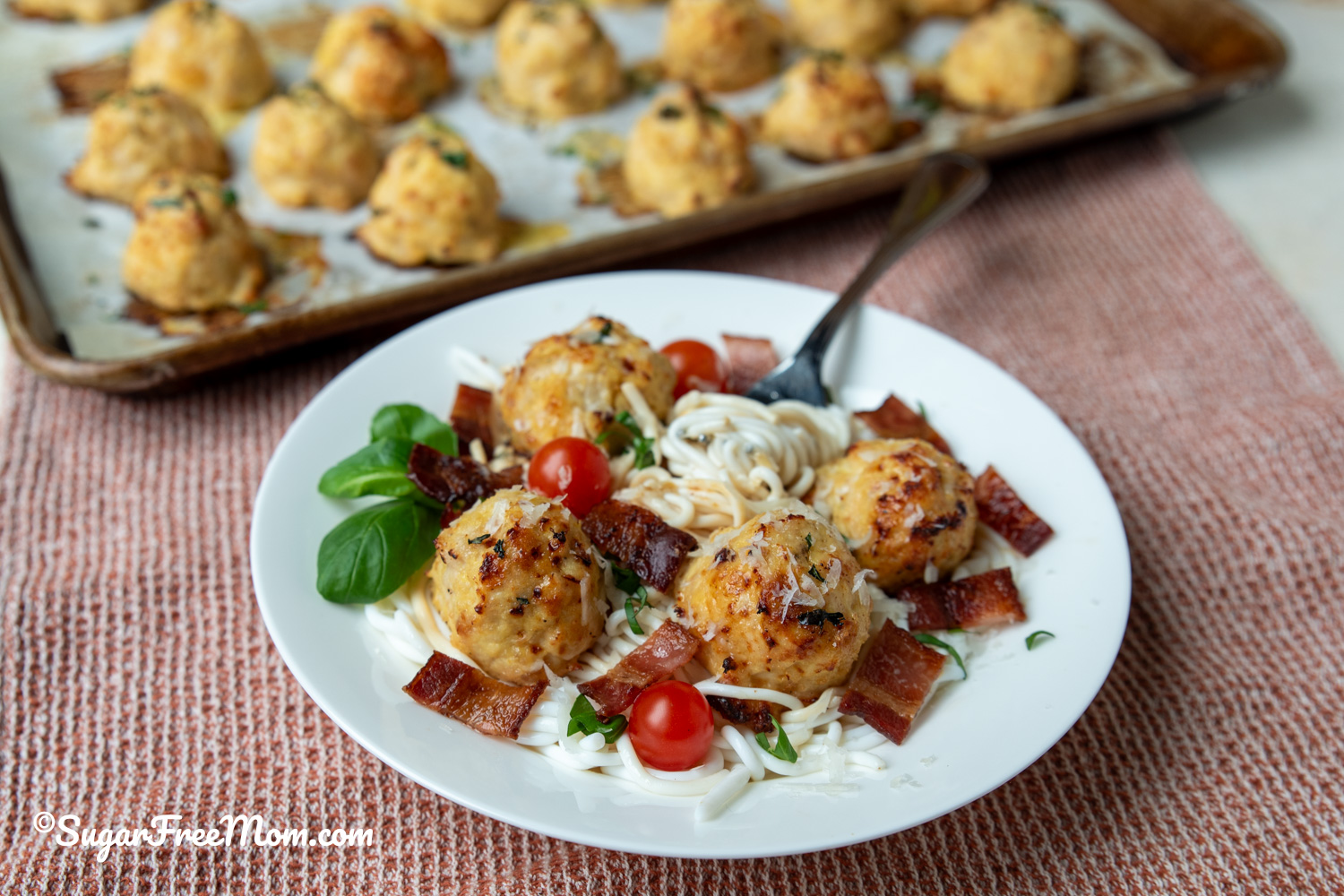
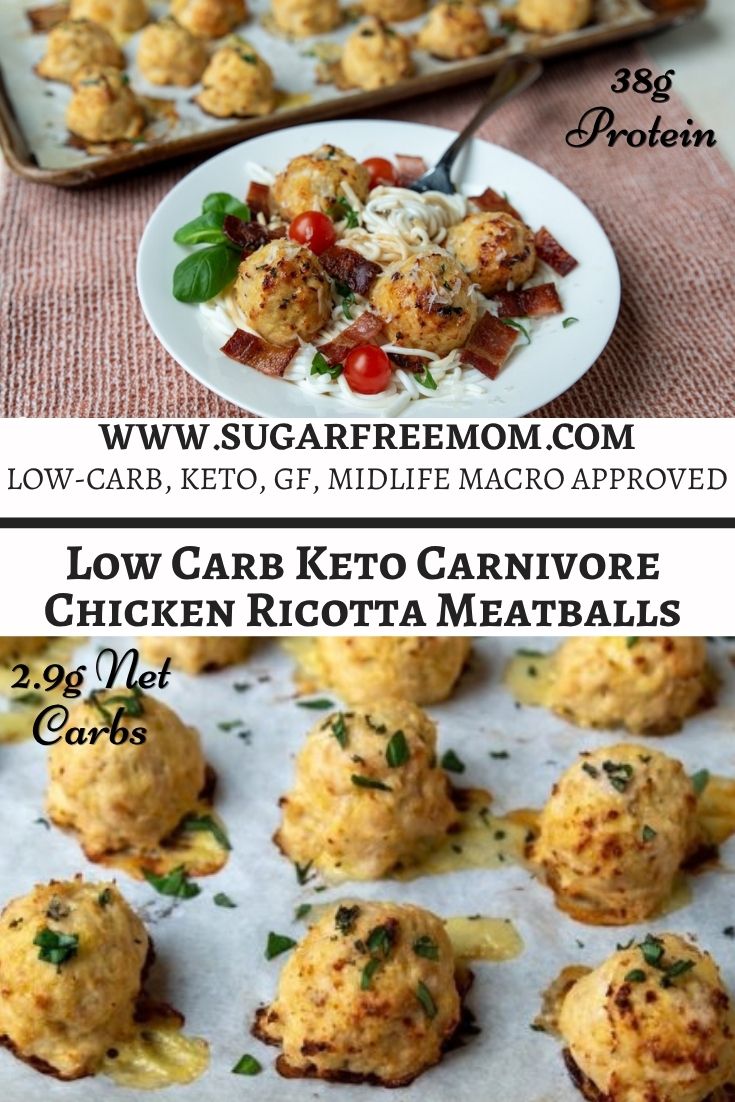
These easy keto carnivore chicken ricotta meatballs are tender, juicy and packed with protein! Made with ground chicken, creamy ricotta cheese and pork rind crumbs, they’re baked in the oven for a simple low carb dinner the whole family can enjoy.
Easy Baked Chicken Ricotta Meatballs
Ground chicken is a wonderful lean protein, but it can become dry when it is overworked or overcooked. Ricotta cheese is the secret ingredient that gives these baked chicken meatballs their moist, tender texture.
The ricotta adds creaminess and moisture without making the meatballs heavy. Pork rind crumbs and large eggs bind the meatball mixture together without traditional breadcrumbs, panko or flour.
Everything is combined in one large mixing bowl, portioned onto a parchment-lined rimmed baking sheet and baked. There’s no large skillet, hot oil or messy stovetop cleanup needed!
You need just 15 minutes of prep time and 20 minutes of cooking time. Each serving of four keto chicken meatballs has just 2 grams of total carbs and an impressive 37 grams of protein!
Why You’ll Love This Recipe
Just 15 minutes of prep
Bakes in one pan
Only 2 grams of carbs per serving
Provides 37 grams of protein per serving
Gluten-free when made with certified gluten-free ingredients
Nut-free
No breadcrumbs, panko or almond flour
Perfect for meal prep
Includes an easy strict carnivore option
What Does Adding Ricotta to Meatballs Do?
Ricotta cheese adds moisture and creates a softer, more tender texture. This is especially helpful when making meatballs with lean ground chicken, which can dry out more easily than beef or pork.
This recipe uses 1 cup of ricotta cheese for 2 pounds of ground chicken. That works out to ½ cup of ricotta per pound of chicken.
I used part-skim ricotta to keep the calories and fat better balanced for my Midlife Macros. Whole milk ricotta can also be used if you prefer a richer flavor.
If your ricotta looks especially watery, let it drain in a fine-mesh strainer for about 10 minutes. It does not need to be pressed completely dry.
Are These Chicken Meatballs Carnivore Friendly?
The main meatball ingredients—ground chicken, ricotta cheese, eggs and pork rind crumbs-are all animal-based. However, the onion powder, garlic powder, black pepper and optional parsley are not strict carnivore ingredients.
Omit the onion powder, garlic powder, black pepper and parsley. Check the ingredient label on your pork rind crumbs to make sure they do not contain sugar, starches or plant-based seasonings.
Some versions of the carnivore diet include dairy, while others do not. These meatballs can work for someone who includes dairy and tolerates ricotta cheese.
Chicken Ricotta Meatball Ingredient Notes
Ground chicken
You can use packaged ground chicken or grind boneless chicken in a food processor. A ground chicken blend containing some dark meat will usually produce juicier meatballs than very lean ground chicken breast.
Ricotta cheese
Part-skim ricotta provides creaminess while keeping the fat and calorie count lower than whole milk ricotta. Either one will work. If lactose is a concern, you could also try my homemade lactose-free ricotta cheese.
Pork rind crumbs
Pork rind crumbs replace high-carb breadcrumbs and help bind the eggs, ricotta and ground chicken together. Plain crumbs are best for the carnivore version. Seasoned pork rind crumbs can add extra flavor, but always check the ingredients and nutrition label.
Eggs
Two large eggs provide structure and help keep the chicken meatballs from falling apart. I don’t recommend omitting them from this recipe.
Seasonings
Garlic powder, onion powder, salt and black pepper keep the flavor simple and family friendly. Fresh parsley is optional and can be sprinkled over the cooked meatballs just before serving.
How to Make Chicken Ricotta Meatballs
First, preheat your oven to 425 degrees F. Line a large rimmed baking sheet with parchment paper.
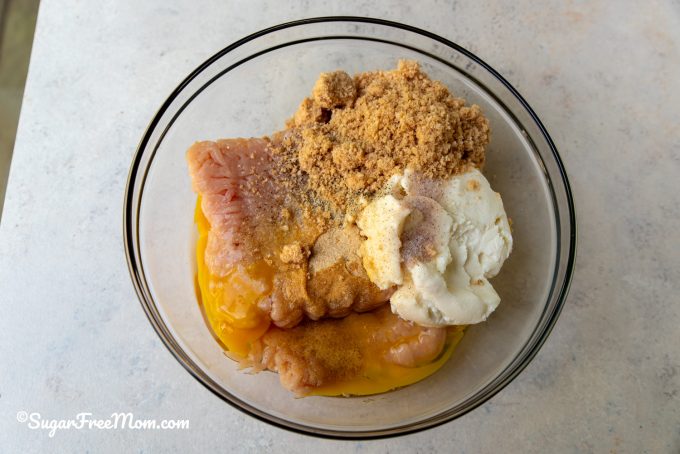
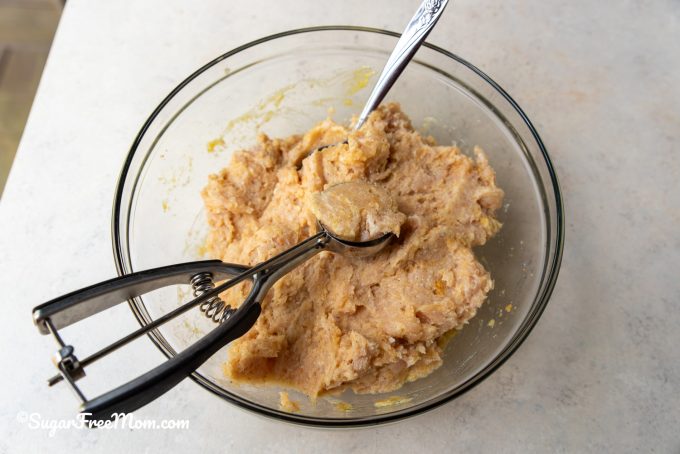
Whisk the eggs, garlic powder, onion powder, salt and black pepper together in a large bowl. Add the ricotta cheese and pork rind crumbs and mix until combined.
Add the ground chicken last. Gently mix just until the ingredients are evenly incorporated. Avoid aggressively squeezing or compacting the mixture.
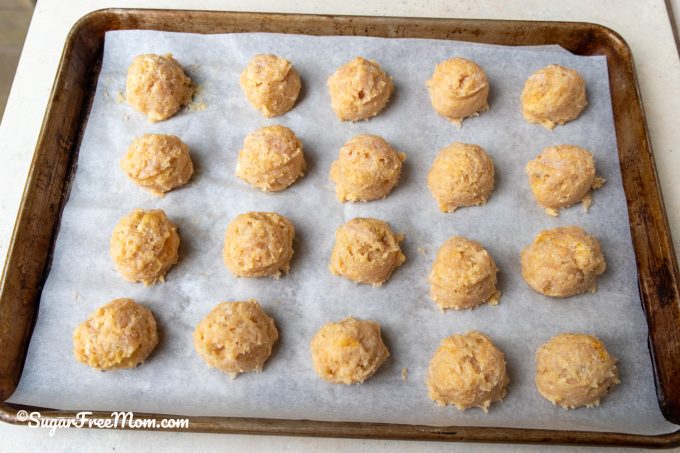
Use a large cookie scoop to portion 28 evenly sized meatballs. If the mixture sticks to your fingers, use slightly damp hands to finish shaping them.
Arrange the meatballs on the prepared baking sheet with a little room between each one. Bake uncovered for 20 minutes or until the center of the largest meatball reaches 165 degrees F.
Tips for Moist Chicken Meatballs
Don’t overmix the ground chicken
Mix the ground chicken only until the other ingredients are incorporated. Overworking the meatball mixture can create a dense or rubbery texture.
Drain watery ricotta
Ricotta brands vary in moisture. If you see a lot of liquid in the container, drain the cheese briefly before measuring it.
Make evenly sized meatballs
A large cookie scoop helps create uniform portions so all the meatballs finish cooking at approximately the same time.
Don’t overbake
Chicken meatballs can dry out when cooked beyond the safe temperature. Begin checking the largest meatball near the end of the cooking time and remove the pan when it reaches 165 degrees F.
Bake them uncovered
These meatballs should be baked uncovered. Covering the baking sheet traps steam and prevents the exterior from developing as much color.
Swaps and Substitutions
Can I replace the ground chicken?
Ground turkey can replace the ground chicken in the same amount. Ground turkey thigh or a combination of light and dark meat will generally give you the moistest texture.
Ground beef or pork can also be used, but they will noticeably change the flavor, fat and nutritional information.
Can I use whole milk ricotta?
Yes. Replace the part-skim ricotta with an equal amount of whole milk ricotta. The meatballs will be slightly richer, and the nutrition information will change.
Can I replace the pork rind crumbs?
For a keto pork-free option, start with ¾ cup of finely ground almond flour. Let the mixture rest for 5 minutes, then add more almond flour, one tablespoon at a time, if it is still too loose to scoop.
This variation will no longer be nut-free or carnivore, and its texture and nutrition will differ from the original recipe.
Grated Parmesan cheese can replace a portion of the pork rind crumbs for extra cheesy flavor, but I would not replace the entire cup with Parmesan because it will make the meatballs saltier and may change their structure.
Can I use cottage cheese instead of ricotta?
Ricotta produces the best creamy texture. In a pinch, blend and drain small-curd cottage cheese before measuring an equal amount. Cottage cheese contains more liquid, so additional pork rind crumbs may be needed.
Can I use fresh garlic?
Replace the garlic powder with 1–2 finely minced garlic cloves. Fresh garlic and onion will not be suitable for the strict carnivore variation.
What to Serve with Chicken Ricotta Meatballs
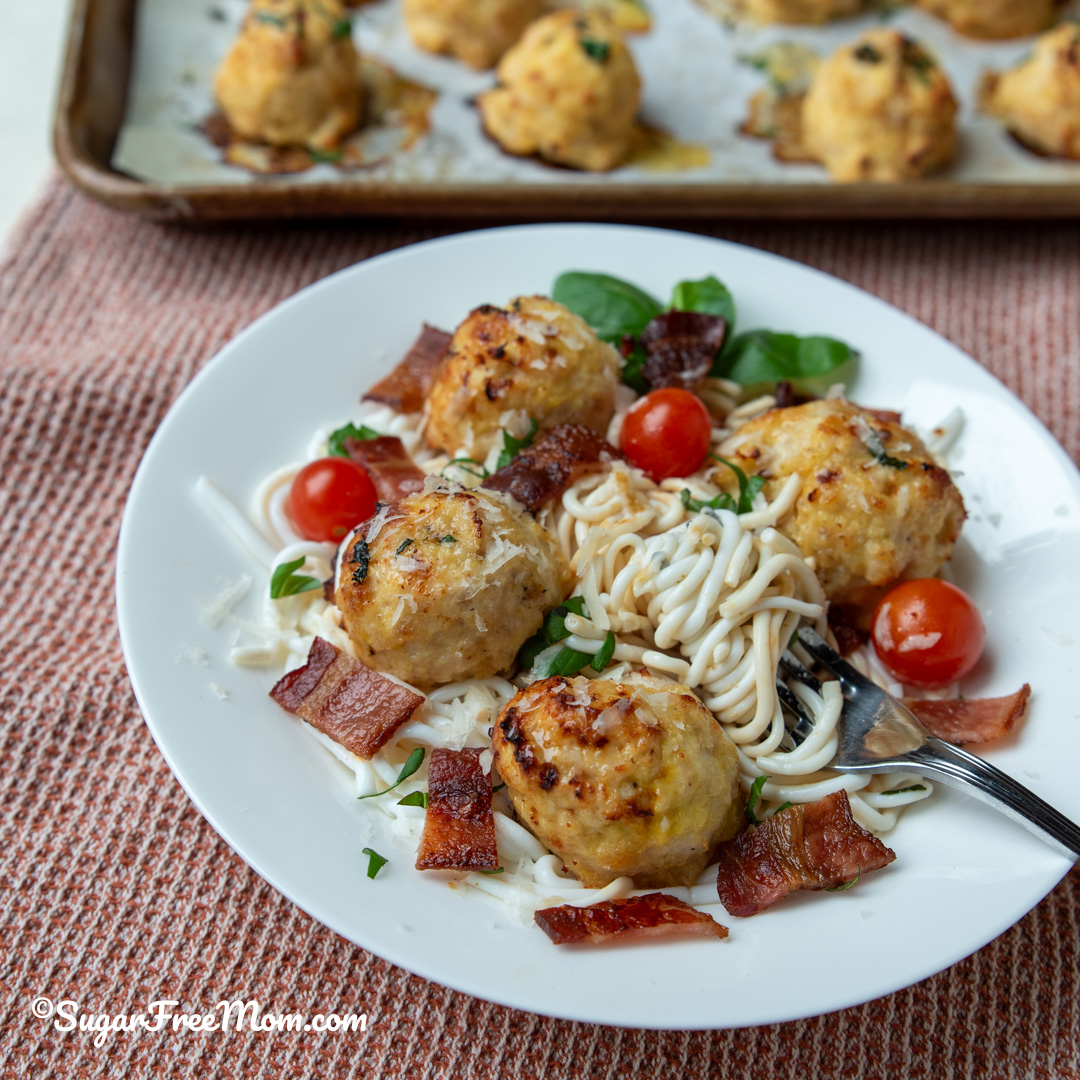
For a carnivore meal, serve the meatballs plain or with melted butter, grated Parmesan cheese or a simple cream sauce. Top with some crispy bacon and try some egg white noodles.
Family members who are not following a low carb diet can enjoy the meatballs with regular pasta, marinara sauce or crusty bread.
Storage, Freezing and Reheating
Allow the cooked meatballs to cool, then store them in an airtight container in the refrigerator for up to 4 days.
Reheat individual portions in the microwave in 30-second intervals until warmed through. You can also place them in a covered baking dish and reheat them in a 350-degree F oven.
To freeze, arrange the cooled meatballs in a single layer on a baking sheet. Freeze until firm, then transfer them to a freezer-safe container or bag for up to 3 months. Thaw overnight in the refrigerator before reheating.
For food safety, leftovers should be reheated to an internal temperature of 165 degrees F.
Frequently Asked Questions
Can you put ricotta in chicken meatballs?
Yes! Ricotta is especially helpful in chicken meatballs because it adds moisture and tenderness to lean ground chicken. It also gives them a creamy texture without an overpowering cheese flavor.
How much ricotta cheese should I add to meatballs?
This recipe uses ½ cup of ricotta cheese for every pound of ground chicken. That is enough to add moisture without making the meatball mixture too loose.
How do you bind meatballs without carbs?
Eggs and pork rind crumbs are used as low carb binding ingredients. The eggs provide structure while the crumbs absorb moisture from the chicken and ricotta, helping the meatballs hold their shape.
How do you keep chicken meatballs from drying out?
Use ricotta cheese, avoid overmixing the ground chicken and do not overbake the meatballs. A meat thermometer is the most reliable way to know when they have reached 165 degrees F without cooking them longer than necessary.
What are common meatball mistakes?
The most common mistakes are overworking the mixture, making uneven portions, using very watery ricotta and baking the meatballs too long. Gently mixing and using a cookie scoop solves most of these problems.
These easy baked chicken ricotta meatballs are moist, tender and packed with protein. With just 2 grams of carbs and 37 grams of protein per serving, they’re perfect for a keto, low carb or carnivore-style meal.
Preheat oven to 425 degrees F. Line a large baking sheet pan with parchment paper.
Mix the eggs with dry seasonings, ricotta cheese, pork rind crumbs and parmesan together in a large bowl. Once combined, mix in the ground chicken.
Use a large cookie scoop to make 28 meatballs. Place them on a parchment lined baking sheet pan.
Bake in the preheated oven for 20 minutes and internal temperature is 165 degrees F. You can broil them for a minute or two if you want them more browned. I served mine over egg white noodles and crispy bacon.
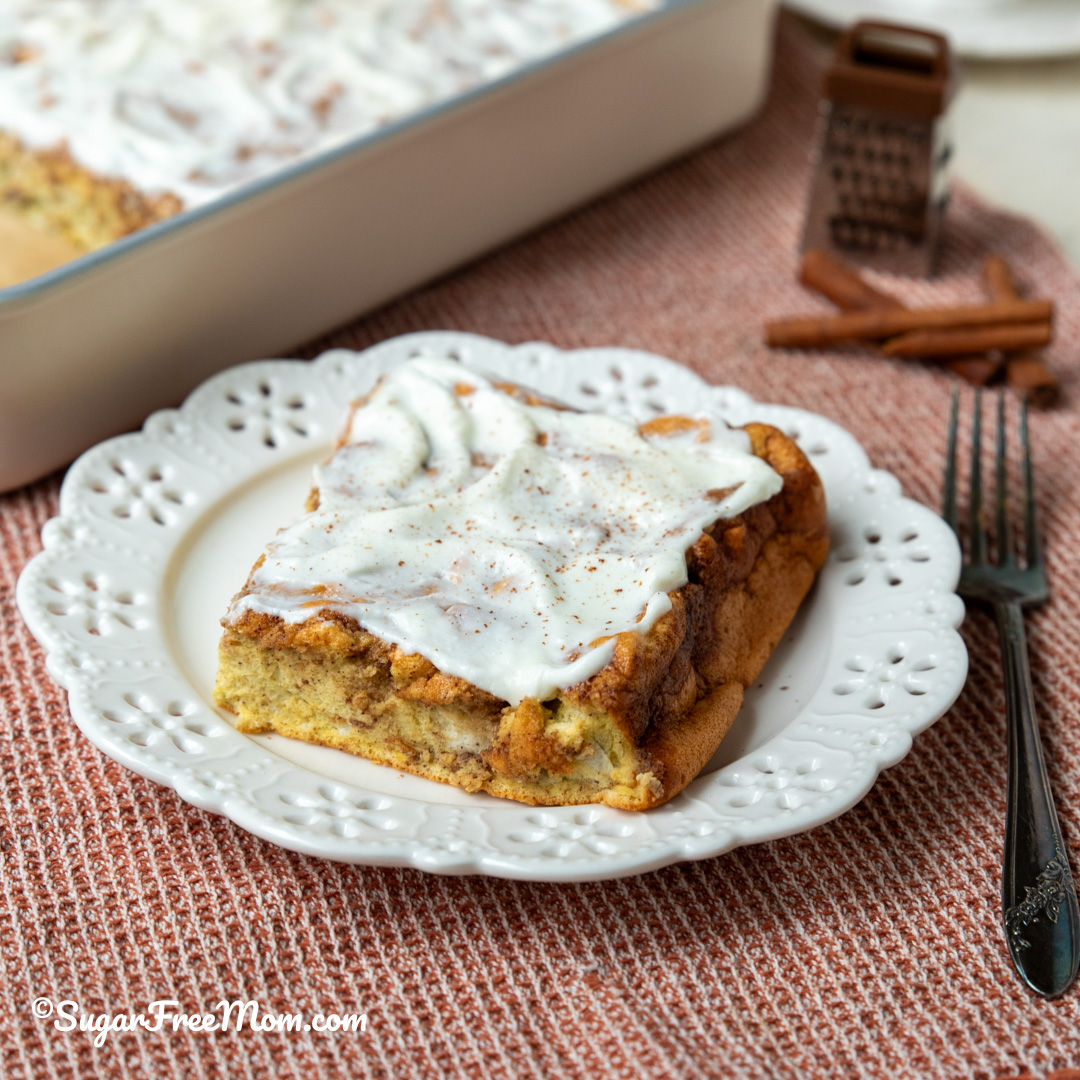
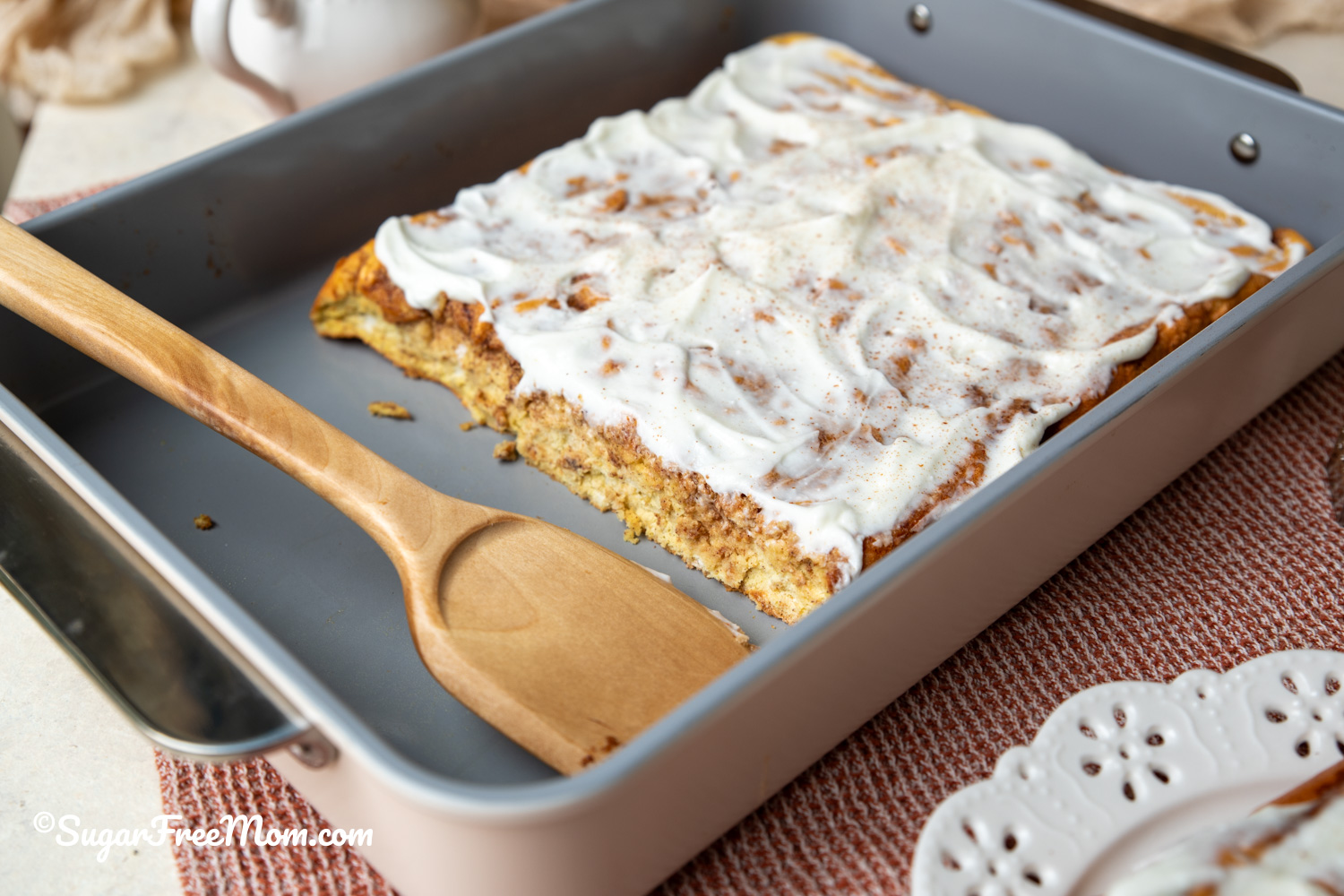
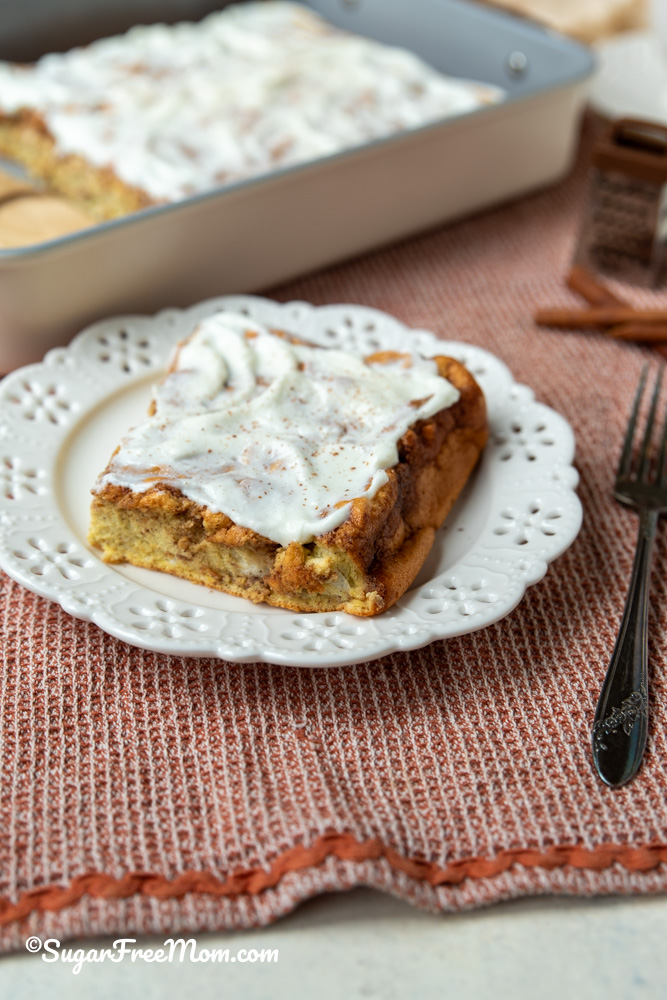
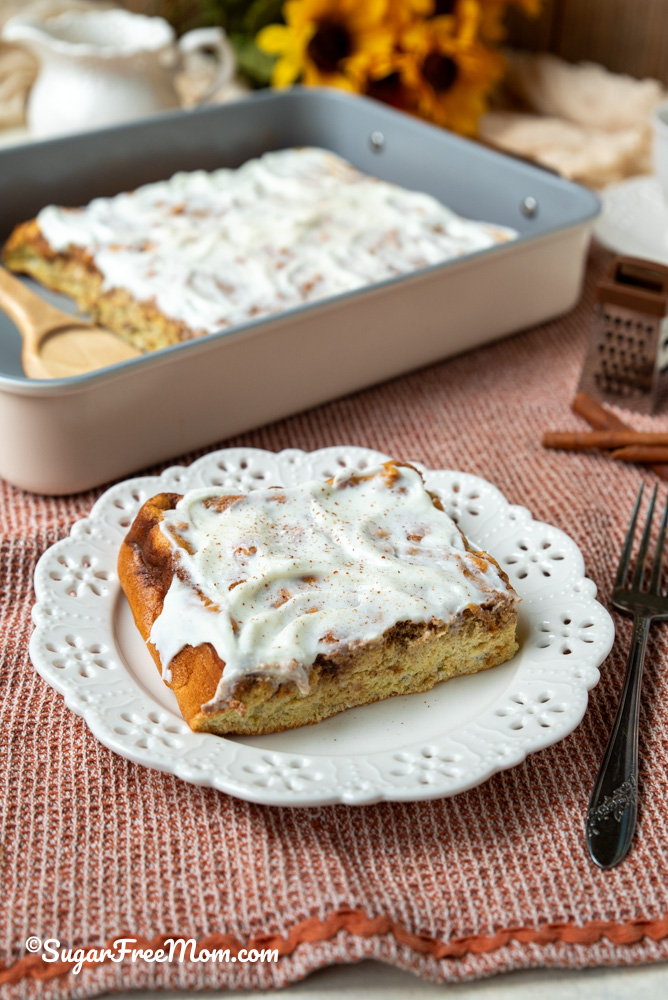
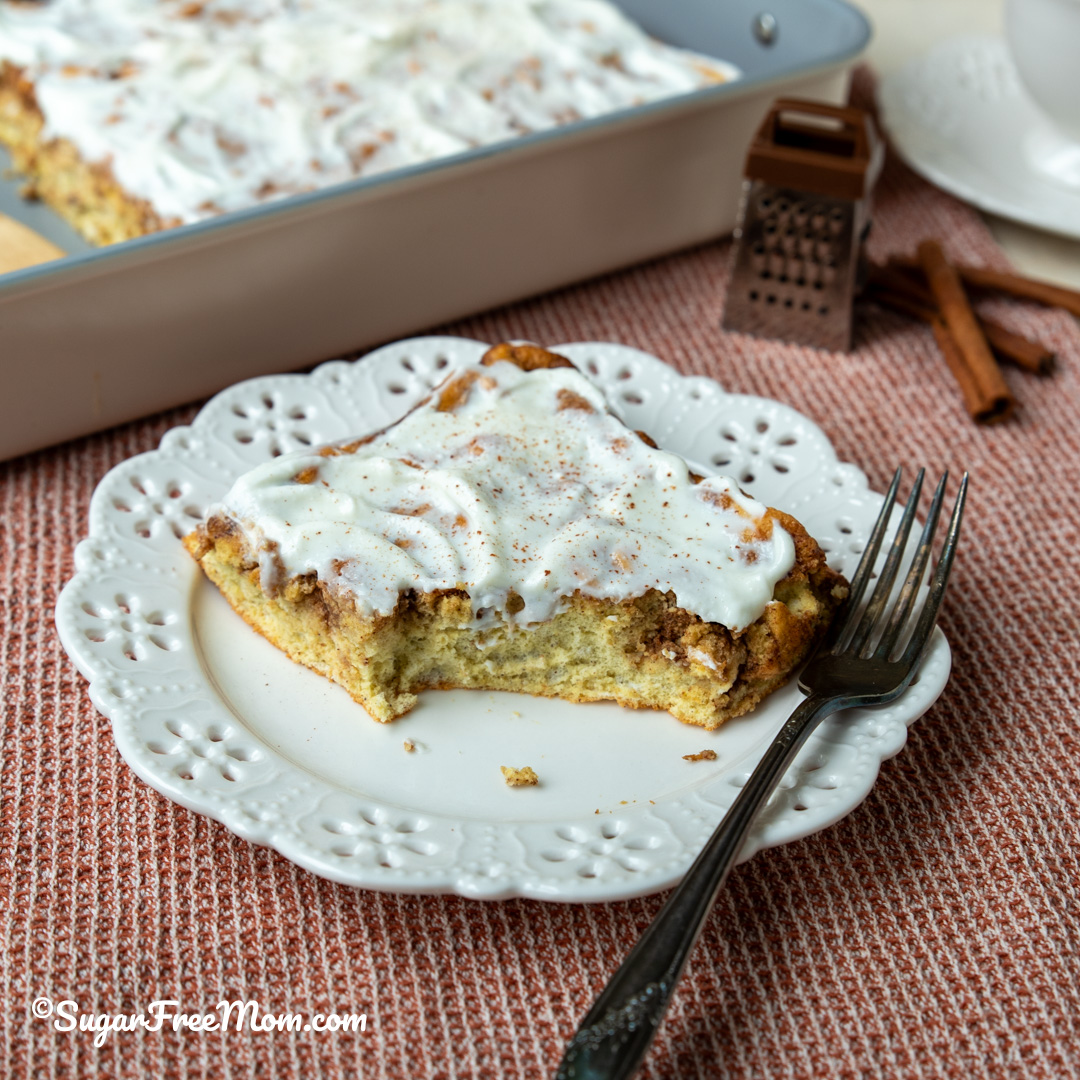
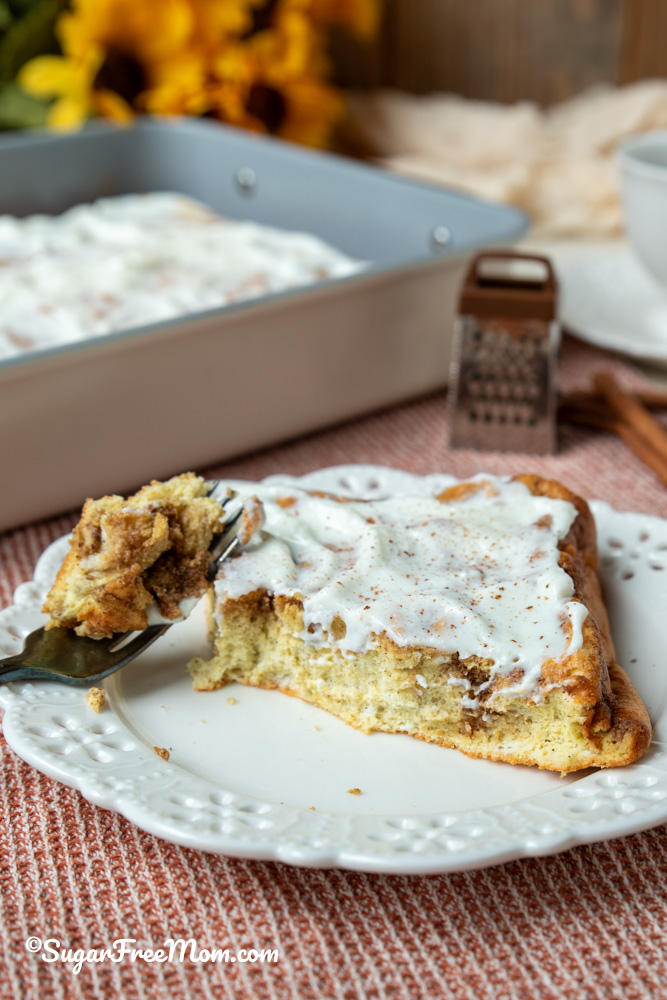
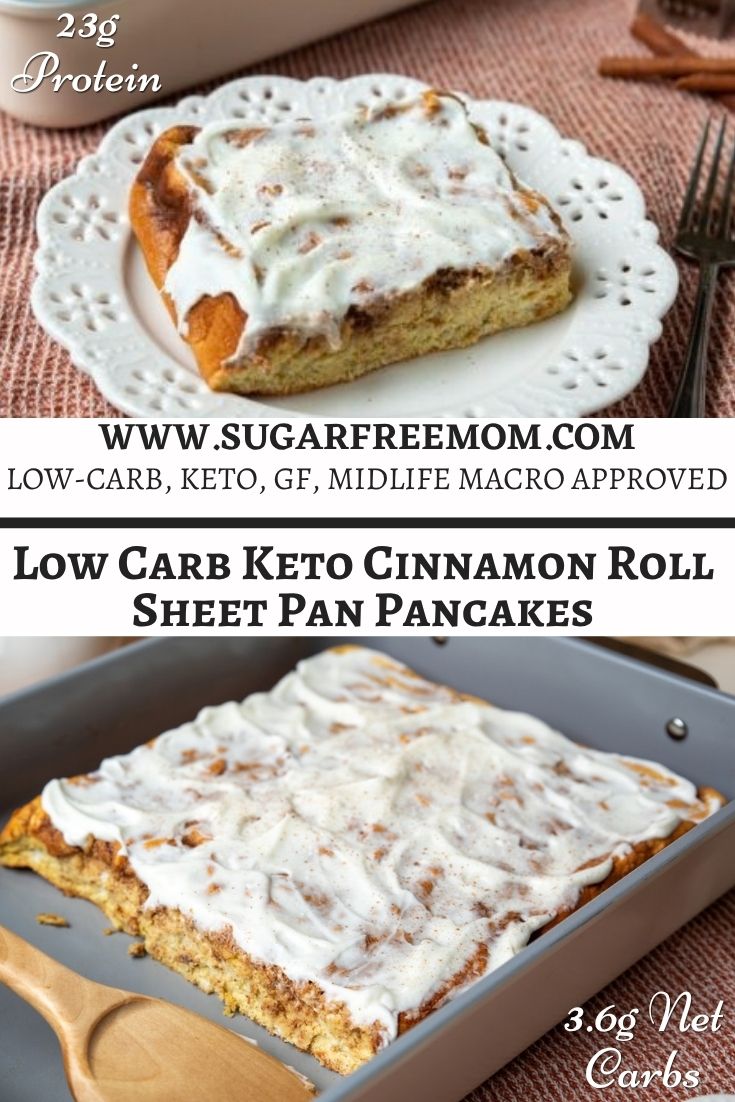
These Low Carb Keto Cinnamon Roll Sheet Pan Pancakes bake all at once in a 9-by-13-inch pan and are topped with a sugar free sweet cinnamon swirl. This easy low carb breakfast is flourless, gluten free, nut free and high in protein.
Sugar Free Keto Cinnamon Roll Sheet Pan Pancakes
All the cozy flavor of warm cinnamon rolls without standing over the stove flipping individual pancakes! Add the optional cream cheese frosting for the complete cinnamon roll experience!
The pancake batter is made with eggs, Greek yogurt and dried egg whites, so the texture is light, soft and airy, almost like a cross between fluffy pancakes and sponge cake.
It is a delicious recipe for a weekend family breakfast, but it is also simple enough for meal prep. Bake one pan, cut it into six large pieces and keep breakfast ready to grab from the fridge all week.
Why Make Cinnamon Roll Sheet Pan Pancakes?
I love pancakes, but I do not love being the person stuck at the stove flipping batch after batch while everyone else is eating! I adapted this recipe from my original sheet pan pancake recipe with just a few little tweaks.
With the sheet pan method, all the pancake batter goes into one pan and the oven does the work. Every piece is ready at the same time, which makes this a great option for busy mornings, holidays or feeding a family.
You will love this recipe because it is:
– Low carb and keto friendly
– Flourless, gluten free and nut free
– High in protein
– Baked in one pan with no flipping
– Easy to store in the fridge or freezer
– Sweet enough for kids but made without added sugar
– Perfect for breakfast meal prep
Unlike traditional cinnamon roll pancakes made with white flour and sugar, this recipe uses a low carb brown sweetener for the cinnamon swirl mix. A little vanilla extract and ground cinnamon give you that warm bakery flavor without the sugar crash.
What Is the Texture of These Keto Sheet Pan Pancakes?
These are not dense, heavy pancakes. Separating the eggs and whipping the egg whites to stiff peaks creates natural lift without almond flour or coconut flour.
Dried egg whites, also called egg white protein powder, add more structure so the baked pancake holds its shape once sliced.
The finished texture is soft, light and airy. It is a little more soufflé-like than a traditional flour pancake, but the cinnamon sugar swirl and optional cream cheese frosting give every bite the flavor of a cinnamon roll.
The pancakes may rise in the oven and settle slightly as they cool. That is normal for a flourless batter made with whipped egg whites.
How Do I Make Cinnamon Bun Pancakes on a Sheet Pan?
The method is easy, but gently folding the whipped egg whites into the pancake mix is the secret to the best texture.
First, separate the room-temperature eggs. Add the egg whites and white vinegar to the bowl of a stand mixer or a large bowl. Use an electric mixer to whip them until stiff peaks form.
While the whites are whipping, add the egg yolks, Greek yogurt, vanilla extract and optional vanilla liquid stevia to a blender. Add the baking powder, salt, dried egg whites and cinnamon, then blend until the wet mixture and dry ingredients form a smooth batter with no lumps.
Fold the whipped whites into the yolk mixture in three small batches. Use a spatula and a light hand so you do not deflate all the air you just whipped into the eggs.
Spread the pancake batter evenly in the prepared pan. I chose to use a 9 by 13 baking dish instead of a sheet pan because I wanted thickness. You can choose to use either pan.
In a separate bowl, stir together the brown sweetener and cinnamon, adding only enough water to make a thick, spoonable cinnamon mixture. Drizzle it over the top of the pancakes and lightly swirl it through the surface.
Bake on the middle oven rack until the center is set and a toothpick comes out clean.
Tips for the Best Fluffy Pancakes
Start with room-temperature eggs
Room-temperature egg whites generally whip more easily and blend into the remaining pancake batter more smoothly.
Use a clean, dry mixing bowl
Even a small amount of grease or egg yolk in the bowl can stop the whites from whipping properly. Make sure the bowl and beaters are completely clean and dry.
Whip to stiff peaks
The egg whites are ready when the peaks stand upright after you lift the whisk. The white vinegar helps stabilize the foam. Do not stop at the soft-peak stage or the pancakes may not have enough lift.
Fold, do not stir
Add the whipped whites in small batches and fold gently with a spatula. Stirring aggressively will knock out the air and make the pancake layer dense.
Add the water to the cinnamon mixture slowly.
You want a thick cinnamon swirl mix that sits on the top of the pancakes. If it is too thin, it may sink into the batter. Start with 1 tablespoon of water and add more only as needed.
Bake on the middle rack
The middle shelf of the oven helps the pancake cook evenly without the top browning too quickly. Avoid opening the oven door early, since a sudden temperature change can cause the center to sink.
What Can I Use Instead of Dried Egg Whites?
Dried egg whites and egg white protein powder are generally the same product when the only ingredient on the package is egg whites. Use an unflavored powder for this recipe.
Do not use meringue powder, which may contain sugar, starch and other ingredients.
The dried egg whites help stabilize this flourless pancake batter and give it structure. If you do not have them, these are the best swaps:
Unflavored whey protein powder—best swap
Replace the ½ cup dried egg whites with ½ cup unflavored whey protein powder. The pancakes will be slightly softer and less airy but should still have a good cake-like texture.
Collagen peptides
Use ½ cup collagen peptides. The result will be softer, more custard-like and may not rise as much because collagen does not provide the same structure as egg white protein powder.
Can I use almond flour or coconut flour?
No, neither is a good 1:1 substitute for the dried egg whites in this recipe. They absorb liquid differently and will turn the light pancake batter into a denser cake. This recipe was created to be flourless.
More Easy Ingredient Swaps
White vinegar
Use cream of tartar to help stabilize the whipped egg whites if you do not want to use white vinegar.
Nonfat Greek yogurt
For a richer result, replace the 4 ounces of nonfat Greek yogurt with the same amount of sour cream. The pancake may be slightly denser and the nutrition information will change.
Vanilla liquid stevia
This ingredient is optional. Omit it or replace it with your preferred low carb sweetener, adjusting the amount to taste. Liquid stevia is concentrated, so it should not be replaced with the same volume of a granular sweetener.
Brown monk fruit allulose sweetener
Another brown sugar-style low carb sweetener can be used in the cinnamon swirl, but the sweetness and texture may vary by brand.
Monk Fruit and Allulose helps keep the swirl softer, while an erythritol-based sweetener may firm up or recrystallize after cooling.
Optional Cream Cheese Frosting
These cinnamon roll sheet pan pancakes are delicious without a glaze, but the cream cheese frosting makes them feel extra special.
Beat softened cream cheese with vanilla stevia until smooth. For a thinner icing that you can drizzle over the tops of the pancakes, mix in 1 teaspoon of water or unsweetened milk at a time until it reaches your preferred consistency.
Wait until the pancake has cooled slightly before adding the glaze so it stays creamy instead of melting completely into the warm surface.
I had actually run out of cream cheese so I adapted using plain nonfat Greek yogurt and mixed it with Zero Sugar Honey.
Storage and Reheating
Cool the pancake completely, then cut it into six large pieces. Store the pieces in an airtight container in the fridge for up to 5 days.
For longer storage, place parchment paper between individual pieces and freeze them in an airtight container for up to 3 months. This makes it easy to remove only what you need.
Reheat one or two frozen pancakes in the microwave for 30 seconds to 1 minute, depending on the power of your microwave. You can also thaw them overnight in the fridge and warm them gently in the oven.
If you are using the optional low carb frosting, you may prefer to store it in a separate bowl in the refrigerator and add it after reheating.
Frequently Asked Questions
Can you put pancake batter in the oven to bake?
Yes. Pancake batter can be baked in the oven, and a sheet pan is an easy way to cook the whole batch at once. This particular flourless batter was designed for oven baking and gets its light texture from whipped egg whites.
Can any pancake recipe be baked in a sheet pan?
Many pancake recipes can be adapted for a sheet pan, but the pan size, thickness, oven temperature and baking time may need to change. For the most reliable result, use a recipe like this one that was specifically tested as sheet pan pancakes.
How long do oven pancakes take to bake?
These low carb cinnamon roll sheet pan pancakes bake at 325°F for about 25–28 minutes. They are done when the center looks set and a toothpick or skewer inserted into the middle comes out clean. A different pancake mix or pan size may require a different baking time.
These Low Carb Keto Cinnamon Roll Sheet Pan Pancakes bake all at once in a 9-by-13-inch pan and are topped with a sugar free sweet cinnamon swirl. This easy low carb breakfast is flourless, gluten free, nut free and high in protein.
Preheat oven at 325 degrees F and line a 9 by 13 baking dish with parchment paper or silpat or grease.
Place your egg whites in a stand mixer with vinegar and whip until stiff peaks. This should take about 10-15 minutes. Set aside.
Place the egg yolks in a blender with wet ingredients and then remaining dry ingredients and blend until incorporated and a smooth batter forms.
Fold your whipped egg whites in small batches into the egg yolk mixture being careful not to deflate whipped whites.
Pour this pancake batter into your prepared pan.
In a separate bowl, stir together the brown sweetener and cinnamon, adding only enough water to make a thick, spoonable cinnamon mixture. Drizzle it over the top of the pancakes and lightly swirl it through the surface.
Bake on the middle shelf of preheated oven for 25-28 minutes or until a toothpick or skewer stick in the center comes out clean. If using optional icing, mix together then spread over the pancakes.
Store in an airtight container in the fridge for up to 5 days or freeze for up to 3 months. Reheat by removing one or two from the freezer and microwaving for 30 seconds to 1 minute.
This Sugar Free Keto Frozen Whipped Dalgona Coffee turns the viral whipped coffee trend into a delicious make-ahead keto coffee treat!
Sugar Free Keto Frozen Whipped Coffee
It’s light, fluffy and creamy when first whipped, then becomes perfectly soft and scoopable after freezing overnight.
Made with just four simple ingredients—instant coffee, hot water, zero-sugar honey and optional vanilla stevia—this easy frozen whipped coffee contains no added sugar and no erythritol.
Simply add one serving to a glass of cold milk with ice cubes and stir. The frozen coffee slowly melts into the milk, creating a creamy iced latte with incredible coffee flavor.
Traditional Dalgona coffee is made by whipping equal amounts of instant coffee, granulated sugar and hot water until the mixture becomes pale, thick and fluffy.
The whipped coffee became popular in South Korea before turning into one of the biggest social media coffee trends. It is usually spooned over hot or cold milk and stirred before drinking.
Frozen whipped Dalgona coffee takes that same idea one step further. After whipping, the coffee mixture is transferred to a freezer-safe container and frozen overnight.
Instead of freezing into a solid block, this sugar-free version remains soft enough to scoop directly from the freezer.
It’s an easy way to prepare multiple servings of my keto Dalgona coffee at once! I simply updated my Keto Dalgona Coffee to make more servings and it’s perfect!
Why This Keto Dalgona Coffee Stays Soft in the Freezer
Traditional frozen whipped coffee depends on a large amount of sugar to create its soft, scoopable texture. Removing the sugar without replacing its function can cause the coffee to freeze too hard or become icy.
For this recipe, I used Wholesome Yum Zero Sugar Honey. It is made with a monk fruit and allulose blend as well as soluble tapioca fiber.
I have successfully used liquid allulose to keep my keto ice cream soft and my keto breads tender, so I knew it was the best keto-friendly sweetener to test in this frozen coffee.
The allulose helps the mixture remain soft after freezing, while the soluble fiber gives it additional body. The final texture is light, creamy and scoopable without using sugar, corn syrup or erythritol.
Ingredients for Sugar-Free Frozen Whipped Coffee
The exact measurements are located in the printable recipe card at the bottom of this post.
Instant coffee dissolves completely in the hot water and creates the foam needed for the mixture to whip.
Regular ground coffee, brewed coffee or brewed espresso coffee will not work. Instant espresso can be used, but its flavor may be much stronger and slightly more bitter.
Use a decaffeinated instant coffee if you want less caffeine.
Zero-sugar honey
The zero-sugar honey provides sweetness, body and the soft frozen texture. I used only ¼ cup for the entire six-serving recipe.
Regular honey contains sugar and carbohydrates, so it would not produce the same sugar-free keto coffee. Be sure you are using the specific zero-sugar honey substitute linked in the recipe.
Hot water
The water needs to be hot enough to dissolve the instant coffee and loosen the thick honey substitute.
Measure carefully. Adding too much water can prevent the mixture from reaching stiff peaks and may produce an icier texture after freezing.
Vanilla stevia
Vanilla stevia is optional, but it helps balance the strong coffee flavor without adding bulk or additional carbohydrates.
Taste the whipped mixture before freezing and adjust the stevia to your preference. Remember that foods often taste slightly less sweet once frozen.
Best Sugar-Free Sweeteners for Frozen Dalgona Coffee
Allulose is my preferred sweetener for this recipe because of the soft texture it creates after freezing.
A monk fruit and allulose blend may also work, but different brands vary in sweetness and concentration. Powdered or confectioners allulose should dissolve more easily than a coarse granulated sweetener, but it has not been tested in this exact frozen recipe.
I would not recommend replacing the zero-sugar honey with an erythritol-based sweetener. Erythritol can recrystallize as it cools and may produce a grainier or harder frozen texture.
If you substitute another sweetener, you may need to adjust both the sweetener and hot water. For guaranteed results, use the zero-sugar honey tested in the recipe.
How to Make Sugar Free Keto Frozen Whipped Dalgona Coffee
Add the instant coffee, zero-sugar honey and optional vanilla stevia to the bowl of a stand mixer fitted with the whisk attachment.
Pour in the hot water and begin mixing on low speed so the ingredients do not splash out of the bowl. Increase to high speed and whip until the coffee becomes lighter in color, increases in volume and forms stiff peaks.
Scrape down the sides of the bowl as needed. An electric hand mixer and deep bowl will also work. You can use a hand whisk, but it will require considerably more time and effort.
Transfer the whipped coffee to a shallow freezer-safe container with a tight-fitting lid. Freeze for at least 8 hours or overnight.
The total finished batch weighs approximately 140 grams. One serving is one-sixth of the batch, or approximately 23 grams of frozen whipped coffee.
How to Serve Frozen Whipped Coffee
Place ice cubes in a glass and add about 8 ounces of unsweetened almond milk or your favorite milk.
Add one serving of frozen whipped coffee. Allow it to soften in the cold milk for a minute, then stir well to create a creamy iced keto latte.
The calories, protein, carbohydrates and net carbs of the complete drink will depend on the milk you choose. The nutritional information in the recipe card is for the frozen whipped coffee only.
Common Mistakes When Making Dalgona Coffee
Using regular ground coffee
Only instant coffee or instant espresso will dissolve and whip properly. Ground coffee will leave grounds in the mixture and will not create the same foam.
Adding too much water
Measure the hot water carefully. Extra liquid can prevent the coffee from becoming thick enough to hold stiff peaks.
Not whipping long enough
The mixture will first look dark and foamy. Continue beating with an electric mixer until it becomes lighter, thicker and visibly increases in volume.
Changing the sweetener
Not every sugar-free sweetener behaves the same way in the freezer. Stevia and monk fruit provide sweetness, but they do not add the same bulk or control the frozen texture the way allulose does.
How to Store Frozen Whipped Coffee
Keep the frozen whipped coffee in a covered, freezer-safe container.
Scoop out only the amount you need and return the container to the freezer immediately. Keeping it tightly covered will protect the coffee flavor and help prevent ice crystals from forming.
This is a convenient make-ahead recipe because you can prepare six servings at one time and enjoy a quick iced keto coffee whenever you want one.
Frequently Asked Questions
Is Dalgona coffee keto-friendly?
Traditional Dalgona coffee is made with a significant amount of granulated sugar and is not appropriate for a keto or low carb diet.
This version uses zero-sugar honey made with monk fruit and allulose. Be sure to serve it with unsweetened milk and include the milk when calculating the total carbohydrates and net carbs in your drink.
You can also use liquid Allulose if you don’t have the zero sugar honey.
Why isn’t my coffee turning into whipped Dalgona coffee?
The most common reason is using brewed coffee or ground coffee instead of instant coffee.
Also check that you measured the ingredients accurately, used hot water and whipped the mixture long enough. A stand mixer or electric hand mixer will produce the fastest and fluffiest results.
Can you premake Dalgona coffee?
Yes! That is the best part of this frozen recipe. Make the entire batch, freeze it overnight and scoop out one serving whenever you want a quick whipped keto coffee.
More Sugar-Free Keto Coffee Recipes
If you love this frozen whipped coffee, try these next:
Combine all the ingredients, except the hot water, into a stand mixer with the whisk attachment or large mixing bowl using a hand held mixer. Mix to combine.
Pour in the hot water and turn the stand mixer on high speed, number 6, for 1 minute. Scrap down the sides of the bowl and blend on high again for 2-3 more minutes for the right consistency or until lighter in color and whipped in texture. Taste and adjust to your level of sweetness.
Spread evenly into a glass container and score using a butter knife into 6 servings then cover and freeze for 3-6 hours or overnight.
Pour a cup of unsweetened almond milk or milk of choice and scoop the whipped coffee into your glass. Store in the freezer for up to a month.
Video
Notes
Net Carbs: 2 grams per serving. MMM™ ApprovedTotal carbohydrates include approximately 4 grams of fiber and 6.7 grams of allulose from the zero-sugar honey, which have been subtracted when calculating net carbohydrates.I weighed the total amount before freezing and it was 140 grams so 1/6th serving would be 23 grams or just score into 6 servings. Pin the video to Pinterest Here
These easy Low Carb Keto Coconut Flour Protein Waffles make a satisfying breakfast with 17 grams of protein and just 4 grams of net carbs per serving. They cook in about 5 minutes, and you can make them sweet or savory with one simple change to the waffle batter.
Keto Coconut Flour Waffles
Many low-carb waffle recipes rely on almond flour or cheese. My recipe does not have either.
This one needs only four main ingredients: eggs, plain Greek yogurt, whey protein powder and coconut flour, plus salt.
The result is a versatile batch of gluten-free coconut waffles for breakfast, lunch or a quick sandwich.
I used my Mini Dash waffle maker, which cooks four small waffles at a time. This recipe made eight waffles total, and one serving is two waffles.
Top the sweet version with butter and fresh berries, or turn the savory waffles into a hearty meal with eggs, avocado or bacon.
Why You’ll Love These Low Carb Waffles
Quick and easy: Prep time is only 5 minutes, and cooking takes about 5 minutes.
High in protein: Each two-waffle serving provides 17 grams of protein.
Low in net carbs: One serving has 4 grams of net carbs.
Sweet or savory: Add vanilla stevia for sweet waffles or Italian seasoning for a savory flavor.
Great for meal prep: Store the cooked waffles in the fridge, then reheat them in a toaster or toaster oven.
Gluten-free: Coconut flour replaces wheat flour, and the recipe uses no almond flour.
From Cloud Bread Waffles to Coconut Flour Protein Waffles
I adapted this recipe from my cloud bread waffles, but I needed to make some important changes to get the right texture.
The original savory recipe used sour cream and a full cup of cheddar cheese and I wanted to reduce the fat. Once I removed the cheddar and replaced the sour cream with plain nonfat Greek yogurt, the balance of protein, fat, moisture and dry ingredients changed.
The whey protein powder helps replace some of the structure the cheddar provided, but too much can make waffles dry or rubbery.
Coconut flour is also extremely absorbent and cannot be added cup for cup like regular flour. I adjusted both until the batter spread easily in the waffle iron and cooked into waffles that held together.
The final balance-⅓ cup whey protein powder and 3 tablespoons coconut flour-gave me the best result. I do not recommend casually adding more of either ingredient because even a small change can affect the texture.
Is Coconut Flour Good for a Keto Diet?
Coconut flour can fit into a keto or low-carb eating plan when the serving size and total carbs work for your needs.
In this recipe, each serving has 6 grams of total carbohydrates and 2 grams of fiber, for 4 grams of net carbs.
Coconut flour absorbs much more liquid than wheat flour and works especially well with eggs.
That is why this recipe uses only 3 tablespoons with six eggs and Greek yogurt. Do not substitute it in equal amounts for another flour; the batter would likely become too thick and dry.
Can I Just Add Protein Powder to Waffle Batter?
Protein powder is not a direct substitute for flour. Too much whey in a standard waffle mix can create dry, dense or rubbery waffles. It needs enough moisture and the right balance of dry ingredients.
Different protein powders absorb liquids differently, so a plant-based powder or whey/casein blend may alter the batter and final texture. Plain whey works best for the sweet or savory options.
Ingredients and Substitutions
Eggs: Six eggs provide structure, moisture and protein.
Plain nonfat Greek yogurt: This adds moisture without the cheddar used in my cloud bread waffles. Full-fat Greek yogurt may also work but will change the nutrition.
Whey protein powder: Use plain powder for maximum flexibility. Vanilla whey could work for sweet waffles, but not the savory version.
Coconut flour: Measure and level each tablespoon. Almond flour is not an equal substitute.
Salt: A small amount balances the flavor in both versions.
Optional flavoring: Use vanilla stevia or another sweetener for sweet waffles. A little vanilla extract adds flavor but not much sweetness. Add Italian seasoning for savory waffles.
This recipe is not dairy-free or paleo as written. Dairy-free alternatives may change the consistency and have not been tested.
How to Make Protein Waffles With Coconut Flour
Whisk all the ingredients together in a large bowl until well combined, or add them to a blender and blend until smooth. Preheat your waffle iron according to the manufacturer’s instructions.
If your waffle maker is not nonstick, lightly grease it with cooking spray, coconut oil, butter or ghee.
Add enough batter to cover each section without overfilling it. The batter spreads easily. Close the iron and cook until the waffles are set and golden brown. Opening it too early can cause them to split.
Waffle makers vary in size and temperature, so your exact cooking time and yield may be different. I made eight small waffles in a Mini Dash waffle maker that cooks four at a time.
For savory waffles, add Italian seasoning and serve with eggs, avocado, bacon or cream cheese. They can also replace bread for a low-carb breakfast sandwich.
Storage and Reheating
Cool the waffles completely, then refrigerate them in a gallon-size zip-top bag or airtight container. For the best texture, reheat in a toaster or toaster oven. A microwave will warm them but will not make them as crisp.
For longer storage, place cooled waffles in the freezer with parchment between the layers, then reheat from frozen.
Frequently Asked Questions
Are protein waffles actually healthy?
“Healthy” depends on your needs and overall eating pattern. These waffles provide 17 grams of protein, 2 grams of fiber and 4 grams of net carbs per serving. They are also Midlife Macro Approved.
What is the secret to making good coconut flour waffles?
Use the exact amount of coconut flour, keep enough moisture in the batter and allow the waffle iron to finish cooking before opening it.
Coconut flour is highly absorbent, so small measurement changes can have a big effect on taste and texture.
How do you keep low carb waffles crisp?
Preheat the waffle maker completely and grease it lightly if required by the manufacturer. Cook until golden brown and the steam has mostly slowed before lifting the lid.
Transfer finished waffles to a wire rack instead of stacking them, since trapped steam softens the edges. If necessary, crisp them in a toaster oven before serving.
Whisk together or use blender to blend all ingredients together until well combined.
Follow your manufacturer’s instructions for cooking waffles.
Remove once browned and enjoy!
I used my mini dash waffle iron maker that makes 4 at a time. I used enough batter in each to cover as the batter spreads easily. We made 8 waffles.
Video
Notes
4 g net carbs per serving. One serving is 2 waffles.Midlife Macro Approved.Pin it Here.Make Ahead Storage: Once cooked and cooled completely store in a ziploc gallon bag in the fridge or an airtight container. Reheat in toaster oven for best results.
These Sugar Free Low Carb Keto No Bake Mini Oreo Cheesecakes are creamy, chocolatey, and perfectly portioned for an easy dessert. Each little cheesecake combines a crunchy chocolate cookie crust, that is nut-free, with a rich cream cheese filling and plenty of Oreo-style flavor, without the added sugar.
Keto No Bake Mini Oreo Cheesecake Bites
Because they require no baking, these mini cheesecakes are especially convenient when you need a make-ahead dessert. Prepare them in advance, refrigerate until firm, and serve them straight from the fridge whenever you’re ready for something sweet.
These bite-sized cheesecakes have everything you want in a decadent dessert: a chocolate cookie base, a smooth and creamy filling, and my mock crushed sugar-free sandwich cookies flavor in every bite. Their individual size also makes them easy to serve at parties, holidays, and family gatherings.
Using my no bake, sugar-free Oreo-style cookie crumble helps create the familiar cookies-and-cream flavor while keeping the dessert lower in carbohydrates than traditional Oreo cheesecake. Be sure to check the nutrition label on your keto Oreo cookies to top the cheesecakes, as carb counts can vary considerably between brands.
The Appeal Of Keto Friendly Desserts
Following a low-carb or keto lifestyle doesn’t mean you have to give up dessert. The secret is choosing ingredients that provide the sweetness and texture you love without relying on traditional sugar.
These mini Oreo cheesecakes are a wonderful example. Cream cheese creates a naturally rich filling, while a keto-friendly sweetener adds sweetness without the usual sugar. My cookie crumble is just like sugar-free chocolate sandwich cookies to bring that recognizable cookies-and-cream flavor to the crust and filling.
Another advantage is portion control. Since each cheesecake is made individually, you can enjoy a satisfying dessert without having to cut or measure a slice from a larger cheesecake.
Ingredients Needed For Sugar Free Keto No Bake Mini Oreo Cheesecakes
You only need a handful of ingredients to prepare these easy no-bake treats. Refer to the recipe card below for the exact quantities used in this recipe.
For the smoothest filling, allow the cream cheese to soften at room temperature before mixing. Powdered sweetener is preferable to granulated sweetener because it dissolves more easily and is less likely to give the filling a gritty texture.
When choosing sandwich cookies, always check the package information. A product labeled “sugar free” is not automatically keto-friendly, and some varieties may contain ingredients or sugar alcohols that do not work for everyone.
Step By Step Preparation Guide
Begin by lining a mini muffin pan with paper or silicone liners. This makes the chilled cheesecakes much easier to remove and serve.
Combine the cookie ingredients to make the crumbs in a food processor with the melted butter, then divide in half and use one half of the mixture evenly among the prepared cups. Press each portion firmly into the bottom to create a compact crust.
Next, beat the softened cream cheese with the powdered sweetener and vanilla until the mixture is completely smooth.
(This is an additional step not on the recipe card). In a separate bowl, whip the heavy cream until it forms firm peaks. Gently fold the whipped cream into the cream cheese mixture to keep the filling light and airy. You could skip this step like I did, if you prefer and just add the heavy cream to the mixer to blend together.
Spoon or pipe the cheesecake mixture over each prepared crust and smooth the tops as best you can. If using, add an Oreo cookie right into the middle of the cheesecake cups.
Refrigerate the mini cheesecakes for the amount of time specified in the recipe card, or until the filling is firm enough to hold its shape. Garnish them with more cookie crumbs or another favorite keto-friendly topping, like my sugar free whipped cream, before serving.
Tips For Making Perfect Mini Cheesecakes
Use room-temperature cream cheese for a lump-free filling. Cold cream cheese is more difficult to blend and may leave small lumps behind.
Whip the heavy cream in a cold bowl for the best volume. Once it has been folded into the cream cheese, avoid overmixing so the filling stays fluffy.
Press the crust down firmly with the back of a small spoon or the end of a flat measuring cup or a paper cupcake liner. A tightly packed crust is less likely to crumble when the cheesecakes are removed from their liners.
Most importantly, allow enough time for the cheesecakes to chill completely. Although it may be tempting to serve them immediately, chilling gives the filling time to firm up and helps all the flavors come together.
Nutritional Benefits Of This Sugar Free, Keto Dessert
Traditional Oreo cheesecake can contain a substantial amount of added sugar. This version uses sugar-free cookies and a low-carb sweetener, making it a more suitable choice for many people limiting their sugar or carbohydrate intake.
The cream cheese and heavy cream also contribute fat and richness, helping a small serving feel satisfying. However, “sugar free” does not necessarily mean carb free or calorie free. Use the nutrition information calculated from your specific ingredients and serving size for the most accurate values.
Readers with dietary restrictions should also review every product label carefully. Ingredients and nutritional values can differ significantly between brands.
Serving Suggestions And Storage Tips
Serve these mini cheesecakes cold, straight from the refrigerator. For a simple presentation, top each one with a sprinkle of chocolate cookie crumbs. You could also add a small swirl of sugar-free whipped cream just before serving.
Keep leftover cheesecakes in a covered container in the refrigerator for up to 3 days. Separating the layers with parchment paper can help protect the toppings and prevent the cheesecakes from sticking together.
If you plan to freeze them, first test how your chosen sweetener and dairy ingredients respond to freezing and thawing. Freeze the cheesecakes without delicate toppings, then thaw them in the refrigerator before serving.
Variations And Add Ons To Customize Your Cheesecakes
There are plenty of simple ways to customize these mini no-bake cheesecakes:
Whenever you add or substitute an ingredient, remember to recalculate the nutritional information if keeping track of net carbohydrates is important to you.
Enjoying Guilt Free Indulgence
These Sugar Free Low Carb Keto No Bake Mini Oreo Cheesecakes make it easy to enjoy a creamy cookies-and-cream dessert without turning on the oven. Their individual size is perfect for sharing, while the simple no-bake preparation makes them convenient for parties, holidays, or an everyday treat.
Prepare a batch ahead of time and keep them chilled until dessert is served. With a crunchy chocolate crust and a luscious cream cheese filling, these mini cheesecakes prove that a lower-sugar dessert can still feel wonderfully indulgent.
Sugar Free Low Carb Keto Mini No Bake Oreo Cheesecakes
These Sugar Free Low Carb Keto No Bake Mini Oreo Cheesecakes make it easy to enjoy a creamy cookies-and-cream dessert without turning on the oven. Their individual size is perfect for sharing, while the simple no-bake preparation makes them convenient for parties, holidays, or an everyday treat.
Place the first six ingredients into a food processor and process until fine crumbs form. Separate in half.
Using half the cookie crumb mixture, place about 2 teaspoons of cookie crumbs into each cupcake liner and press down to flatten evenly. Set aside.
Place the cream cheese into a stand mixer and blend on high until smooth. Pour in the heavy cream and sweetener and blend until smooth and whipped in texture. Alternatively, you could whip the heavy cream separately and fold it into the cream cheese.Taste and adjust sweetener if needed.
Stir the cookie crumbs into the cream cheese mixture and fill the 12 capacity muffin pan. If using mini oreos, push half way into the center of each cheesecake cupcake or top with sugar free whipped cream and serve. Refrigerate until ready to serve. Store refrigerated for up to 3 days.
Video
Notes
5 g net carbs for one mini oreo cheesecake and does not include optional toppingsPin the video here.
These easy Sugar-Free Keto Marshmallow Rice Krispie treats are soft, gooey, crispy, and wonderfully nostalgic—without the added sugar, corn syrup, or traditional rice cereal found in the classic recipe. They’re perfect when you want a quick, no-bake dessert that the entire family can enjoy. Use your favorite keto cereal, protein cereal, low-carb granola, or even crushed pork rinds to make a more budget-friendly version.
Sugar Free Keto Marshmallows
After I recently posted my new keto marshmallow recipe that has been on my foodie bucket list for years, I knew I wanted to make a keto rice krispie treat!
Surprisingly, the fruity flavor was the only one all of us really liked, so that is the crispy cereal I used to make these keto Rice Krispie treats.
You can absolutely use any flavor or brand you prefer. The most important thing is choosing a crunchy, low-carb cereal with no added sugar.
Are Rice Krispie Treats Keto?
Traditional Rice Krispie treats are not keto-friendly or even gluten free. A classic rice krispie treat recipe is made with crisp rice cereal and a bag of marshmallows containing plenty of sugar and corn syrup.
Regular Rice Krispies cereal is also high in grams of carbs and can quickly raise blood sugar. Even though the bars are light and airy, they are not a low-carb food.
This recipe makes a delicious low-carb version by replacing traditional marshmallows and rice cereal with sugar-free ingredients and keto cereal. The result is a pan of chewy marshmallow treats that gives you the flavor and texture of the real thing without all the sugar.
These are not technically “rice” treats because they do not contain traditional rice krispies or puffed rice. However, they have the same satisfying combination of crispy cereal and a soft, sticky marshmallow mixture.
No Store-Bought Keto Marshmallows Required
You may have already seen my recipe for homemade keto marshmallows. They are fantastic on their own and can be used in many different sweet treats.
I did not make this recipe using a batch of my already-prepared keto marshmallows because we did not have any left! Instead, this recipe uses the same basic ingredients to create the marshmallow mixture directly in the pan.
That means you do not need to make your own sugar-free marshmallows first, wait for them to set, cut them, and then melt them again.
It also saves you from purchasing an expensive bag of keto marshmallows, such as Max Mallow or another specialty brand. Making the marshmallow base as part of the cereal mixture keeps the process simple and may be more cost effective.
Of course, the final cost depends on the cereal you choose. Keto protein cereal can be expensive. If you want to reduce the cost, try a less expensive keto cereal, a nut-free low-carb cereal, or crushed pork rinds.
Choosing the Best Keto Cereal
Magic Spoon cereal worked well in this recipe because it stayed crispy after being combined with the warm marshmallow mixture. I used the fruity flavor, which also gave the cereal bars some cheerful, festive colors.
Always check the nutrition label, even when a product is advertised as keto. The total grams of carbs, fiber, sugar alcohols, and net carbs can vary greatly among brands.
Also confirm that the cereal is safe for your family’s dietary needs. Many keto cereals and granolas contain almonds, pecans, cashews, or other tree nuts.
A Nut-Free Option for Our Family
I chose not to use keto granola because my youngest son has a tree nut allergy, and I wanted him to be able to enjoy these treats with the rest of us.
Nut allergies can make finding keto packaged foods difficult because almonds and other tree nuts are used in so many low-carb products. Even a product that does not include nuts as a main ingredient may have been processed in a facility that handles them.
If you are preparing these keto crispy treats for someone with an allergy, carefully read every package and check for possible cross-contact warnings. Choose a certified safe cereal based on that person’s specific needs.
You should also avoid adding peanut butter unless you know it is safe for everyone eating the treats. Peanut butter is not a tree nut, but some people, like my son, must avoid both peanuts and tree nuts.
Why You’ll Love These Keto Marshmallow Treats
These easy keto Rice Krispie treats are:
Sugar-free and made without corn syrup
Low in net carbs compared with traditional cereal bars
Gooey, crispy, and satisfying
Made without a store-bought bag of marshmallows
Easy to customize with different cereal flavors
A fun no-bake treat for children and adults
Simple enough for holidays, parties, or an everyday dessert
Easy to store in an airtight container
They are a great choice whenever the family wants something familiar and fun, but you do not want the grams of sugar found in traditional marshmallow treats.
Tips for Making Sugar-Free Cereal Bars
Sugar-free marshmallow mixtures can behave differently from melted traditional marshmallows, so a few simple tips will help you get the best results.
Prepare the Pan First
Line your baking pan with parchment paper or wax paper before beginning. Once the marshmallow base is ready, you will need to work fairly quickly.
A prepared pan makes it easy to transfer and shape the cereal mixture before it starts to set.
You can lightly coat the parchment paper with coconut oil. If you do not use coconut oil, another neutral option may work, but I generally avoid vegetable oil when possible.
Use a Large Mixing Bowl
Place your keto cereal in a large mixing bowl so you have enough room to fold everything together quickly.
You want the cereal coated with the marshmallow mixture, but you do not want to stir so aggressively that all those crispy pieces turn into crumbs.
Do Not Pack the Mixture Too Firmly
Transfer the cereal mixture to the prepared pan and gently press it into an even layer.
If you compress it too firmly, the finished cereal bars may become dense or hard. Light pressure creates treats with a better balance of crispy and chewy textures.
A lightly greased spatula works well. You can also place a piece of parchment paper or plastic wrap over the top and press gently with your hands.
Let the Bars Set Before Cutting
Allow the treats to cool and firm up at room temperature before slicing. I let them sit overnight but even 6 hours should be good enough. Cutting them while they are still warm can cause them to fall apart.
For the cleanest pieces, use a large, sharp knife and wipe the blade between cuts.
Fun Flavor Variations
Once you have the basic recipe, these keto cereal bars are easy to customize.
Chocolate Keto Crispy Treats
Use cocoa protein cereal and add a small amount of unsweetened cocoa powder to the marshmallow mixture. You could also drizzle the cooled bars with melted chocolate.
The fruity flavor makes these bars look festive without needing traditional sugary cereal. If desired, you can add a small amount of natural food coloring to the marshmallow base, but it is not necessary.
White Chocolate Drizzle
Drizzle the bars with melted sugar-free white chocolate chips after they have cooled. Let the chocolate set completely before cutting or storing them.
Holiday Marshmallow Treats
Choose festive colors for the occasion or add keto-friendly sprinkles. These make adorable bake-sale-style treats even though they are actually no-bake treats.
Avoid regular sprinkles if you want the recipe to remain completely sugar-free.
Caramel-Inspired Treats
For a flavor similar to caramel Rice Krispie treats, add a keto-friendly caramel extract or a drizzle of my sugar-free caramel sauce.
Make sure any sauce you use fits your personal carb goals.
Can I Use Homemade Marshmallows?
Yes. If you already have a batch of homemade marshmallows ready, you can experiment with melting them for cereal bars.
However, that adds extra preparation because you must first make and set the marshmallows, then melt them down for the treats. The method in this recipe is easier because the sugar-free marshmallow mixture is prepared specifically for the bars.
Store-bought keto marshmallows may also work, but different brands contain different sweeteners and fibers. They may not melt exactly like traditional marshmallows, so the final texture can vary.
Monk fruit is a popular keto option, but products labeled monk fruit are often blended with erythritol or allulose. These blends are not interchangeable in every recipe.
Erythritol can sometimes produce a cooler flavor or a slightly firmer texture. Allulose generally keeps sugar-free treats softer, though it may brown more quickly when heated.
For the most reliable results, use the sweetener specified in the recipe rather than making a direct substitution. If you change sweeteners, you may need to adjust the quantity.
How to Store Keto Rice Krispie Treats
Store the sliced treats in an air-tight container at room temperature. Place parchment paper or wax paper between the layers so they do not stick together.
For individual portions, wrap each bar in plastic wrap or place it in a small Ziploc bag.
These bars are usually best when enjoyed within the first few days because the cereal will gradually lose some of its crisp texture. Refrigerating them may make them too firm, depending on the sweetener and fat used.
If your kitchen is very warm, you may need to refrigerate them briefly. Let refrigerated bars return to room temperature before serving for the best chewy texture.
Are These Healthy Rice Krispie Treats?
“Healthy” can mean something different to everyone, but these are certainly a lower-sugar alternative to traditional Rice Krispie treats.
They contain zero added sugar when prepared with appropriate sugar-free ingredients. They also have fewer grams of sugar and fewer net carbs than classic treats made with rice cereal and traditional marshmallows.
They are still a sweet treat, and serving size matters. Always calculate the nutrition using the exact cereal, sweetener, and other products you use, since brands can vary significantly.
For people watching blood sugar, individual responses to sugar alcohols, fibers, and protein cereal can differ. Check with your healthcare provider if you need advice for your personal medical needs.
Frequently Asked Questions
Can I use regular Rice Krispies?
You can, but the finished recipe will not be keto or very low in carbs. Regular rice cereal is made from rice and contributes a significant amount of carbohydrates.
For keto Rice Krispie treats, use a low-carb crispy cereal or one of the alternatives suggested above.
Can I use keto granola?
Yes, as long as the granola fits your nutritional needs. The texture will be different from crispy cereal, and many keto granolas contain tree nuts.
Can I use pork rinds?
Plain pork rinds could be used as an inexpensive, extremely low-carb substitute. Crush them into cereal-size pieces and make sure they are fresh and very crispy.
The flavor will not be exactly the same as cereal, but the sweet marshmallow mixture can help balance their saltiness.
Do I need keto marshmallows?
No. One of the best things about this recipe is that you do not need to buy or prepare keto marshmallows first. The homemade marshmallow base is created directly as part of the recipe.
Why are my cereal bars hard?
The mixture may have been cooked too long, pressed too firmly into the baking pan, or prepared with a sweetener that crystallizes as it cools.
Cook only as directed and press the mixture gently into the pan.
How do I keep the mixture from sticking?
Use a parchment-lined prepared pan, lightly grease your spatula with coconut oil, and work while the mixture is still warm.
Easy Keto Treats the Whole Family Can Enjoy
I love being able to recreate nostalgic recipes in a way that works for my low-carb lifestyle and my family’s needs.
These easy sugar-free keto marshmallow Rice Krispie treats give you that classic combination of gooey marshmallow and crispy cereal without traditional marshmallows, corn syrup, or added sugar.
The fruity Magic Spoon cereal was the winner in our house, but feel free to use whichever keto cereal you and your family enjoy. You can also try chocolate, peanut butter, or chocolate chip cereal—or use crushed pork rinds when you want a lower-cost option.
Just remember to check every ingredient carefully if you are cooking for someone with food allergies.
Scroll down to the recipe card for the exact ingredients, complete directions, nutritional information, total grams of carbs, and net carbs. If you make these keto marshmallow treats, leave a comment and let me know which crispy cereal and flavor you used!
These easy sugar-free keto marshmallow Rice Krispie treats give you that classic combination of gooey marshmallow and crispy cereal without traditional marshmallows, corn syrup, or added sugar.
Line a 9×9-inch pan with parchment and lightly grease. Set aside. If using a stand mixer, fit it with the whisk attachment. Have all your ingredients ready to go.Set aside a large bowl with the keto cereal. I used a metal masher to roughly chop the cereal but you could also leave it whole.
Pour the cold water (1/2 cup) into your stand mixer's bowl or a large glass bowl. Sprinkle the gelatin in and allow to bloom.
Pour the remaining water (2/3 cup) into a saucepan, and pour in the monk fruit allulose sweetener. Bring to a boil over medium heat, allowing the sweetener to completely dissolve.If you have a kitchen thermometer, heat the mixture until it reaches about 210°F (100°C). Don’t worry if you don’t have one—simply bring it to a rolling boil and let it cook for about 2 minutes. Unlike regular sugar, sugar alcohols don’t caramelize or reach the same high temperatures used in traditional candy making, so boiling for 2 minutes ensures the mixture is hot enough for the recipe to work properly.
At this point, you’ll want to work fairly quickly so the mixture stays hot. Turn your stand mixer to low speed just long enough to break up the bloomed gelatin, then carefully pour the hot syrup into the bowl, aiming for the gelatin rather than the sides of the bowl to minimize cooling.Increase the mixer to high speed and whip continuously for about 15 minutes. Add the salt around the 8-minute mark, then the vanilla extract (and liquid stevia, if using) around 12 minutes. By the end of mixing, the marshmallow mixture should be thick, glossy, and fluffy, holding stiff peaks. If you’re using a glass mixing bowl, it should feel only slightly warm to the touch.
Turn off the mixer and immediately pour the marshmallow mixture into your prepared bowl with the cereal. Work quickly, as the mixture begins to set fast. Use a buttered silicone spatula to gently fold everything together. Transfer to your parchment-lined 9×9 pan. Lightly butter your hands or another piece of parchment and gently press it into an even layer.
Allow the marshmallows to set uncovered at room temperature for at least 6 hours, or preferably overnight, until they are firm and easy to handle. Gently lift them out of the pan and cut into squares using a lightly greased knife for clean edges.Store the marshmallows in an airtight container in a cool, dry place for up to 2 weeks. For longer storage, freeze them for up to 3 months.
These easy sugar free low carb keto marshmallows recipe needs just 5 ingredients and tastes just like a traditional marshmallow!
Sugar Free Homemade Keto Marshmallows
If you’ve been following me for a while, you know I love a good recipe challenge. And let me tell you…this one has been sitting on my foodie bucket list for years.
I’ve made everything from keto breads and cheesecakes to sugar-free candy, but homemade keto marshmallows always intimidated me.
Traditional marshmallows rely on hot sugar syrup, corn syrup, and very precise candy-making techniques. Recreating that same fluffy texture without table sugar or corn syrup seemed almost impossible.
But after years of recipe testing, I finally felt confident enough to give these easy sugar-free marshmallows a try.
My very first batch wasn’t a complete failure, but it wasn’t exactly what I was hoping for either.
I used pure liquid allulose, and while the marshmallow mixture whipped beautifully and became bright white, it stayed just a little too soft. That’s when I realized the extra moisture from liquid allulose was preventing the marshmallows from setting as firmly as I wanted.
For my second attempt, I kept everything exactly the same except for one important change.
The marshmallow mixture whipped into thick, glossy stiff peaks, set beautifully at room temperature, and gave me the fluffy texture I’d been dreaming about. I also switched from an 8×8 pan to a 9×9 pan, which created the perfect marshmallow height.
I can honestly say these are everything I hoped they’d be.
Soft.
Fluffy.
Light.
And completely sugar free.
Why You’ll Love These Homemade Keto Marshmallows
Whether you’re following a keto diet, low carb diet, or simply trying to reduce your blood sugar spikes, these homemade marshmallows are an easy recipe you’ll want to make again and again.
They’re:
Zero added sugar
Low carb and keto friendly
Naturally gluten free
Only 3 calories each
Made without corn syrup
No egg whites required
Perfect for hot chocolate
Great for s’mores
Delicious in protein shakes
Perfect sweet treat for holidays or everyday snacking
Unlike store-bought marshmallows, these contain simple ingredients you can actually pronounce.
Why I Use Grass-Fed Gelatin
One of the reasons I love making homemade marshmallows is that they’re actually a delicious way to enjoy one of my favorite functional ingredients, grass-fed gelatin powder.
I personally only use and recommend grass-fed beef gelatin because it comes from pasture-raised cattle rather than conventionally raised animals. While all gelatin provides collagen-building amino acids, choosing grass-fed sources gives me greater confidence in the quality of the finished product.
Gelatin is rich in amino acids like glycine, proline, and hydroxyproline, which are the primary building blocks of collagen.
These amino acids may help support:
Healthy skin elasticity
Strong hair and nails
Joint comfort
Bone health
Healthy digestion
A healthy gut lining
Better recovery after exercise
Muscle maintenance as we age
Glycine is especially interesting because it also plays a role in supporting relaxation and restful sleep, which makes these marshmallows a fun bedtime treat in a cup of sugar-free hot chocolate.
Of course, I’m not eating marshmallows as my primary collagen source, but I certainly don’t mind getting a little extra nutrition while satisfying my sweet tooth!
Ingredients You’ll Need
One of my favorite things about this marshmallow recipe is how incredibly simple it is.
Liquid allulose contains additional water, which can make the marshmallow mixture softer and delay setting.
The powdered monk fruit allulose blend dissolves quickly in the hot syrup while allowing the gelatin to create those beautiful fluffy stiff peaks.
Unlike regular sugar, keto-friendly sweeteners don’t caramelize exactly the same way, so you don’t need to cook them to the traditional 240°F soft-ball stage.
A simple rolling boil for about two minutes (or approximately 210°F if using a candy thermometer) worked perfectly during testing.
Tips for Perfect Keto Marshmallows
If this is your first time making marshmallows, don’t worry-they’re much easier than they seem.
A few helpful tips:
Bloom the gelatin completely before adding the hot syrup.
Use the whisk attachment on a stand mixer for the fluffiest texture.
Pour the hot syrup directly into the gelatin instead of along the sides of the bowl.
Whip on high speed for about 15 minutes.
Wait until the mixture forms stiff peaks before transferring it to your prepared pan.
Work quickly once mixing is finished because the marshmallow mixture starts setting almost immediately.
Allow them to dry uncovered at room temperature overnight for the best texture.
Use a lightly greased sharp knife for clean slices.
Frequently Asked Questions
Can I use liquid allulose?
I don’t recommend it.
My first test batch used liquid allulose, and while it whipped beautifully, the marshmallows remained softer because of the extra moisture.
Absolutely, but then these would simply become traditional marshmallows, and the nutrition information would change dramatically.
My goal was creating low carb marshmallows that taste like the real thing without affecting blood sugar the same way.
Can I use erythritol instead of the monk fruit allulose blend?
I don’t recommend it.
While many older keto marshmallow recipes use erythritol or erythritol-based sweeteners, I no longer develop recipes with erythritol because it doesn’t perform as well in many desserts and candy recipes.
Erythritol tends to recrystallize as it cools, which can leave marshmallows with a gritty or crunchy texture instead of the soft, fluffy texture you’re looking for. It also has a noticeable cooling sensation that can overpower the classic vanilla marshmallow flavor.
After extensive recipe testing, I’ve found that a monk fruit allulose blend creates a much smoother marshmallow mixture with a softer bite that’s much closer to traditional marshmallows.
If you have an erythritol-based sweetener like Swerve Confectioners, I don’t recommend substituting it in this recipe. For the best results, stick with the confectioners-style monk fruit and allulose blend listed in the recipe.
Do these taste like store-bought marshmallows?
Honestly, yes!
The texture of my low-carb marshmallows is surprisingly close to classic marshmallows, although they’re just slightly softer because they’re made without traditional sugar syrup.
Do I need a candy thermometer?
No.
A candy thermometer is helpful if you have one, but simply bringing the syrup to a rolling boil and cooking for about two minutes worked perfectly in my testing.
How should I store them?
Store your sugar-free marshmallows in an airtight container in a cool, dry place for up to two weeks.
For longer storage, freeze them for up to three months.
Can I roast these over a campfire?
Not exactly.
These low carb marshmallows taste remarkably similar to traditional marshmallows, but they won’t toast or caramelize the same way over an open flame. Regular marshmallows brown because the sugar caramelizes and melts.
Since these are made with a keto-friendly sweetener instead of table sugar or corn syrup, they don’t develop that golden, toasted exterior.
If you hold them over a flame too long, they’ll simply soften, melt, and eventually drip off the skewer rather than puffing up and turning golden brown like store-bought marshmallows.
Enjoyed as a sweet snack right out of the container
If you’d like a lightly toasted finish, a small kitchen or crème brûlée torch may lightly brown the outside. I recommend using quick passes with the flame rather than holding it in one spot, as keto-friendly sweeteners can melt faster than regular sugar. If you try this, let me know how it works for you!
After years of putting this recipe off, I’m so glad I finally checked homemade keto marshmallows off my foodie bucket list.
Sometimes the recipes that seem the most intimidating turn out to be some of the most rewarding. Once I swapped the liquid allulose for a confectioners-style monk fruit allulose blend, everything came together beautifully.
Whether you’re dropping one into hot chocolate, making sugar-free s’mores, adding them to protein shakes, or simply enjoying one as a little sweet treat, I think you’ll be amazed that something this fluffy can be completely sugar free, low carb, and keto friendly.
Line a 9×9-inch pan with parchment and lightly grease. Set aside. If using a stand mixer, fit it with the whisk attachment. Have all your ingredients ready to go.
Pour the cold water (1/2 cup) into your stand mixer's bowl or a large glass bowl. Sprinkle the gelatin in and allow to bloom.
Pour the remaining water (2/3 cup) into a saucepan, and pour in the monk fruit allulose sweetener. Bring to a boil over medium heat, allowing the sweetener to completely dissolve.If you have a kitchen thermometer, heat the mixture until it reaches about 210°F (100°C). Don’t worry if you don’t have one—simply bring it to a rolling boil and let it cook for about 2 minutes. Unlike regular sugar, sugar alcohols don’t caramelize or reach the same high temperatures used in traditional candy making, so boiling for 2 minutes ensures the mixture is hot enough for the recipe to work properly.
At this point, you’ll want to work fairly quickly so the mixture stays hot. Turn your stand mixer to low speed just long enough to break up the bloomed gelatin, then carefully pour the hot syrup into the bowl, aiming for the gelatin rather than the sides of the bowl to minimize cooling.Increase the mixer to high speed and whip continuously for about 15 minutes. Add the salt around the 8-minute mark, then the vanilla extract (and liquid stevia, if using) around 12 minutes. By the end of mixing, the marshmallow mixture should be thick, glossy, and fluffy, holding stiff peaks. If you’re using a glass mixing bowl, it should feel only slightly warm to the touch.
Turn off the mixer and immediately pour the marshmallow mixture into your prepared baking dish. Work quickly, as the mixture begins to set fast. Don’t worry about scraping every last bit from the whisk or bowl—trying to get it all can cause the marshmallow to firm up before you get it into the pan.
Allow the marshmallows to set uncovered at room temperature for at least 6 hours, or preferably overnight, until they are firm and easy to handle. Gently lift them out of the pan and cut into squares using a lightly greased knife for clean edges.Unlike traditional marshmallows, these keto marshmallows aren’t overly sticky, so there’s usually no need to coat them in powdered sweetener. If they do feel tacky, simply rub a tiny amount of coconut oil on your knife or hands to prevent sticking. In very warm or humid weather, you can lightly dust them with powdered allulose or your favorite powdered keto sweetener if desired.Store the marshmallows in an airtight container in a cool, dry place for up to 2 weeks. For longer storage, freeze them for up to 3 months.
Video
Notes
I greased my knife to slice into 4 columns and 5 rows making 20 total.
This easy keto ice cream sandwich recipe is a low carb, gluten free, sugar free ice cream recipe with no bake keto cookie dough that tastes amazing! It’s a guilt-free dessert using high-quality ingredients and is super satisfying!
Keto Ice Cream Sandwiches
There is nothing better on a hot summer day than biting into a thick, creamy ice cream sandwich. Traditional ice cream sandwiches are loaded with added sugars, refined flour, and enough sugar to send blood sugar soaring.
Thankfully, making a homemade keto ice cream sandwich is much easier than you might think.
This easy no bake keto ice cream sandwich recipe combines a rich chocolate cookie dough with my creamy homemade Ninja protein ice cream for the ultimate sugar-free dessert.
There is no baking, no ice cream maker, and no complicated steps. Just press the chocolate dough into a pan, layer with your favorite keto ice cream, freeze, and slice.
Whether you’re following a keto lifestyle, watching your carbs, living gluten-free, or simply looking for a healthier frozen dessert, this recipe tastes remarkably close to the real thing while containing just 7 grams of net carbs per sandwich. Nutritional Information is at the bottom of this page on the printable recipe card.
Why You’ll Love This Recipe
No bake recipe
Perfect for summer
Rich chocolate cookie dough
Creamy homemade keto ice cream
Gluten free
Grain free
Sugar free
No added sugars
Only 7 grams net carbs
Easy to customize with different flavors
Great make-ahead dessert
Stores well in the freezer for months
Ingredients you’ll need
The best part about these keto ice cream sandwiches is that every ingredient is simple and easy to find.
The combination creates a soft cookie dough that freezes beautifully while staying tender enough to bite into straight from the freezer.
Homemade Keto Ice Cream Recipes
I highly recommend using my Ninja Protein Ice Cream recipe as the ice cream base. It stays creamy, packs in extra protein, and has a fraction of the calories found in traditional vanilla ice cream.
One reason these sugar-free ice cream sandwiches taste so much like the real thing is using monk fruit instead of traditional sugar.
Unlike regular sugar, our sugar-free version tastes amazing using monk fruit sweetener which adds sweetness without added sugars or extra carbs, making it one of the best sweeteners for anyone following a keto lifestyle or low carb eating plan.
Add all cookie dough ingredients to a food processor.
Process until a soft dough forms.
Press dough between parchment paper into prepared pans.
Freeze briefly if needed.
Spread softened homemade keto ice cream evenly over one cookie layer.
Top with the second cookie layer.
Freeze for about one hour until firm.
Slice into sandwiches.
Individually wrap with parchment paper or plastic wrap for easy grab-and-go treats.
Tips for Success
Use room temperature butter for the smoothest cookie dough.
A food processor makes mixing incredibly easy.
If the ice cream becomes too soft, return it to the freezer for 10-15 minutes before assembling.
Press the cookie dough firmly so it doesn’t crumble.
Run a sharp knife under hot water before slicing.
Freeze the finished sandwiches before wrapping individually.
Store in an airtight container for up to two months.
Frequently Asked Questions
Can I make these without an ice cream maker?
Absolutely! My Ninja Protein Ice Cream recipe works wonderfully, but you can use any homemade ice cream or your favorite store-bought low carb ice cream.
Can I use almond flour?
Yes. Almond flour or almond meal both work well if you don’t have a nut allergy. Sunflower seed meal is an excellent nut-free option.
Why use coconut flour?
Coconut flour helps absorb moisture and gives the cookie dough structure without needing to bake it.
Can I use heavy cream?
If you’re making your own homemade ice cream from scratch, heavy cream creates an incredibly creamy texture. For this recipe, simply use your favorite prepared keto ice cream.
How long do they last?
When wrapped individually in parchment paper or plastic wrap and stored in an airtight freezer container, these homemade keto ice cream sandwiches stay fresh for up to 2 months.
More Frozen Keto Desserts You’ll Love
If you love this keto ice cream sandwich recipe, be sure to try these other reader favorites:
Place all ingredients into a food processor and process until smooth or a large bowl and mix until combined.
Press into two parchment lined 8 by 8 pans or one 9 by 13 pan.
If using two-8 by 8 pans: Divide the dough in half and press each half into each pan. Use another piece of parchment on top of the dough and press with hands or a flat measuring cup to make it even. Spread softened ice cream over one half. Top with the other dough.
If using the 9 by 13, remove cookie dough by lifting the parchment paper out of the pan and place onto a cutting board. Cut dough in half and reserve one half for top layer. Spread softened ice cream onto one half as evenly as you can, then top with the other layer.
Freeze for 1 hour, then slice into 12 sandwiches. Individually wrap with foil or parchment. Store in freezer for up to two months.
If you’ve ever wanted a warm, fudgy brownie without making an entire pan, this Sugar Free Flourless High Protein Brownie Mug Cake is the perfect solution. Made with simple ingredients like Greek yogurt, cacao powder, an egg yolk, and dark chocolate, this protein mug brownie is ready in about one minute in the microwave. A satisfying warm brownie and with 8 grams of protein!
Why You’ll Love This High Protein Brownie
Unlike many protein mug cake recipes that rely on chocolate protein powder or almond flour, this protein mug cake recipe has a rich chocolate flavor without any whey protein powder, flour, cottage cheese or added sugar.
The result is a soft, gooey center with plenty of chocolate flavor to satisfy a chocolate craving for a sweet tooth while keeping carbs low and with 8 grams of protein.
Ready in about 1 minute using the microwave brownie instructions.
Just a handful of simple ingredients.
Flourless, gluten free, sugar free, and low carb.
Naturally high in protein thanks to Greek yogurt and an egg yolk.
Rich chocolate flavor with a fudgy brownie batter texture.
No almond flour, coconut flour, or protein powder needed.
Perfect when you’re craving a sweet treat but don’t want leftovers tempting you.
Also includes oven and air fryer instructions.
What Makes This Mug Brownie Different?
Years ago I shared my Best Sugar Free Gluten Free Low Carb Keto Mug Brownie in my cookbook, The 30-Day Sugar Elimination Diet. That recipe makes two servings and uses sunflower seed flour along with a few more pantry ingredients.
After hearing from so many readers who wanted something even easier with less dry ingredients, I started experimenting with a single-serve brownie recipe using fewer ingredients. After several rounds of testing, I discovered that using just an egg yolk instead of a whole egg created the rich, fudgy brownie texture I was looking for.
The result is this Sugar Free Flourless High Protein Brownie Mug Cake. It’s made with minimal ingredients, has an incredibly gooey center, and it’s a quick fix to satisfy a chocolate craving in minutes.
Ingredient Notes
You only need a few pantry staples:
Egg yolk creates an incredibly rich, fudgy brownie instead of a rubbery texture.
Plain Greek yogurt adds moisture, protein, and keeps the brownie soft.
85% dark chocolate creates delicious pockets of melted chocolate throughout the brownie.
Recipe Tips for 1 Minute Protein Brownie
Microwave strengths vary, so begin checking around 45 seconds.
The top should look set while the center stays slightly soft.
Allow the brownie to rest for 2 to 3 minutes after cooking. It continues cooking as it cools, giving you the perfect gooey brownie texture.
Overcooking is the biggest reason mug cakes become dry or rubbery.
Easy Ingredient Swaps
Need to customize this recipe? Here are a few simple substitutions.
Dairy-Free
Replace the Greek yogurt with your favorite unsweetened dairy-free yogurt. Unsweetened coconut yogurt or almond milk yogurt both work well. Keep in mind the protein content will be lower.
Natural cocoa powder can be substituted for cacao powder if that’s what you have on hand. Cacao powder simply provides a slightly richer chocolate flavor.
Chocolate
The chopped 85% dark chocolate or higher is optional, but highly recommended if you love pockets of melted chocolate. You can also use your favorite sugar-free chocolate bar.
Frequently Asked Questions
Can I make this ahead of time?
This recipe is best enjoyed warm immediately after cooking while the center is still soft and fudgy.
Why only use the egg yolk?
The yolk adds richness and helps create a moist, fudgy brownie. Using a whole egg can make small mug cakes slightly more cake-like and less dense.
Can I use protein powder?
I don’t recommend it for this recipe. Protein powder absorbs a lot of moisture and changes the texture. This recipe gets its protein naturally from the Greek yogurt and egg yolk.
Can I bake this instead of microwaving?
Yes! I’ve included microwave, oven, and air fryer instructions so you can choose whichever cooking method you prefer.
More Single-Serve Desserts You’ll Love
If you love easy desserts and chocolate-y treats made with wholesome ingredients that are single-serve recipes, be sure to check out these favorites:
Sugar Free Flourless High Protein Brownie Mug Cake
This easy High Protein Brownie Mug Cake is flourless, gluten free, sugar free, and low carb. Made with Greek yogurt, rich cacao, and dark chocolate, it’s a single-serving dessert that’s ready in about one minute.
Looking for a beautiful birthday cake made with fresh fruit instead of flour, frosting, and sugar? This Easy Flourless Fresh Fruit Watermelon Cake Recipe is the perfect centerpiece for summer birthdays, baby showers, graduation parties, cookouts, and special occasions.
Fresh Watermelon Cake Recipe
If you’re looking for a unique birthday dessert that’s made with real food ingredients, this Easy Flourless Fresh Fruit Watermelon Cake Recipe is the perfect solution.
Unlike a traditional white cake or chocolate cake, there’s no cake batter, cake flour, purpose flour, granulated sugar, icing sugar, unsalted butter, sour cream, heavy cream, or cream frosting required. Instead, this beautiful watermelon birthday cake is made entirely from fresh fruit and takes far less time to prepare than a traditional layer cake.
I originally made this fresh fruit cake recipe for my sister-in-law’s birthday. Since she prefers eating whole foods and seasonal fruit, I knew a regular birthday cake, even one of my sugar free low carb cake recipes, wouldn’t be nearly as exciting as a giant watermelon cake decorated with fresh berries and fruit skewers.
The reaction was priceless.
As soon as she saw it, she was over the moon excited. Instead of feeling pressured to eat a keto flour-filled dessert, she had a birthday cake she genuinely wanted to enjoy.
After we sang Happy Birthday and she blew out the candle, everyone immediately started grabbing the fruit skewers around the cake base. Then I sliced the whole cake into wedges and served it alongside a bowl of sugar-free whipped cream for anyone who wanted it.
It turned out to be one of the easiest birthday desserts I’ve ever made.
The Best Way to Make a Watermelon Birthday Cake
Many watermelon cake recipes online use multiple cake layers stacked on top of one another to create a layer cake effect. While those are beautiful, I wanted the easiest way possible.
Instead of creating multiple cake layers, I simply transformed a seedless watermelon into a single cake shape.
The result was a gorgeous cake with a simple naked look that was easy enough for anyone to recreate at home.
Since watermelon is one of summer’s most refreshing juicy fruits, it naturally becomes the star of the show.
The combination of:
Fresh strawberries
Green grapes
Blueberries
Fresh mint leaves
Creates a stunning presentation without needing complicated decorating skills.
Why You’ll Love This Watermelon Cake
Ingredients Found at Any Local Grocery Store.
One of my favorite things about this recipe is how accessible it is. You don’t need specialty ingredients, expensive equipment, or a trip to multiple stores. Everything can be found at your local grocery store.
No baking required
Naturally sweet from fresh fruit
Perfect for summer parties
Gluten-free and flourless
Easy to customize with seasonal fruit
Beautiful presentation with minimal effort
Can be made ahead of time
Great for guests who prefer whole foods
Ingredients You’ll Need
This fresh fruit cake uses simple ingredients you can find at any local grocery store:
Why This Fresh Fruit Cake Recipe Works for So Many Different Diets
One reason I think this fresh fruit cake recipe is becoming so popular is because it works well for guests following different eating styles.
Many people today are trying to eat more whole foods and fewer processed ingredients.
Others may be avoiding flour, limiting desserts, reducing added sugars, or simply trying to include more fresh berries and seasonal fruit in their diet.
Unlike traditional fruit cake recipes made with dried fruit, sugar syrup, cake batter, and loaf cake ingredients, this version celebrates real fruit in its most natural form.
It’s naturally:
Flourless
Gluten-free
Dairy-free
Vegetarian
Whole food based
For guests who want something extra, serving sugar-free whipped cream on the side is a wonderful option.
How to Create a Beautiful Cake Shape
The most important step is creating the cake base.
Start by cutting both ends off your watermelon so it sits securely on a flat surface.
Using a large sharp knife, carefully remove the rind.
Continue trimming around the sides of the cake until you create a smooth cylinder shape.
Don’t worry about making it perfect.
In fact, I love the slightly rustic naked look because it highlights that this is made from real fruit rather than cake sponge and frosting.
Once shaped, use paper towels to pat the outside dry.
This helps the fruit decorations stay in place and prevents excess moisture from collecting on the serving platter.
Decorating the Top of the Cake
The top of the cake is where you can really have fun.
I kept mine simple by using a combination of:
Whole strawberries
Halved strawberries
Grapes
Blueberries
Fresh mint leaves
Instead of carving elaborate fruit pieces, I simply arranged the fruit naturally.
The fresh berries added beautiful color while the mint created contrast against the bright red watermelon.
For added height, I threaded fruit pieces onto decorative skewers and inserted them into the center of the cake.
Whether you’re serving guests who prefer whole foods, avoiding restrictive diets, or simply looking for a fun summer dessert, this Easy Flourless Fresh Fruit Watermelon Cake Recipe is a beautiful alternative to traditional birthday cake. With its fresh berries, juicy fruits, simple cake shape, and colorful presentation, it’s guaranteed to be the centerpiece of your celebration.
Cut both ends off the watermelon and stand it upright on a cutting board.
Using a sharp knife, carefully remove the rind and white portion of the watermelon.
Shape the watermelon into a smooth cylinder resembling a cake.
Pat the outside dry with paper towels.
Transfer the watermelon to a serving platter or cake stand.
Arrange whole and halved strawberries, grapes, blueberries, and mint leaves around the top and one half of the watermelon.
Thread additional fruit onto small skewers and insert several into the top of the cake for height and decoration.
Place more fruit skewers around the base of the cake for guests to enjoy.
Insert a Happy Birthday topper into the center of the cake if using.
Refrigerate until ready to serve.
Slice the watermelon into wedges and serve with sugar-free whipped cream if desired.
Video
Notes
Serving Size: Approximately 1 slice watermelon cake with assorted berries and grapes (about 290g).– Decorate up to 24 hours in advance.– Store leftovers covered in the refrigerator.– Save extra watermelon pieces for fruit salad or smoothies.Midlife Macro ApprovedWatch my video tutorial on Pinterest.